Protein in Sea Cucumber: What Buyers and Formulators Need to Know
How Much Protein Is Actually in Sea Cucumber?
The protein in sea cucumber varies dramatically by species. For dried material, the values range as follows:
Apostichopus japonicus (the species most widely farmed): about 90% protein on a dry basis
Holothuria scabra: roughly 55–60% protein on a dry basis
Cucumaria frondosa: approximately 45–50% protein on a dry basis
Holothuria forskali: about 35–40% protein on a dry basis
Stichopus regalis: only 19–20% protein on a dry basis
Holothuria tubulosa: just 7.8–10.2% protein on a dry basis
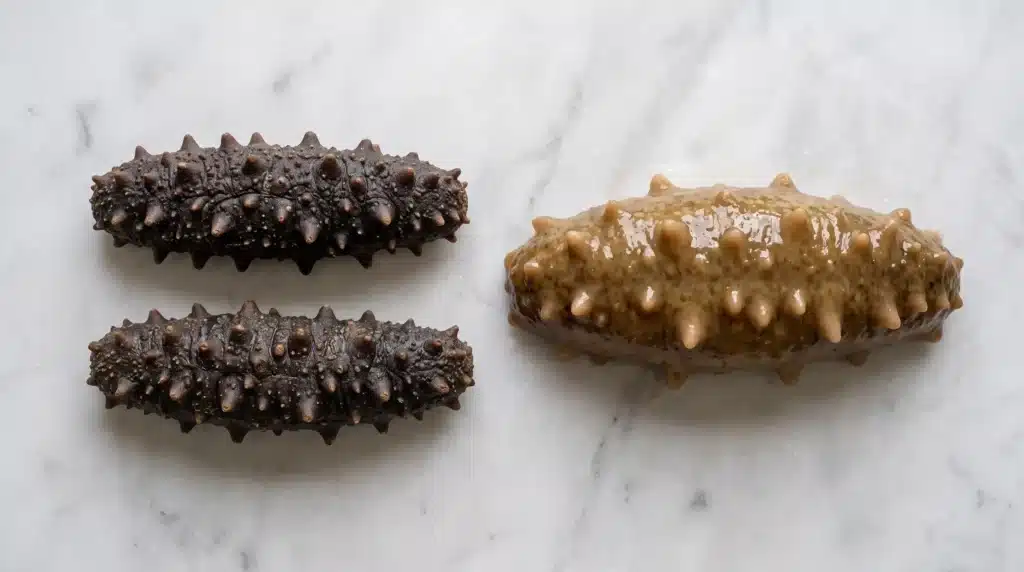
If you are working with fresh sea cucumber, the protein in sea cucumber is much lower by weight because the body wall is 80–90% water. Fresh material typically gives 3.4% to 8.7% protein, meaning 100 grams of fresh sea cucumber yields roughly 5 to 9 grams of protein. Dried products concentrate the protein to 37–72% or higher. So when you ask “how much protein in sea cucumber,” the answer depends entirely on which species you are using and whether the material is fresh or dried.
For buyers and product developers, this variation is critical. The species you choose directly affects your protein yield, production costs, and final product specifications.
Protein Content by Species: What the Numbers Mean for Your Product
If you are sourcing sea cucumber protein for commercial use, species selection is the most important decision you will make.
Apostichopus japonicus gives you the highest protein in sea cucumber at about 90% on a dry basis. This is the species that dominates aquaculture because it delivers consistent quality and excellent yield. The protein in sea cucumber from this source is concentrated enough to compete with whey protein isolate in terms of purity. For peptide production, this species is the clear first choice.
Holothuria scabra offers a respectable 55–60% protein in sea cucumber on a dry basis. This species has a long history in traditional medicine and continues to be used in various supplement formulations. While the protein content is lower than A. japonicus, it still provides a solid base for many applications.
Cucumaria frondosa, which comes from colder waters, gives a sea cucumber protein content of about 45–50%. Its collagen has slightly different structural properties compared to tropical species, which may be advantageous for certain specialized products.
Holothuria forskali lands in the 35–40% range for protein in sea cucumber. This is usable but less efficient for large-scale extraction.
Stichopus regalis gives only about 19–20% protein in sea cucumber on a dry basis. At this level, the economics of protein extraction become questionable for most commercial operations.
Holothuria tubulosa has the lowest recorded sea cucumber protein content at just 7.8–10.2% on a dry basis. This species is generally not suitable for commercial peptide production.
| Species | Protein Content on Dry Basis (%) |
|---|---|
| Apostichopus japonicus | ~90% |
| Holothuria scabra | ~55–60% |
| Cucumaria frondosa | ~45–50% |
| Holothuria forskali | ~35–40% |
| Stichopus regalis | ~19–20% |
| Holothuria tubulosa | ~7.8–10.2% |
Fresh vs. Dried: A Critical Distinction for Buyers
The protein in sea cucumber must be evaluated in the context of moisture content. Fresh sea cucumber contains 80–90% water, which dilutes the protein to 3.4–8.7% by wet weight. Drying removes this water, and the protein in sea cucumber on a dry basis rises to the values shown in the table above.
For A. japonicus, dried material reaches about 90% protein in sea cucumber. For lower-protein species, the dried concentration increases proportionally but never matches the top species.
When comparing quotes from different suppliers, always check whether the protein in sea cucumber is reported on a wet or dry basis. Most reputable suppliers use a dry basis for specifications because it provides a stable, comparable number. If a supplier reports protein on a wet basis without stating it clearly, the number will appear artificially low.
What Else Affects Protein Content Beyond Species?
Species sets the baseline, but other factors can shift the protein in sea cucumber up or down by a meaningful margin.
Harvest season is one of the more significant variables. Sea cucumbers spawn at specific times of year, and during spawning, they use stored nutrients for reproduction. This can reduce the protein in sea cucumber by 10–20%. For the highest protein content, you want material harvested before the spawning season.
Diet and environment also play a role. Wild sea cucumbers feed on organic matter in the sediment, so the protein in sea cucumber reflects the nutrient availability of that particular habitat. Farmed sea cucumbers can be given formulated feeds that may boost protein content, but the genetic ceiling of the species is still the main factor.
Processing methods matter too. Different drying techniques—sun drying, freeze drying, hot-air drying—can affect the measured protein in sea cucumber. Some methods cause protein denaturation or loss of soluble nitrogen compounds, which can lower the apparent protein content. When you compare protein in sea cucumber from different sources, make sure the drying and analytical methods are consistent.
What Kind of Amino Acids Are in Sea Cucumber Protein?
Protein quantity is important, but quality is just as critical. The amino acid profile of sea cucumber protein tells you what functional properties you can expect.
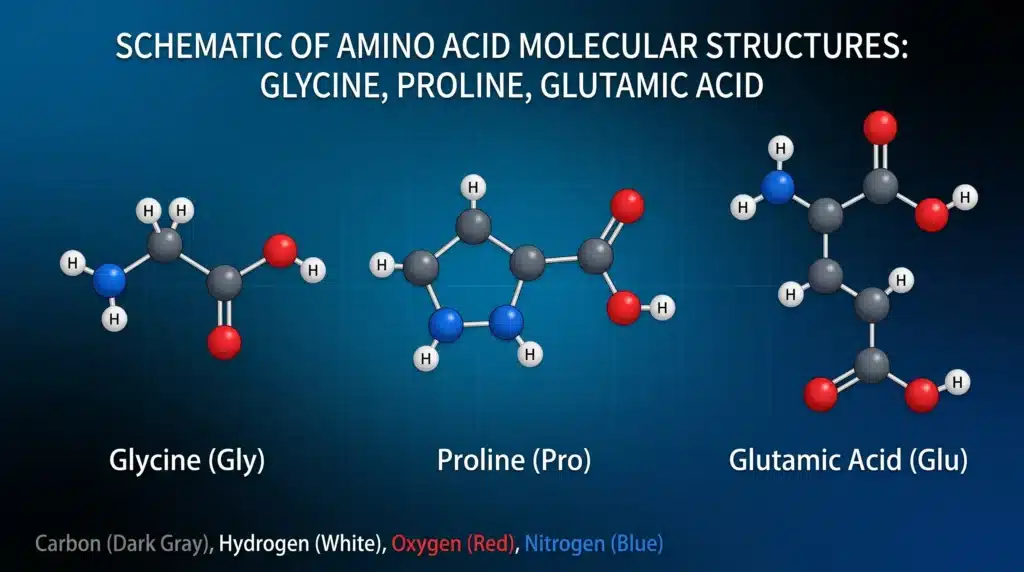
Sea cucumber protein is over 70% collagen, which means it is rich in glycine, proline, and glutamic acid. The table below compares the amino acid composition of sea cucumber protein with oyster meat, krill, and fish skin.
| Amino Acid | Sea Cucumber | Oyster Meat | Antarctic Krill | Fish Skin |
|---|---|---|---|---|
| Glycine | 13.35 | 5.10 | 4.21 | 19.09 |
| Glutamic Acid | 11.46 | 11.33 | 12.64 | 8.88 |
| Proline | 7.15 | 4.09 | 3.07 | 9.88 |
| Arginine | 6.75 | 5.31 | 5.75 | 7.31 |
| Aspartic Acid | 8.19 | 7.78 | 9.27 | 5.54 |
| Alanine | 6.66 | 4.72 | 5.02 | 7.97 |
| Leucine | 4.01 | 5.43 | 7.42 | 3.00 |
| Lysine | 2.56 | 5.95 | 7.28 | 3.42 |
| Other Amino Acids | 18.63 | 30.30 | 29.62 | 15.65 |
| Total | 78.76 | 80.01 | 84.28 | 80.69 |
(Values in grams per 100 grams of dry protein)
Glycine is the most abundant amino acid in sea cucumber protein, which makes sense given the high collagen content. Proline and glutamic acid are also present at significant levels. This composition gives sea cucumber protein its functional properties—gelation, water-holding capacity, and specific bioactive sequences that you do not find in plant proteins or in other marine sources like krill or fish skin.
Sea cucumber protein is low in lysine and methionine, so if your formulation requires a complete amino acid profile, you will need to combine it with other protein sources.
How Protein Content Is Measured in Practice
Most suppliers determine the protein in sea cucumber using the Kjeldahl method, which measures total nitrogen and multiplies by 6.25. This gives you the crude protein content. However, this method includes non-protein nitrogen from free amino acids and nucleotides, so it may slightly overestimate the true protein in sea cucumber.
For a more accurate measurement, amino acid analysis sums the actual amino acid residues. This gives the true protein content but costs more and takes longer. Most commercial specifications use Kjeldahl because it is practical and widely accepted. When you review a certificate of analysis, confirm the method used and whether the protein in sea cucumber is reported on a dry or wet basis.
From Protein to Peptides: What Changes and What Stays the Same
The protein in sea cucumber can be hydrolyzed enzymatically to produce peptides. This process cuts the long polypeptide chains into shorter fragments, which improves solubility and bioavailability. The total nitrogen content—and therefore the measured protein in sea cucumber—remains essentially unchanged during hydrolysis.
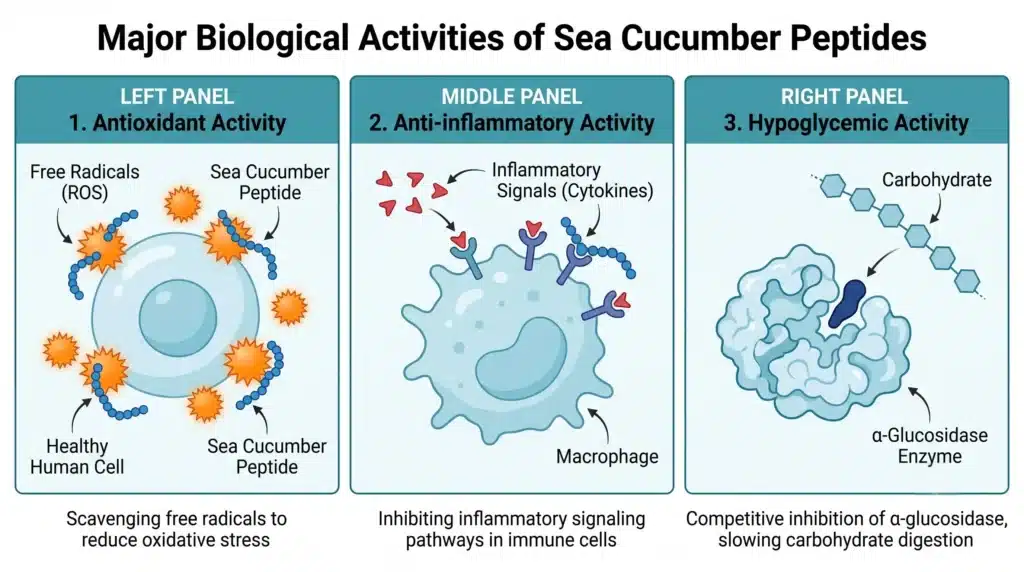
The high glycine and proline content of sea cucumber protein makes the resulting peptides structurally stable. Some specific peptides derived from sea cucumber protein have shown antioxidant, anti-inflammatory, and hypoglycemic activities in laboratory studies. These functional properties come from the unique amino acid sequences, not from a change in overall protein content.
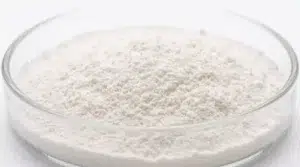
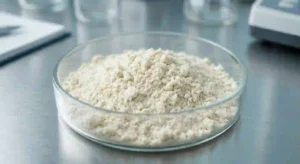
For buyers, this means the protein in sea cucumber peptide powder should match the source material. High-quality peptide powder should have a protein content of ≥90% on a dry basis, consistent with the starting material from A. japonicus.
Quality Specifications for Commercial Sea Cucumber Protein Products
For dried sea cucumber powder or peptide powder, the protein in sea cucumber is the most important specification on the certificate of analysis. Typical quality parameters include:
| Parameter | Specification | Test Method |
|---|---|---|
| Protein (dry basis) | ≥ 90.0% | Kjeldahl |
| Total Nitrogen | ≥ 15.0% | GB5009.5 |
| Molecular Weight | ≤ 10,000 Da | GB31645 |
| Moisture | ≤ 10.0% | GB5009.3 |
| Ash | ≤ 2.0% | GB5009.4 |
| Heavy Metals | Within limits | ICP-MS |
| Microbiological | Negative pathogens | Culture |
For Atnutra’s sea cucumber peptide powder, the measured protein in sea cucumber is 91.85% on a dry basis, with total nitrogen 15.64%, molecular weight below 10,000 Da, ash 0.84%, and moisture 6.21%.
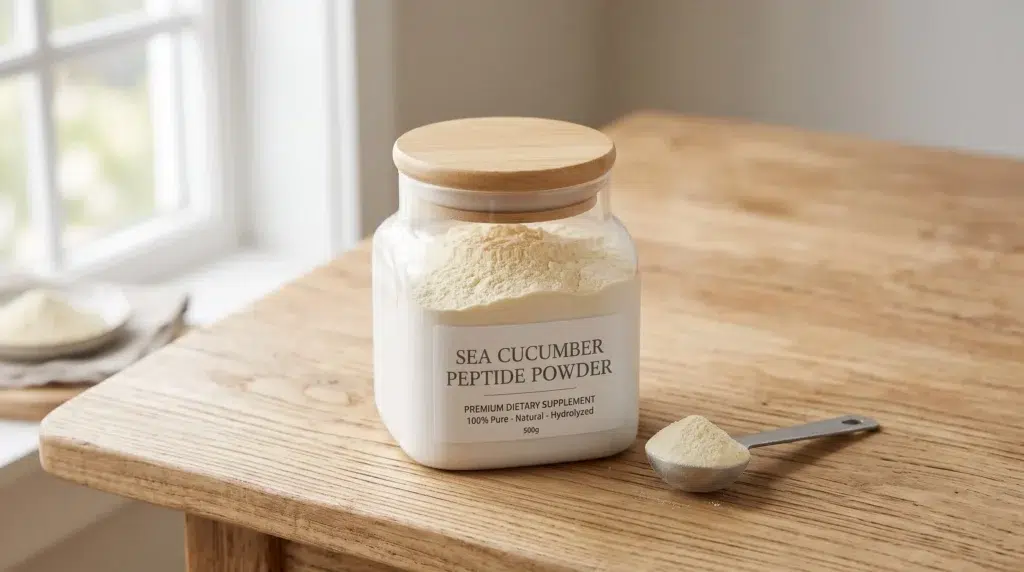
All heavy metals are below detectable limits, and microbiological tests are negative for pathogens. Each batch is independently tested to verify these specifications.