What Collagen Is in Eggshell Membrane vs. Type II Collagen for Brand Formulators
Does eggshell membrane contain type II collagen? The answer is no. But if you’re a supplement brand owner, an R&D formulator, or a procurement manager, the decision that actually lands on your desk is different: which raw material—eggshell membrane or type II collagen—will give your joint‑health product the clearest label story, the broadest format flexibility, and the most reliable supply chain? From a manufacturer’s perspective, this isn’t about picking a “better” ingredient; it’s about matching the ingredient to your product vision, your production line, and your target consumer. This guide lays out the eggshell membrane vs type II collagen comparison on the only criteria that matter when you’re writing a purchase order: collagen types, clinical dose ranges, real‑world solubility, ingredient combinations, and bulk sourcing realities.
Quick Answer: Does Eggshell Membrane Contain Type II Collagen?
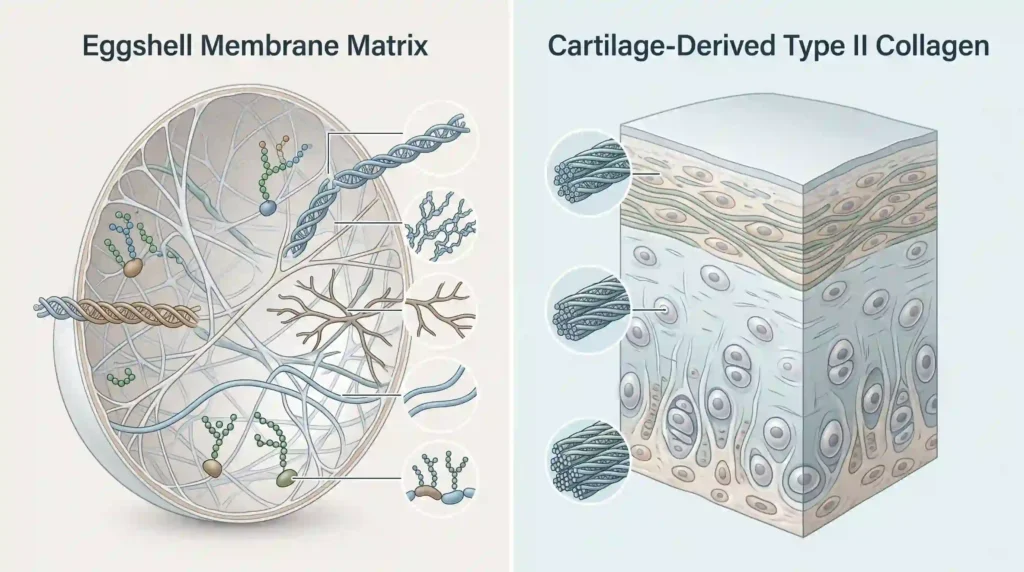
No, eggshell membrane contains no type II collagen at all. Instead, it naturally delivers a completely different collagen profile—types I, V, and X—woven into a matrix of elastin, hyaluronic acid, and sulfated glycosaminoglycans (dermatan sulfate, chondroitin sulfate). The question “does eggshell membrane contain type II collagen?” is probably the single most frequent one we hear from brands working on joint formulas, and the answer instantly determines what you can print on your label. If you must feature “type II collagen” as a call‑out, eggshell membrane cannot be your only active. However, if you want a single‑ingredient matrix that supports skin, joints, tendons, and ligaments all at once, the membrane’s native composition is actually a much larger—and increasingly research‑backed—story. Let’s examine exactly what sits inside that eggshell‑derived powder.
Under the Microscope: The Collagen Matrix in Eggshell Membrane
When formulators ask “what type of collagen is in eggshell membrane?”, they rarely want just a bullet list. They need to know how each collagen type translates into a claim on the bottle. Unlike cartilage‑derived type II collagen or bovine‑type I & III blends, eggshell membrane gives you a three‑collagen system that works as a functional unit. Here is the detailed snapshot from our in‑house analytical work.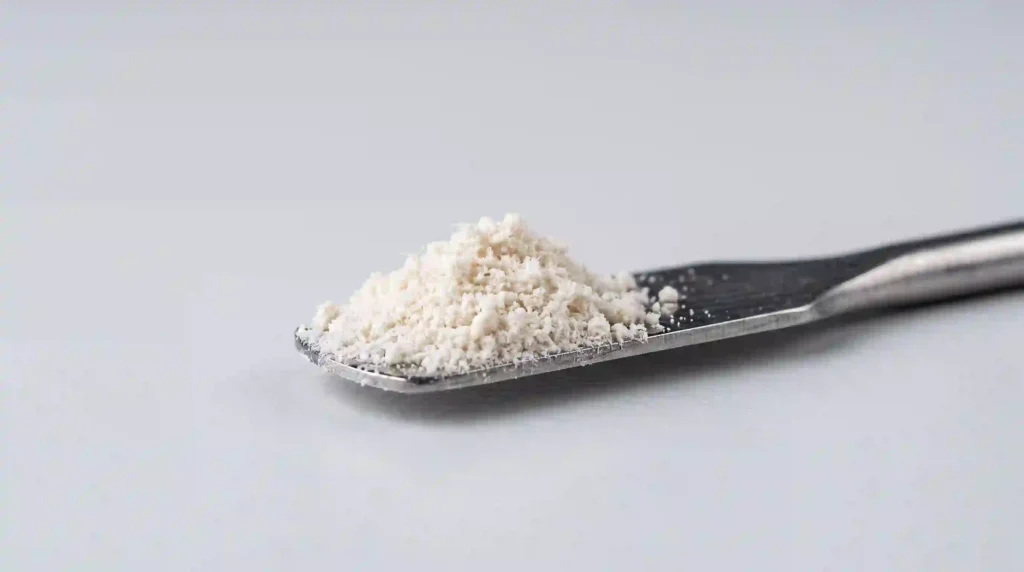
Type I Collagen – The Workhorse of Connective Tissue
Type I is the most abundant protein in eggshell membrane, just as it is in human skin, bone, tendons, and ligaments. In our hydrolyzed eggshell membrane peptide, these type I‑derived fragments supply the glycine, proline, and hydroxyproline the body needs for daily repair of the extracellular matrix. Multiple human studies have tied oral type I peptides to measurable increases in skin hydration, dermal collagen density, and reduced appearance of fine lines—which explains why a 300‑mg eggshell membrane capsule can legitimately serve both the joint‑health and the beauty‑from‑within markets without any additional expensive actives.
Type V Collagen – The Fibril Organizer
Type V collagen, despite its lower abundance, co‑assembles with type I and controls the diameter of the resulting fibrils. Think of it as the supervisor that ensures your type I fibers don’t turn into a weak, disorganized mess. In a dietary supplement, delivering both collagens together means the body receives a more complete molecular blueprint for rebuilding strong connective tissue. This matrix synergy is one of the reasons why clinical trials on eggshell membrane often get meaningful results at just 300–500 mg per day— far lower than the 5‑g to 10‑g doses needed for isolated collagen peptides.
Type X Collagen – The Cartilage‑to‑Bone Bridge
Type X collagen is normally localized at the growth plate and the zone where cartilage becomes mineralised into bone. Its presence in the membrane is especially relevant for products targeting active‑aging consumers, because both cartilage thinning and subchondral bone sclerosis are partners in osteoarthritis progression. Including type X lets you talk about “whole‑joint” support rather than stopping at the articular surface—a more nuanced, science‑forward claim that resonates with well‑educated supplement buyers.
Elastin, Hyaluronic Acid, and Sulfated GAGs – The Complete Matrix
- Elastin: Gives ligaments and arterial walls the ability to stretch and snap back. In a joint formula, it complements collagen by supporting the structures that stabilise the joint.
- Hyaluronic acid (HA): A natural component of synovial fluid and skin; HA can hold up to 1,000 times its weight in water. Because it is already embedded in eggshell membrane, your label gets this high‑value ingredient “for free.”
- Sulfated GAGs: Dermatan sulfate and chondroitin sulfate are structurally identical to the GAGs found inside your own cartilage. They contribute to both water retention and the mechanical integrity of the tissue.
This whole‑matrix composition is why a hydrolyzed eggshell membrane powder can be positioned as a “connective tissue support complex” rather than just another collagen tablet. At AT Nutra, we profile every batch for collagen types I, V, and X by SDS‑PAGE and ELISA—so you receive a COA that substantiates your label, not just a generic protein number. For a more consumer‑facing look at the clinical research supporting this matrix, our eggshell membrane benefits guide makes a natural companion piece.
Type II Collagen 101: Undenatured vs. Hydrolyzed and Why It Matters
Before you can make a genuine eggshell membrane vs type ii collagen call, you need to understand that “type II collagen” isn’t one single thing. It comes from chicken sternum cartilage and is commercially offered in two radically different forms—undenatured (native) and hydrolyzed (peptides). The choice between them affects everything: mechanism, dose, claims, and which delivery formats you can use on your production line.
Undenatured Type II Collagen – The Immune Modulator
Undenatured type II collagen is processed under strict low‑temperature conditions to keep the original triple‑helical structure intact. Its biological mechanism hinges on oral tolerance: minute amounts of native type II collagen interact with the gut‑associated lymphoid tissue (GALT) and effectively teach the immune system to stop attacking its own type II collagen in the joints. This immune‑based pathway has been validated in several high‑quality RCTs where a dose of just 40 mg per day led to clinically meaningful drops in WOMAC pain scores and a reduced need for rescue medication over 90–180 days. For a brand, this opens the door to a very specific, evidence‑backed claim around “immune‑mediated cartilage protection.”
Formulation constraint: Because bioactivity depends on the protein staying intact, undenatured type II collagen is extremely sensitive to heat and shear. It is not compatible with beverages, gummies, or high‑shear powder blending. Capsules—preferably low‑temperature compressed tablets or size‑3 to size‑4 capsules—are your only practical option.
Hydrolyzed Type II Collagen – The Peptide Building Block
Hydrolyzed type II collagen is produced by enzymatic breakdown into small, water‑soluble peptides rich in hydroxyproline, proline, and glycine. In this form, it acts as a substrate‑donor: the peptides are absorbed, distributed to joints, and used by chondrocytes to synthesise new cartilage matrix. Typical doses run from 500–1,000 mg per day. It does not work through oral tolerance, so your claim will revolve around cartilage nourishment and joint maintenance, often combined with glucosamine, chondroitin, or MSM. On the bench, hydrolyzed type II is far more versatile—it dissolves well, tolerates moderate heat, and can be formulated into capsules, tablets, drink mixes, and even some pectin‑based gummies.
The Full Comparison: Eggshell Membrane Peptide vs. Type II Collagen
When you leave the textbook and step onto the sourcing floor, the eggshell membrane vs type ii collagen decision boils down to a handful of technical parameters that directly hit your BOM, your manufacturing agreement, and your product’s label claims. Here is the side‑by‑side our own quality and application teams use when advising brand customers.
| Comparison Factor | Eggshell Membrane Peptide (AT Nutra) | Type II Collagen (Undenatured / Hydrolyzed) |
|---|---|---|
| Primary Collagen Types | I, V, X | II |
| Native Bioactive Matrix | Elastin, hyaluronic acid, dermatan & chondroitin sulfate | Minimal; undenatured may retain some cartilage‑associated proteins |
| Mechanism of Action | Peptide precursors + whole‑matrix synergy | Oral tolerance (undenatured) / peptide substrate (hydrolyzed) |
| Water Solubility | Excellent—clear solution, no sedimentation | Hydrolyzed: good; Undenatured: poor, cannot be used in liquids |
| Clinically Effective Daily Dose | 300–500 mg | 40 mg (undenatured) / 500–1,000 mg (hydrolyzed) |
| Delivery Format Flexibility | Very high: capsules, tablets, powders, RTD, gummies, shots | Undenatured: capsules only; Hydrolyzed: capsules, tablets, drinks, some gummies |
| Label Claim Story | Multi-collagen matrix; skin + joint; “naturally derived membrane” | Cartilage‑specific joint care; immune‑based modulation (undenatured) |
| Bulk Material Form | ≥90% protein micro‑powder; free‑flowing; virtually tasteless | Powder or granular; odor may require masking |
You can review the complete certificate of analysis, protein content, and microbial limits for our eggshell membrane peptide on the product specification page.
How to Choose: A Decision Framework for Your Brand
There is no universal winner in the eggshell membrane vs type ii collagen conversation. The right path depends entirely on your brand’s DNA, your factory setup, and the end consumer you’re trying to reach. Use this three‑step self‑diagnosis to cut through the clutter.
1. Define Your Core Product Claim
- “Clinically proven to reduce osteoarthritis knee pain through immune modulation” → Undenatured type II collagen (40 mg). If you want a razor‑sharp, problem‑solution product aimed squarely at diagnosed OA consumers, this is your strongest bet.
- “Complete multi‑collagen matrix for everyday joint comfort, skin hydration, and active‑aging” → Eggshell membrane peptide (300–500 mg). The built‑in HA, elastin, and type I/V/X combination let you talk to a much wider audience within a single ingredient.
- “High‑purity type II collagen peptides for daily joint maintenance—familiar, trusted, and stackable” → Hydrolyzed type II collagen (500–1,000 mg). Ideal for value‑priced joint formulas that sit next to glucosamine on the shelf.
2. Map Your Delivery Format
- Stick packs, ready‑to‑drink shots, clear beverages, beauty elixirs, gummies: Eggshell membrane (fully water‑soluble, heat‑stable up to 60°C) or hydrolyzed type II collagen are your only real candidates. Undenatured type II is simply not an option.
- Capsules or low‑temperature tablets: Any form works. Undenatured type II requires a very small capsule (size 3 or 4) due to the 40 mg dose, while eggshell membrane and hydrolyzed type II can fill a size 00 for higher per‑unit actives.
- Hybrid dual‑delivery systems: If you’re layering a liquid‑fill softgel with a powder cap, eggshell membrane’s solubility and bland taste give you far fewer compatibility headaches.
3. Identify Your Target Consumer
- Active adults & weekend warriors: Want joint comfort plus skin/tendon support → eggshell membrane.
- Seniors with diagnosed knee OA: Demand a strong, specific pain‑reduction study → undenatured type II collagen.
- Beauty‑focused consumers: Searching for collagen that also supports skin hydration and elasticity → eggshell membrane (types I & V + HA).
- Big‑box retail shoppers: Expect familiar joint ingredients in large bottles → hydrolyzed type II blended with glucosamine, chondroitin, and MSM.
If you find yourself torn between two paths—many brands do—know that custom premixes of eggshell membrane and type II collagen are routine in our facility. That approach gives your formula both the matrix story and the targeted cartilage‑support credentials.
Formulating with Confidence: Dosage, Solubility & Winning Combos
Good science means nothing if the powder won’t flow, dissolve, or play nice with your other actives. This section is pure bench‑level practicality.

Powdered Drinks and Stick Packs
Our hydrolyzed eggshell membrane peptide dissolves within 30–60 seconds in room‑temperature water, yielding a clear to faintly opalescent solution with almost zero detectable taste. This makes water-soluble eggshell membrane an invaluable asset for unflavored joint powders, beauty shots, and effervescent tablets. A typical eggshell membrane powder dosage of 300–500 mg fits comfortably into a 3–5 g stick pack along with natural flavors, citric acid, and a flow agent. Because the powder truly goes into solution, you avoid the consumer complaint #1 for stick packs: grittiness or sediment at the bottom of the glass.
Capsules and Tablets
Eggshell membrane micro‑powder flows excellently—a simple 0.5–1% magnesium stearate or silica lubricant keeps encapsulation machines humming. Undenatured type II collagen’s minuscule 40 mg dose must be blended with microcrystalline cellulose or another carrier to guarantee content uniformity; the resulting blend commonly targets a size‑3 capsule, which many consumers find easy to swallow.
Gummies and Soft Chews
Eggshell membrane peptide can be pre‑dissolved in the water phase of both pectin‑ and gelatin‑based gummies at temperatures up to 60°C without causing premature gelling or texture defects. Hydrolyzed type II collagen is also feasible but may increase chewiness. Undenatured type II collagen is simply off the table for this segment.
Winning Ingredient Combinations
| Primary Ingredient | Pair With | Why |
|---|---|---|
| Eggshell membrane | Hyaluronic acid, Vitamin C, Biotin | Amplifies skin hydration; Vitamin C is a collagen co‑factor |
| Undenatured type II collagen | Curcumin (95% curcuminoids), Boswellia serrata | Pairs immune‑modulation with targeted anti‑inflammatory pathways |
| Hydrolyzed type II collagen | Glucosamine sulfate, MSM, Chondroitin | Classic, consumer‑familiar cartilage‑support stack |
| Eggshell membrane | Magnesium, Calcium, Vitamin D₃ | Taps the active‑aging bone‑and‑joint crossover market |
Every joint health ingredient combination listed above has been run through our mixing trials to ensure homogeneity.
The Science Snapshot: Benefits at a Glance
Both eggshell membrane and type II collagen are backed by published human research. Here are the core findings you’ll lean on when building your product’s marketing dossier:
- Joint pain and stiffness: A 2018 randomized, double‑blind, placebo‑controlled trial on eggshell membrane (500 mg/day) reported a 27% reduction in knee pain within 10 days and a 32% drop in stiffness within 30 days.
- Cartilage protection in OA: Multiple RCTs on undenatured type II collagen (40 mg/day) have documented statistically significant improvements in WOMAC scores and VAS pain ratings, with one trial showing a 33% pain reduction at 90 days.
- Skin hydration and anti‑aging: A 2020 study using 300 mg/day of eggshell membrane peptides found a 14% increase in corneometer‑measured skin moisture and a measurable decrease in crow’s‑feet wrinkle depth.
- Exercise recovery: 500 mg/day of eggshell membrane for two weeks before a controlled exercise bout significantly reduced post‑exercise joint discomfort and CTX‑II (a cartilage breakdown marker) in healthy postmenopausal women.
- Safety: Neither ingredient has been associated with serious adverse events in clinical trials. Both meet GRAS standards and are well‑tolerated at their recommended doses.
For a deeper review—including full study protocols, subject demographics, and effect sizes—our companion article The Science Behind Eggshell Membrane Collagen Benefits is the place to go.
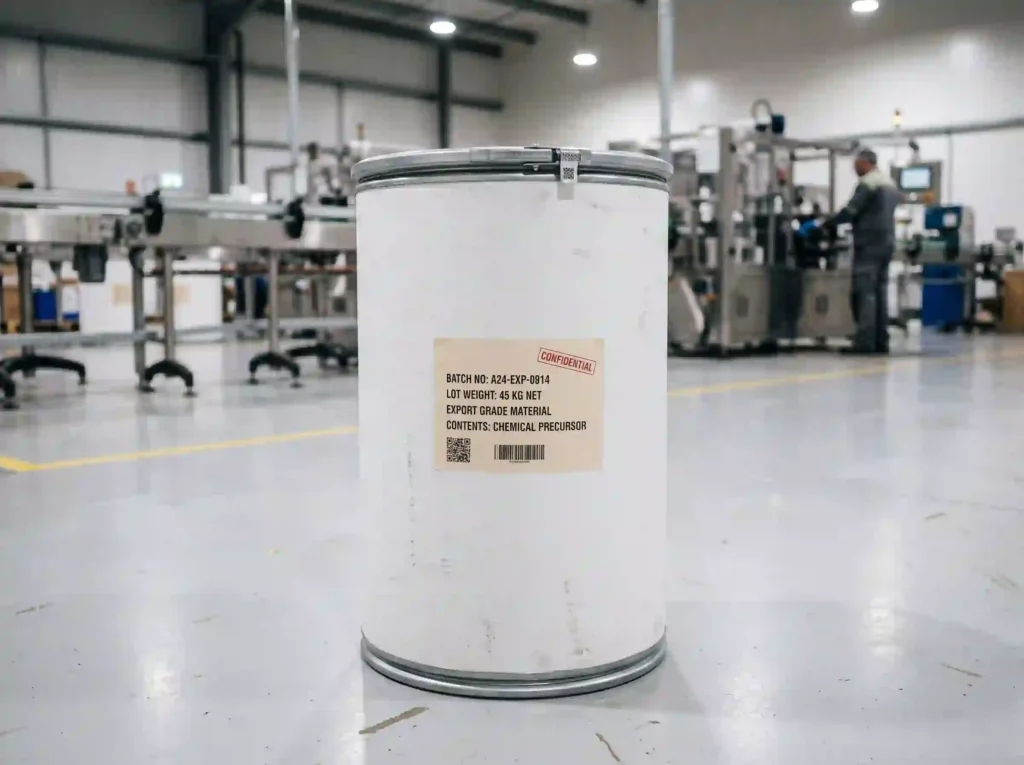
Bulk Supply & Sourcing Specifications
When your formula is locked, and you’re ready to scale, the reliability of your eggshell membrane bulk supply becomes the single largest predictor of your product’s long‑term success. Below are the non‑negotiable quality parameters every brand should require—and what we deliver as standard.
Protein Purity & Identity
Our hydrolyzed eggshell membrane peptide consistently tests at ≥90% protein (Kjeldahl, N×6.25). This high purity comes from a proprietary multi‑step separation process that removes shell residues and albumen without harsh chemicals. For type ii collagen wholesale orders, we also supply both undenatured and hydrolyzed grades meeting ≥95% protein.
Solubility & Clarity
The powder passes a 0.45‑micron filter test, confirming a true water‑soluble eggshell membrane solution—no gums, no cloudifiers needed. Sedimentation is the #1 return‑driver for protein‑based ready‑to‑drink products; our solubility spec lets you formulate clear beverages with confidence.
Microbiological & Heavy Metal Limits
- Total Aerobic Microbial Count: <1,000 CFU/g
- Yeast & Mold: <100 CFU/g
- E. coli: Negative in 10 g
- Salmonella: Negative in 25 g
- Heavy metals (Pb, As, Cd, Hg) compliant with USP <561> and California Proposition 65
Minimum Order Quantities & Global Logistics
- R&D & trial: 25 kg is the standard MOQ; smaller evaluation samples can often be arranged.
- Commercial production: Multi‑ton lots ship with a lead time of 2–4 weeks, by air, sea, or courier. Every consignment includes a batch‑specific COA, MSDS, allergen statement (egg‑derived; processed to minimise ovalbumin), and BSE/TSE‑free certificate.
As a direct eggshell membrane manufacturer, we eliminate middlemen and give you a single technical contact for specification sheets, formulation advice, and paperwork—shortening your supply chain and lowering risk. Whether you need a strict eggshell membrane powder dosage spec or a custom blend of eggshell membrane plus type II collagen, we’re set up to support it.