Grass-Fed Beef Protein Isolate in Capsule Applications: Formulation, Processing, and Technical Considerations
Grass-fed beef protein isolate powder works effectively in capsule applications. The key factors that determine success are particle size, bulk density, molecular weight, moisture content, and flow properties. These parameters directly affect fill weight consistency, capsule count per serving, manufacturing efficiency, and end-product stability. When formulating grass fed beef protein isolate powder into capsules, understanding these technical parameters is essential. Let me walk you through each of these considerations so you can formulate grass fed beef protein isolate capsules with confidence.
I have worked extensively with grass fed beef protein isolate powder in capsule applications, and the formulation principles differ significantly from powders or ready-to-drink beverages. Capsule filling demands specific particle characteristics, flow properties, and density parameters that not all protein ingredients can meet. For grass fed beef protein isolate, these parameters are well-defined and consistent. Here is everything you need to know for successful application of grass-fed beef protein isolate powder in capsule product lines.
Why Choose Capsules for Grass-Fed Beef Protein Isolate?
Capsules offer distinct advantages over other formats for grass fed beef protein isolate supplementation. Understanding these advantages helps justify the formulation approach.
Consumer Preference and Compliance
Capsules are among the most familiar and trusted supplement formats. Consumers perceive capsules as precise and convenient, which can enhance compliance compared to powders that require mixing. For grass fed beef protein isolate powder, capsule delivery eliminates the need for taste masking, flavouring, or sweeteners—the ingredient is consumed in its pure form. This appeals to consumers who prefer unflavoured, additive-free supplements. Grass fed beef protein isolate in capsule form is particularly attractive to consumers who value convenience and purity.
Portability and Convenience
Capsules are portable, shelf-stable, and require no preparation. For athletes and active consumers, carrying a bottle of grass fed beef protein isolate capsules is far more convenient than carrying a shaker bottle and powder. This convenience factor drives repeat purchase behaviour. Grass fed beef protein isolate powder in capsules eliminates the mess and preparation time associated with traditional protein powders.
Precise Dosing
Capsules provide accurate, consistent dosing. Each capsule contains a measured amount of grass fed beef protein isolate powder, eliminating the variability of scoop-based powder dosing. For formulators, this means precise label claims and consistent consumer experience. When using grass-fed beef protein isolate powder in capsules, dosing accuracy is guaranteed batch after batch.
Sustained Release Potential
The sustained release amino acid profile of grass fed beef protein isolate—demonstrated by clinical research showing steady increases in plasma amino acid concentrations over 3 hours—makes it particularly suitable for capsule delivery. Capsules can be formulated for specific release profiles, and the hydrolysed form of grass fed beef protein isolate powder supports easy mixing and a light texture. Grass fed beef isolate protein provides extended amino acid delivery that other protein forms cannot match.
Clean Label Positioning
Grass-fed beef protein isolate powder is naturally free from dairy, lactose, gluten, and soy. It contains zero carbohydrates and zero fat in its pure form. This clean label profile makes grass fed beef protein isolate suitable for paleo, keto, carnivore, and elimination diets—all of which align with the capsule format’s pure supplement positioning. Grass fed beef protein isolate powder offers formulators a versatile ingredient that meets multiple dietary positioning strategies.

Ingredient Specifications for Capsule Applications
Not all grass-fed beef protein isolate powder is suitable for capsule filling. Here are the critical parameters that determine capsule compatibility for grass fed beef protein isolate. Understanding these specifications is the first step in successful formulation.
Particle Size and Mesh Rating
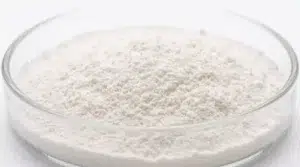
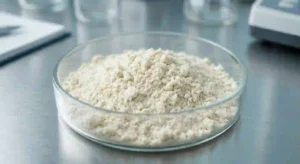
Capsule filling equipment requires powders with consistent particle size for accurate dosing and smooth flow. Atnutra’s grass fed beef protein isolate powder is precisely milled to a 60-mesh particle matrix. This specific particle size ensures:
- Consistent flow through capsule filling machines without bridging or clogging
- Uniform density for accurate fill weight from capsule to capsule
- Rapid dispersion upon capsule dissolution in the digestive tract
For grass fed beef isolate protein powder, a 60-mesh particle size represents the optimal balance between flowability and compressibility, making it ideal for high-speed capsule filling operations. Grass fed beef protein isolate with consistent particle size ensures reliable manufacturing outcomes.
Bulk Density
Bulk density determines how much grass fed beef protein isolate powder can fit into a given capsule size. Higher bulk density means more protein per capsule, reducing the number of capsules required per serving. This is a critical consideration when formulating grass-fed beef protein isolate powder into capsule products. Understanding the bulk density of grass fed beef protein isolate powder helps you calculate capsule counts accurately.
Atnutra’s grass-fed beef protein isolate powder has a bulk density of 0.39 g/ml. This allows approximately:
| Capsule Size | Typical Fill Volume | Approximate Fill Weight (0.39 g/ml) | Protein per Capsule (at 96% purity) |
|---|---|---|---|
| Size 00 | 0.95 ml | 370 mg | 355 mg |
| Size 0 | 0.68 ml | 265 mg | 254 mg |
| Size 1 | 0.50 ml | 195 mg | 187 mg |
For a 25 g protein serving using grass fed beef protein isolate powder, this translates to approximately 70 capsules of Size 00—a significant quantity that may influence consumer acceptance. This is why formulators often combine grass fed beef protein isolate with other protein sources or concentrate the dosage into fewer, larger capsules. Grass fed beef protein isolate powder with higher bulk density would reduce capsule count, but 0.39 g/ml is typical for this ingredient.
Molecular Weight and Hydrolysis
The molecular weight of hydrolysed beef protein affects both bioavailability and physical properties of grass fed beef protein isolate powder. Atnutra’s grass-fed beef protein isolate has a molecular weight allocation of 3,000–5,000 Da. This molecular weight range represents an optimal balance for grass fed beef isolate protein:
- Small enough for efficient absorption while maintaining structural integrity
- Large enough to provide sustained release characteristics
- Consistent enough for predictable capsule filling behaviour
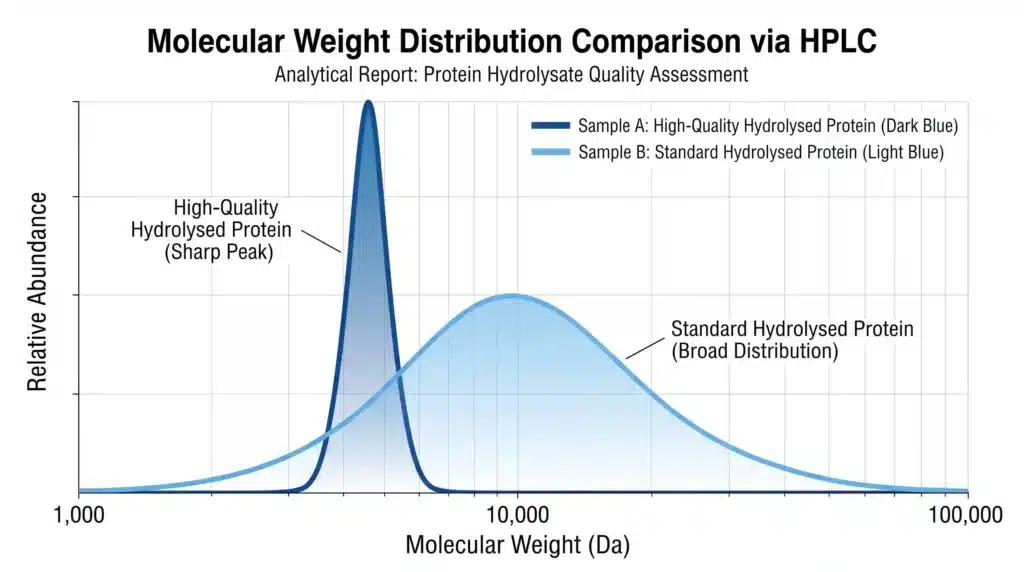
When selecting grass fed beef protein isolate powder for capsules, the molecular weight profile directly impacts how the ingredient performs during both manufacturing and digestion. Grass fed beef isolate protein with controlled molecular weight ensures consistent performance.
Moisture Content and Flowability
Moisture content is critical for capsule filling with grass fed beef protein isolate powder. Excess moisture causes powder to cake, bridge, or stick to filling equipment. Atnutra’s grass-fed beef protein isolate powder has a loss on drying of 5.60% (well below the 8.0% specification). This low moisture content ensures:
- Smooth flow through capsule filling machines
- No clumping or bridging during high-speed filling
- Extended shelf stability in finished capsules
Grass-fed beef protein isolate powder with consistent moisture content below 8% is essential for reliable capsule filling performance. Grass fed beef protein isolate powder with low moisture also maintains its flow properties throughout the product shelf life.
Ash and Mineral Content
Ash content reflects the naturally occurring mineral content from grass-fed beef. Atnutra’s grass fed beef isolate protein has a total ash value of 1.42% (below the 2.0% specification). This indicates high purity and minimal inorganic contamination—essential for clean label positioning of grass fed beef protein isolate powder. Grass fed beef protein isolate with low ash content delivers better sensory performance and cleaner formulations.
Capsule Formulation: Technical Considerations
Formulating grass fed beef protein isolate powder into capsules requires careful attention to several technical factors. Let us examine each one.

Capsule Shell Selection
Two primary capsule shell types are available for grass-fed beef protein isolate powder:
Gelatin Capsules:
- Standard, cost-effective option
- Suitable for most applications
- Dissolve readily in the digestive tract
- Derived from bovine or porcine sources (may conflict with some dietary preferences)
HPMC (Vegetarian) Capsules:
- Plant-based, suitable for vegan and vegetarian consumers
- Lower moisture content, better for hygroscopic ingredients
- Slower dissolution profile
- Premium positioning
For grass fed beef protein isolate powder, both shell types work effectively. The choice depends on target consumer positioning and regulatory requirements. When choosing capsules for grass fed beef protein isolate, consider your target market’s dietary preferences.
Fill Weight and Capsule Size Selection
Selecting the right capsule size for grass fed beef protein isolate powder requires balancing several factors:
Target Protein Dose: Determine the desired protein per serving. For grass fed beef protein isolate, typical servings range from 20–30g of protein.
Capsule Capacity: Match the capsule size to the fill weight required. As shown above, Size 00 capsules hold approximately 370 mg of grass-fed beef protein isolate powder at 0.39 g/ml bulk density.
Consumer Acceptability: Fewer, larger capsules are generally preferred over many small capsules. However, capsule size should remain swallowable for the target demographic.
Production Efficiency: Larger capsules fill faster on automated equipment but may require different tooling.
Grass fed beef protein isolate powder dosing must be carefully calculated to achieve target protein delivery per serving.
Excipients and Flow Aids
Pure grass-fed beef protein isolate powder may require flow aids for optimal capsule filling. Common additions include:
- Magnesium stearate (0.5–1.0%) – improves flow and reduces sticking
- Silicon dioxide (0.5–1.0%) – anti-caking agent, improves flow
- Microcrystalline cellulose – bulking agent, improves compressibility
At Atnutra, our grass fed beef protein isolate powder is engineered with a 60-mesh particle matrix that minimises the need for flow aids. However, formulators should conduct their own flow testing to determine optimal excipient levels for their specific capsule filling equipment. You can review our full product specifications at Beef Protein Isolate. Grass fed beef protein isolate powder with good native flow properties reduces formulation complexity.
Compatibility with Other Ingredients
Grass-fed beef protein isolate powder can be combined with other ingredients in capsule formulations:
- Collagen peptides – complementary for joint and muscle products
- Creatine – naturally occurring in beef, supports strength and power
- BCAAs – additional branched-chain amino acids for targeted muscle support
- Digestive enzymes – enhance protein breakdown and absorption
- Vitamins and minerals – create comprehensive nutrition profiles
When formulating grass fed beef protein isolate powder with other actives, ensure compatibility testing to maintain stability and efficacy. Grass fed beef isolate protein blends well with most common supplement ingredients.
Taste and Odour Considerations
One of the key advantages of capsule delivery for grass fed beef isolate protein powder is that taste and odour are irrelevant—the capsule shell masks any sensory characteristics. This eliminates the need for flavouring, sweetening, or taste-masking ingredients, resulting in cleaner labels and simpler formulations.
At Atnutra, our grass-fed beef protein isolate powder is processed to achieve an excellent sensory profile with clean odour distribution. While taste is not a concern in capsules, odour can affect consumer perception when opening the bottle—our processing ensures a neutral, acceptable sensory experience for grass fed beef protein isolate. Grass fed beef protein isolate powder with clean sensory characteristics is essential for positive consumer experiences.
Manufacturing and Processing
Capsule Filling Equipment
Three main types of capsule filling equipment are used for grass-fed beef protein isolate powder:
Manual Fillers:
- Suitable for small-batch or R&D production
- Labour-intensive, limited throughput
- Useful for formulation development and pilot runs
Semi-Automatic Fillers:
- Moderate throughput (thousands per hour)
- Good for small-to-medium production runs
- Reasonable capital investment
Automatic Rotary Fillers:
- High throughput (hundreds of thousands per hour)
- Consistent fill weights
- Significant capital investment, requires skilled operators
When scaling production of grass fed beef protein isolate capsules, equipment selection directly impacts efficiency and cost.
Process Parameters
For consistent capsule filling with grass-fed beef protein isolate powder, monitor these parameters:
Hopper Feed Rate: Ensure consistent powder delivery to the filling station. Atnutra’s 60-mesh particle matrix supports consistent flow for grass fed beef protein isolate powder.
Tamping Pressure: Adjust tamping pressure to achieve target fill weight without over-compressing the powder. Over-compression can cause capsules to split or affect dissolution.
Fill Weight Monitoring: Continuously monitor fill weights to ensure consistency. Target variation should be within ±3% of target weight.
Environmental Conditions: Maintain humidity below 45% RH to prevent moisture absorption and flow issues with grass fed beef protein isolate powder. Temperature should be controlled (20–25°C) for consistent powder behaviour.
Grass fed beef protein isolate powder requires careful environmental control during processing to maintain flow properties and fill weight consistency.
Post-Filling Operations
After filling, capsules undergo:
Polishing: Removes excess powder from capsule exteriors
Inspection: Visual or automated inspection for defects (split capsules, incorrect fill weights, colour variation)
Packaging: Bottling with desiccants to maintain low moisture environment
Labelling: Apply labels with dosage instructions, ingredient declarations, and claims
Grass fed beef protein isolate capsules should be packaged in opaque, moisture-protective containers to maintain stability.
Quality Control Testing
For finished grass-fed beef protein isolate capsules, conduct these tests:
| Test | Purpose | Specification |
|---|---|---|
| Fill weight variation | Ensure dosing consistency | ±5% of target |
| Disintegration | Confirm capsule dissolution | ≤30 minutes (USP) |
| Protein content | Verify label claim | ≥95% of label |
| Moisture content | Ensure stability | ≤8% |
| Microbial counts | Safety verification | Within limits |
| Heavy metals | Safety verification | Within limits |
Regular quality testing of grass fed beef protein isolate powder and finished capsules ensures consistent product quality.
Dosage and Application Guidelines
Recommended Dosage
Based on clinical research and sports nutrition literature, the recommended dosage of grass-fed beef protein isolate for muscle support is 1.6–2.2 g per kilogram of body weight per day. For a 70 kg individual, this translates to 112–154 g of protein per day.

In capsule form using grass fed beef protein isolate powder, a typical maintenance dose might be 20–30 g of grass-fed beef protein isolate powder per day, providing approximately 19–29 g of protein (at 96% purity). This would require:
- Size 00 capsules: approximately 55–80 capsules per day
- Size 0 capsules: approximately 75–115 capsules per day
For practical consumer compliance, many formulators position grass fed beef protein isolate capsules as a convenient supplement to dietary protein rather than the sole protein source. Grass fed beef protein isolate powder in capsule form works best as part of a comprehensive protein strategy. Grass fed beef isolate protein provides high-quality supplementation that fits seamlessly into daily routines.
Timing and Application
Post-Workout: Consume within 30–60 minutes after training for muscle recovery support. Grass fed beef protein isolate powder in capsules delivers amino acids precisely when muscles need them.
Between Meals: Use as a convenient protein top-up between meals for sustained amino acid delivery. Grass fed beef protein isolate capsules provide steady protein availability throughout the day.
Before Bed: The sustained release profile of grass-fed beef protein isolate makes it suitable for overnight recovery.
Travel and On-the-Go: Capsules are ideal for maintaining protein intake during travel when powders are impractical. Grass fed beef protein isolate capsules are the ultimate travel-friendly supplement format.
Target Consumer Segments
Athletes and Active Individuals: Convenient post-workout or on-the-go protein using grass fed beef isolate protein
Dairy-Sensitive Consumers: Lactose-free alternative to whey, ideal for grass fed beef protein isolate powder
Paleo and Keto Consumers: Clean-label, zero-carb protein source from grass fed beef protein isolate
Aging Populations: Connective tissue support from glycine and proline in grass-fed beef protein isolate powder
Clinical Nutrition: Emerging applications in therapeutic diets for grass fed beef protein isolate
Grass fed beef protein isolate powder serves diverse consumer segments with varying nutritional needs and dietary restrictions.
Quality and Sourcing Considerations
Grass-Fed Certification
For grass-fed beef protein isolate powder, verify that the supplier provides:
- Grass-fed certification from recognised bodies
- Full traceability from pasture to finished product
- Documentation of animal welfare standards
At Atnutra, our grass fed beef protein isolate powder is derived entirely from grass-fed sources with complete supply chain visibility. Grass fed beef protein isolate with proper certification provides the authenticity that premium consumers demand.
Regulatory Compliance
Ensure your grass fed beef protein isolate powder meets regulatory requirements for your target markets:
- US: GRAS status for use as a food supplement
- EU: Novel Food regulations (where applicable)
- Other markets: Local supplement regulations
Grass fed beef protein isolate powder must meet all applicable regulatory standards in your target markets.
Documentation Requirements
For commercial capsule production using grass fed beef protein isolate powder, maintain:
- Batch-specific Certificate of Analysis
- Grass-fed certification documentation
- Non-GMO verification (where applicable)
- Allergen declaration (dairy-free, gluten-free)
- Heavy metal and microbial test results
- Stability data for finished capsules
Complete documentation for grass fed beef protein isolate powder ensures smooth regulatory compliance and builds consumer trust.
Key Takeaways for Capsule Formulation
If you are ready to develop grass-fed beef protein isolate capsules, here are the essential considerations:
- Particle size matters – Atnutra’s 60-mesh particle matrix ensures consistent flow and fill for grass fed beef protein isolate powder. Verify particle size specifications with your supplier.
- Bulk density determines capsule count – At 0.39 g/ml, Size 00 capsules hold approximately 370 mg of grass-fed beef protein isolate powder. Calculate your capsule count requirements early.
- Hydrolysis affects performance – The 3,000–5,000 Da molecular weight range provides optimal balance of bioavailability and physical properties for grass fed beef isolate protein.
- Low moisture ensures stability – Atnutra’s 5.60% loss on drying supports long shelf life for grass fed beef protein isolate powder.
- Clean label is an advantage – Grass-fed beef protein isolate powder is naturally dairy-free, lactose-free, and allergen-friendly.
- Test your formulation – Conduct flow testing, fill weight validation, and stability testing before full production of grass fed beef protein isolate capsules.
- Source quality – Demand full traceability from grass-fed sources with complete documentation.
At Atnutra, we provide premium grass-fed beef protein isolate powder engineered for capsule applications. You can review our full product specifications at Beef Protein Isolate. Our grass fed beef protein isolate powder is trusted by formulators worldwide for its consistent quality and reliable performance in capsule applications.