How Much Protein Is in Chicken Bone Broth? A Complete Technical Breakdown
A standard 1-cup serving of chicken bone broth contains 8 to 10 grams of protein. But that number shifts significantly based on ingredients, simmering time, and processing methods. For businesses sourcing chicken bone broth protein, understanding what drives that protein content is essential for quality control, product development, and supplier evaluation.
How Much Protein in Chicken Bone Broth?
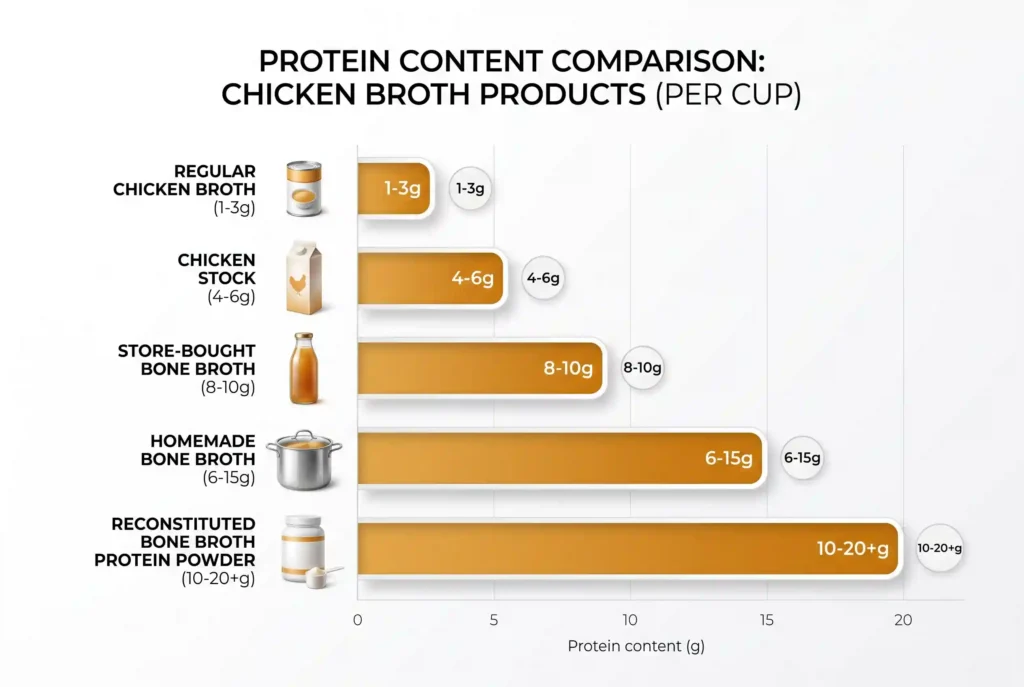
The table below shows the protein content across different broth products:
| Type | Protein Per 1 Cup (240 ml) |
|---|---|
| Regular chicken broth | 1–3 grams |
| Chicken stock | 4–6 grams |
| Store-bought chicken bone broth | 8–10 grams |
| Homemade chicken bone broth | 6–15 grams |
| Chicken bone broth protein powder (reconstituted) | 10–20+ grams |
Most commercial chicken bone broth products provide 8 to 10 grams of protein per cup. Some premium or concentrated versions reach 12 grams or more. Regular chicken broth has only 1 gram of protein per cup—a tenfold difference. Chicken stock falls in between, at roughly 4 to 6 grams per cup.
If you are comparing how much protein is in chicken bone broth versus other broth products, bone broth delivers significantly more protein because of one critical factor—simmering time.
Why Chicken Bone Broth Contains More Protein
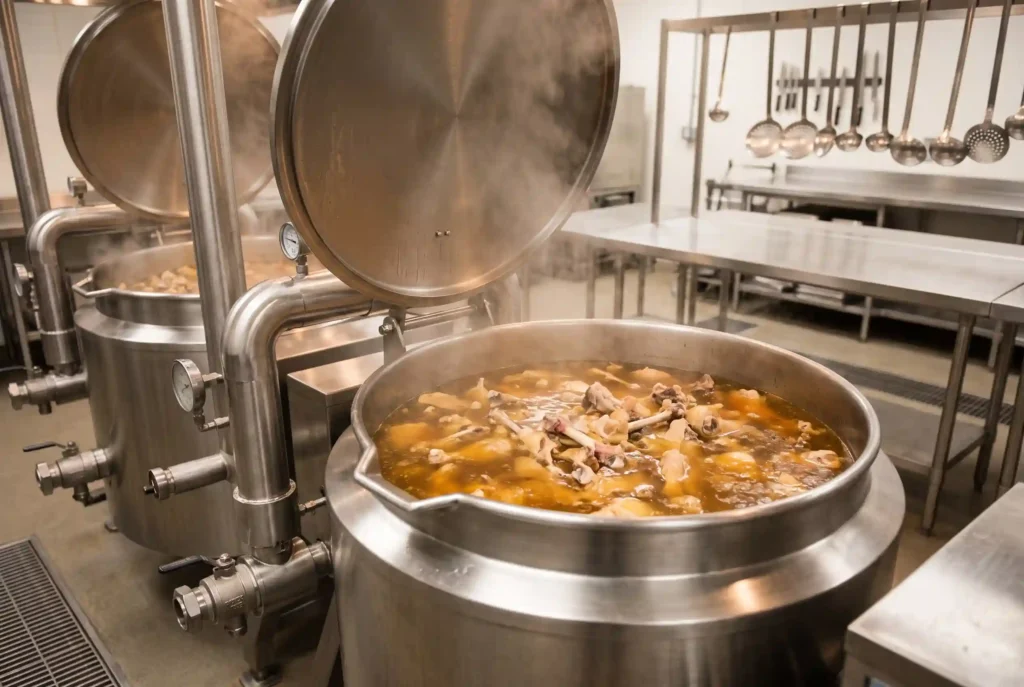
The protein difference comes down to extraction. Regular chicken broth simmers for 30 minutes to 2 hours, extracting very little protein from bones or connective tissue. Chicken stock simmers for 4 to 6 hours, releasing moderate amounts of collagen. Chicken bone broth simmers for 12 to 24 hours or more. This extended cooking process breaks down collagen from bones, joints, and connective tissue into gelatin, which dissolves into the liquid and dramatically increases the protein in chicken bone broth.
Regular chicken broth = flavor base, minimal protein
Chicken stock = cooking foundation, moderate protein
Chicken bone broth = nutritional product, high protein
This distinction matters for product positioning. If a product label says “bone broth,” customers expect a protein content in chicken bone broth that justifies the premium price. A product with only 4 or 5 grams of protein per cup while using the term “bone broth” likely contains fewer collagen-rich parts and more water.

How Much Protein in Homemade Chicken Bone Broth?
Homemade chicken bone broth often contains more protein than store-bought versions because the bone-to-water ratio and simmering time are fully controllable. A homemade batch made with a high proportion of joints, feet, and connective tissue, simmered for 12 to 24 hours, can yield 8 to 15 grams of protein per cup.
However, not all homemade recipes are equal. A broth simmered for only 3 to 4 hours will contain closer to 6 grams per cup—more like stock than true bone broth. So the answer to how much protein does homemade chicken bone broth have is: 6 to 15 grams per cup, entirely dependent on the recipe and method.
To maximize protein extraction:
Use collagen-rich parts (feet, wings, joints, necks)
Maintain a high bone-to-water ratio
Add a small amount of vinegar to help break down bone minerals
Simmer for at least 12 hours, ideally 18–24 hours
What Type of Protein Is in Chicken Bone Broth?
Knowing how much protein is in chicken bone broth is only part of the picture. The type of protein matters just as much.
The primary protein in chicken bone broth is collagen, which breaks down into gelatin during cooking. Collagen is an incomplete protein because it does not contain all nine essential amino acids in optimal ratios. However, it is exceptionally rich in specific amino acids that are scarce in other protein sources.
Chicken bone broth contains roughly:
4 mg of glycine per gram of broth
2.4 mg of proline per gram of broth
2.2 mg of hydroxyproline per gram of broth
These amino acids serve specific functions:
Glycine – supports collagen synthesis, digestive health, and sleep quality
Proline – crucial for cartilage maintenance and connective tissue integrity
Hydroxyproline – found almost exclusively in collagen, supports joint health
Glutamine – supports intestinal lining maintenance and immune function
This amino acid profile is both an advantage and a limitation. These amino acids are highly bioavailable and offer targeted benefits for gut and joint health. However, because collagen is naturally low in tryptophan, chicken bone broth protein does not qualify as a “complete protein” on its own.

Factors That Determine Protein Content
What determines how much protein is in chicken bone broth? Several factors directly affect the final concentration:
Bone-to-Water Ratio
More bones relative to water produce higher protein concentration. Commercial producers use specific ratios to achieve consistent protein levels.Type of Bones and Parts Used
Different parts of the chicken contain different amounts of collagen. Joints, feet, wings, and necks are rich in connective tissue and yield more protein than shaft bones. Chicken feet, in particular, are exceptionally high in collagen.Simmering Time
This is the most critical factor. A short simmer of 3 to 4 hours yields minimal protein extraction, while 12 to 24 hours extracts significantly more. Most protein is extracted within the first 12 to 18 hours; beyond 24 hours, returns diminish.Temperature
A gentle simmer (around 85–95°C) is more effective than a rolling boil. Boiling can break down collagen too aggressively and may result in a cloudy broth with less desirable texture.Addition of Acid
Adding a small amount of vinegar or lemon juice helps break down the mineral matrix of bones, facilitating the release of both proteins and minerals.Concentration and Reduction
Some commercial bone broths are concentrated or reduced after extraction, which increases the protein content per cup.Filtration
Unfiltered or minimally filtered broth retains more protein, including suspended particles and gelatin. Highly clarified broths may lose some protein during processing.
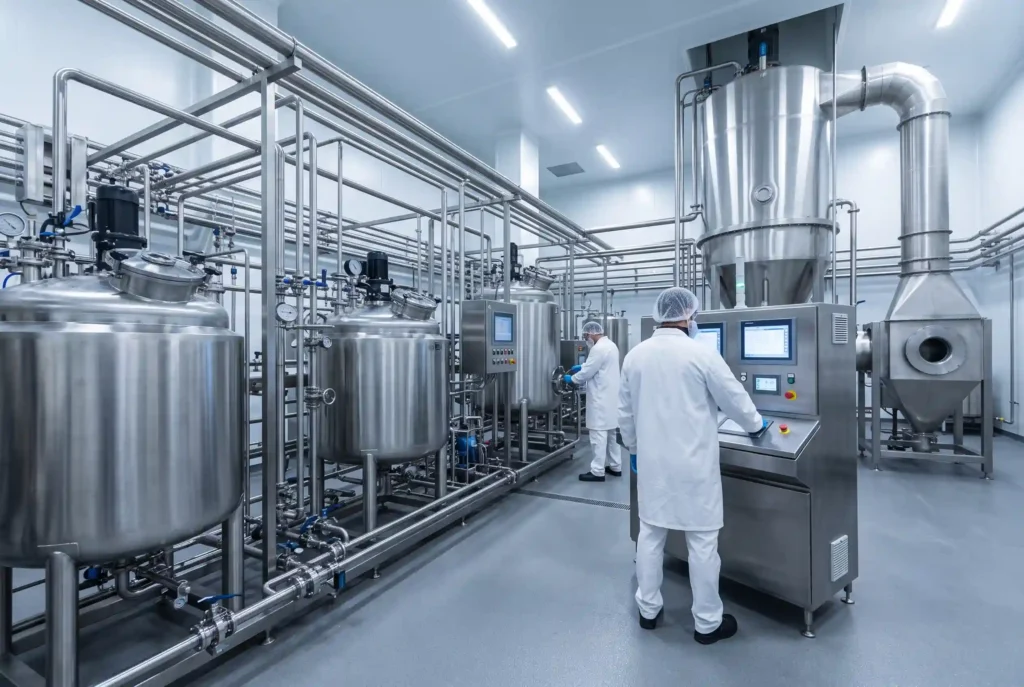
From Bones to Powder: The Extraction Process
For businesses sourcing chicken bone broth protein in powdered form, understanding the extraction process helps evaluate supplier quality. The production process involves several critical steps:
Hydrolysis is the key technology. Research has shown that optimized hydrolysis protocols can recover 79–86% of the protein from bone-rich poultry by-products.
Enzymatic hydrolysis breaks down collagen and other proteins into bioactive peptides. This step determines the final molecular weight of the protein, which directly affects solubility, digestibility, and application performance.
Filtration and concentration remove excess sodium, fats, and other non-protein components. This is particularly important for formulators who want a neutral-tasting ingredient that works in both savory and sweet applications.
Spray drying converts the concentrated liquid into a stable powder form, extending shelf life, reducing shipping costs, and giving formulators maximum flexibility.
Protein yield depends on the extraction method, raw material type, and processing conditions. Studies have shown that depending on the extraction method, 6.7–17.6% of total protein can be recovered from poultry by-products. Advanced processing techniques can push these numbers higher.
Powder vs. Liquid: Which Form to Choose?
The choice between liquid chicken bone broth and chicken bone broth protein powder depends on application, logistics, and formulation requirements.
Liquid Chicken Bone Broth
Provides 8 to 10 grams of protein per cup
Ready to use, familiar taste and texture
Suitable for soups, sauces, and ready-to-drink products
Heavy to ship, requires refrigeration, shorter shelf life
Chicken Bone Broth Protein Powder
Highly concentrated: typically 90%+ protein vs. 8–10% in liquid form
Longer shelf life: up to 3 years with proper storage
Lower shipping costs: lightweight and compact
Greater formulation flexibility: can be reconstituted to any desired protein concentration
Cleaner label: no added water, fewer preservatives
For most commercial applications—sports nutrition, functional foods, dietary supplements, and pet food—powdered chicken bone broth protein is the more practical and cost-effective choice.
Key Specifications to Verify
When evaluating chicken bone broth protein suppliers, the following specifications should be verified:
Total Protein Content
Premium chicken bone broth protein powders typically achieve 90% protein or higher on a dry basis. Some manufacturers achieve protein purity of ≥ 97% with verified batch levels.
Molecular Weight Distribution
Molecular weight affects solubility, digestibility, and bioavailability. Research suggests that collagen peptides with molecular weights in the 3,000–5,000 Dalton range offer an ideal balance: they are cold-water soluble without clumping and are rapidly digested and absorbed.
Sodium Content
Sodium is a critical consideration. Many bone broth powders contain high levels of salt, limiting them to savory applications. Low-sodium options (< 0.7%) offer greater formulation versatility, allowing use in sweet nutritional shakes, protein bars, and other products.
Heavy Metals
Bones can sequester heavy metals that may be released during extraction. Responsible suppliers test for lead, arsenic, and other contaminants. Industry standards typically require lead < 1.0 ppm and arsenic < 1.0 ppm.
Microbiological Purity
Total bacterial count should be below 1,000 CFU/g, with coliforms and E. coli negative.
Moisture Content
Moisture should be below 8.0% to prevent caking and extend shelf life.
Commercial Applications
Chicken bone broth protein has found its way into a growing range of industrial applications:
Sports Nutrition – Post-workout recovery products benefit from collagen-derived amino acids that support joint health and tissue repair. The rapid digestibility of low-molecular-weight peptides makes them particularly suitable for this category.
Functional Foods – Bone broth protein is added to soups, sauces, meal replacements, and ready-to-eat meals to boost protein content and improve nutritional profiles.
Dietary Supplements – Available in capsule, powder, and liquid forms, chicken bone broth protein is marketed for joint health, gut health, and skin health.
Medical Nutrition – For patients requiring easily digestible protein, bone broth protein offers a gentle option. The gelatin and amino acids are well-tolerated by sensitive digestive systems.
Pet Food – Premium pet food brands increasingly use bone broth protein as a palatable, nutritious ingredient.
Culinary Ingredients – Food service operators use bone broth as a base for soups, sauces, and braises, where the protein content adds body and richness.
Atnutra Chicken Bone Broth Protein
For businesses seeking a reliable source of high-quality chicken bone broth protein, Atnutra offers a premium solution. The chicken bone broth protein powder is manufactured through a traditional slow-simmered extraction process followed by advanced spray-drying technology, preserving the natural nutritional matrix of collagen, amino acids, and essential minerals.
Key product specifications:
Protein purity: ≥ 97% (verified batch: 97.45%)
Molecular weight: 3,000–5,000 Da for optimal solubility and bioavailability
Sodium content: < 0.7%, enabling use in both savory and sweet formulations
Heavy metals: Lead < 1.0 ppm, Arsenic < 1.0 ppm
Neutral flavor profile: Mild savory note that accepts chocolate, vanilla, and berry flavor systems
Naturally occurring compounds: Glucosamine, chondroitin, and hyaluronic acid retained from poultry cartilage and bones
Atnutra provides complete analytical COAs for every batch, ensuring formulation transparency and consistency. Bulk packaging features multi-layer moisture-proof liners for maximum shelf stability (up to 3 years).
Visit Atnutra Chicken Bone Broth Protein for detailed specifications, laboratory sample requests, and wholesale pricing inquiries.
Conclusion
So how much protein is in chicken bone broth? For most commercial products, the answer is 8 to 10 grams per cup, while homemade versions range from 6 to 15 grams depending on the recipe. This makes chicken bone broth a far better protein source than regular broth. Understanding the factors that affect protein content—bone-to-water ratio, simmering time, and processing methods—is key to ensuring quality and consistency. Atnutra provides verified chicken bone broth protein powder with full traceability.