Hydrolyzed Wheat Protein vs Keratin: Which One Delivers Better Results?
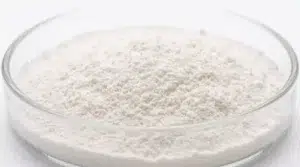
Hydrolyzed keratin is derived from animal keratinous tissues, primarily poultry feathers and sheep wool. Its defining characteristic is an exceptionally high cysteine content, typically ranging from 5% to 8% of total amino acids. Cysteine is a sulfur-containing amino acid that serves as the primary building block for keratin synthesis in hair, skin, and nails. The hydrolysis process breaks keratin into small peptides with an average molecular weight below 1,000 Da, with over 90% typically present as free amino acids and dipeptides. This small molecular size enables rapid absorption in the digestive tract, making hydrolyzed keratin particularly suitable for dietary supplements targeting hair growth, nail strength, and skin elasticity.
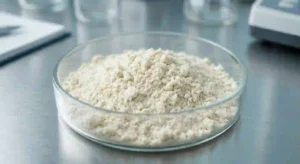
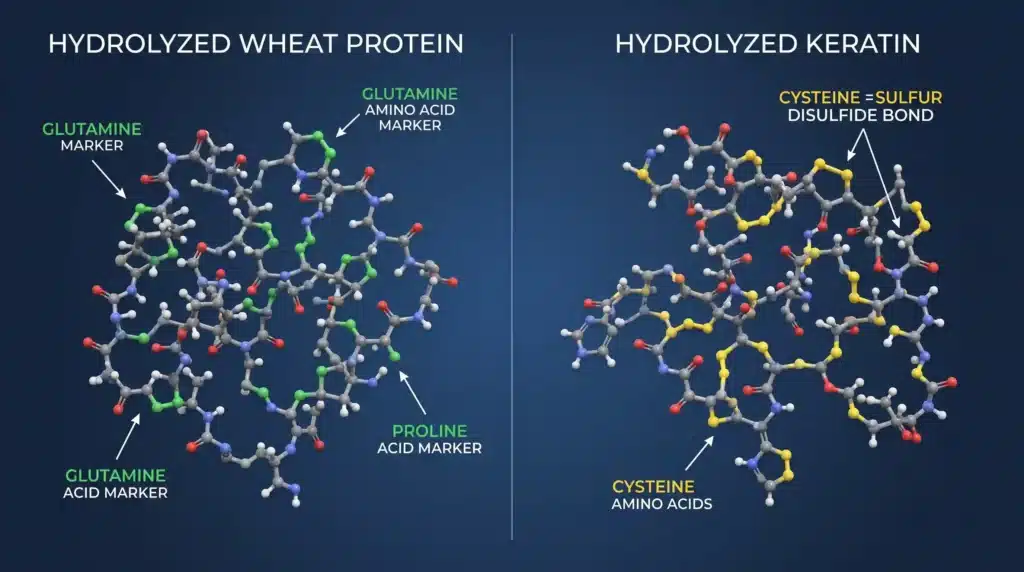
Hydrolyzed wheat protein comes from wheat gluten, a plant-based protein fraction. Its amino acid composition is dominated by glutamine (approximately 35%) and proline (approximately 15%), while cysteine constitutes less than 2% of the total. The peptide chains are larger, with molecular weights typically ranging from 1,500 to 3,000 Da. This larger size confers superior water-binding capacity, emulsification activity, and dough-conditioning effects. Hydrolyzed wheat protein is widely used in bakery products, protein beverages, plant-based meat analogues, and general nutritional fortification, where neutral flavour and cost-effectiveness are primary considerations.
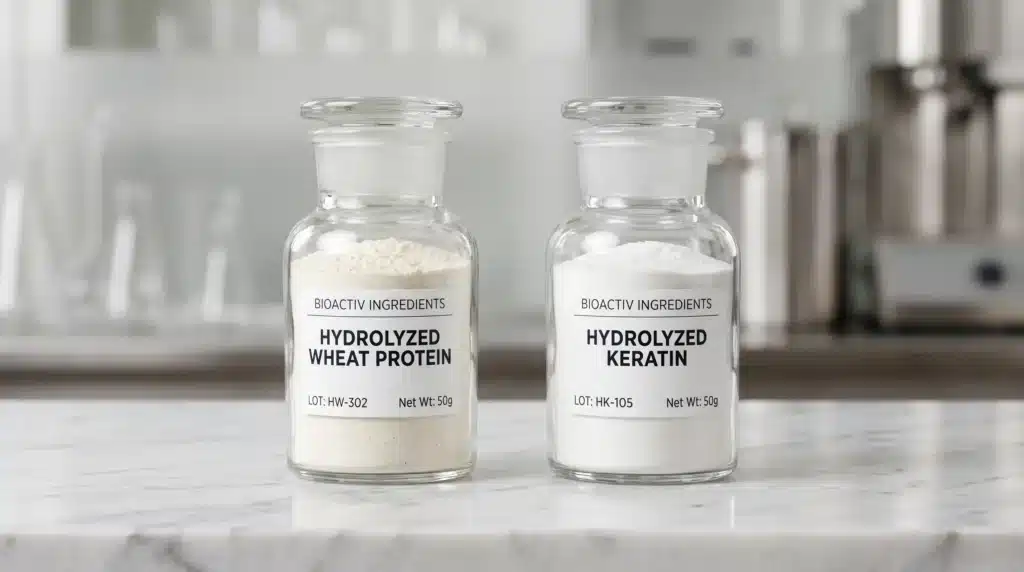
The selection between hydrolyzed wheat protein vs keratin depends on the specific product objectives, nutritional targets, and market positioning. Neither is inherently superior; each excels in distinct application areas. Throughout this comparison, the hydrolyzed wheat protein vs keratin decision will be examined across multiple technical dimensions to guide your choice.
1. Sources: Hydrolyzed Wheat Protein vs Keratin Starting Materials
| Parameter | Hydrolyzed Keratin | Hydrolyzed Wheat Protein |
|---|---|---|
| Source material | Poultry feathers, sheep wool | Wheat gluten |
| Origin classification | Animal-based | Plant-based |
| Hydrolysis approach | Chemical reduction + enzymatic hydrolysis | Enzymatic hydrolysis |
| Production complexity | Higher (requires breaking disulfide bonds) | Lower (direct enzymatic treatment) |
| Typical yield | Moderate | High |
Keratin is structurally robust due to extensive disulfide cross-linking. Therefore, the production of hydrolyzed keratin requires a preliminary chemical reduction step to cleave these bonds before enzymatic digestion can proceed. This additional processing step increases production time and cost. Wheat gluten lacks such cross-linking and is readily hydrolysed by proteases, resulting in a simpler and more economical manufacturing process.
When comparing hydrolyzed wheat protein vs keratin, the source difference is the first major distinction buyers encounter. The plant-versus-animal origin influences not only cost but also consumer positioning and regulatory labelling.
2. Molecular Weight: Hydrolyzed Wheat Protein vs Keratin Absorption Rates
| Parameter | Hydrolyzed Keratin | Hydrolyzed Wheat Protein |
|---|---|---|
| Average molecular weight | < 1,000 Da (typically ~600 Da) | 1,500 – 3,000 Da |
| Free amino acid content | Up to 94% | 10 – 30% |
| Peptide size range | < 6 kDa | 1 – 5 kDa |
| Intestinal absorption rate | Rapid | Moderate |
The molecular weight difference has direct physiological implications in the hydrolyzed wheat protein vs keratin comparison. Smaller peptides and free amino acids from hydrolyzed keratin are absorbed more quickly via intestinal peptide transporters, enabling faster systemic availability. This rapid absorption is advantageous for supplements where timely delivery of amino acids to target tissues is desired. The larger peptides in hydrolyzed wheat protein are absorbed more gradually, which may be suitable for sustained protein supplementation but less ideal for acute nutrient delivery.
For formulators seeking optimal bioavailability, the molecular weight threshold matters considerably. Products with average molecular weight strictly below 2,000 Daltons have been shown to bypass digestive bottlenecks more effectively, ensuring rapid absorption into the bloodstream. This is one of the most critical factors in the hydrolyzed wheat protein vs keratin decision.
3. Amino Acid Profiles: The Real Difference Between Hydrolyzed Wheat Protein and Keratin
| Amino Acid | Hydrolyzed Keratin (%) | Hydrolyzed Wheat Protein (%) |
|---|---|---|
| Cysteine | 5.0 – 8.0 | < 2.0 |
| Methionine | 2.0 – 3.0 | 1.0 – 1.5 |
| Lysine | 3.0 – 4.0 | 1.5 – 2.5 |
| Arginine | 4.0 – 6.0 | 2.0 – 3.0 |
| Glutamine | ~10 | ~35 |
| Proline | ~6 | ~15 |
| Total sulfur amino acids | High | Low |
This compositional divergence underpins the distinct nutritional functions of each ingredient. Cysteine is a conditionally essential amino acid that serves multiple critical roles: it is the rate-limiting substrate for keratin synthesis, a precursor for glutathione (the body’s primary endogenous antioxidant), and a component of numerous structural proteins. Hydrolyzed keratin provides cysteine in a readily absorbable form, directly supporting these physiological processes.
Hydrolyzed wheat protein, with its high glutamine content, supports intestinal barrier integrity, immune cell function, and muscle protein synthesis. Glutamine is the preferred fuel for enterocytes and lymphocytes, making this ingredient valuable for products targeting gut health or post-exercise recovery. Proline, another abundant amino acid in wheat protein, contributes to collagen synthesis and wound healing.
When evaluating hydrolyzed wheat protein vs keratin for specific health outcomes, the amino acid profile tells the whole story. The absence of cysteine in wheat protein makes it unsuitable for applications that require keratin synthesis support.
4. Functional Properties: Hydrolyzed Wheat Protein vs Keratin in Food Systems
| Property | Hydrolyzed Keratin | Hydrolyzed Wheat Protein |
|---|---|---|
| Water-holding capacity | Low | High |
| Oil-binding capacity | High (up to 9.4 g/g) | Moderate |
| Emulsifying activity | Moderate (≤49%) | High (≥60%) |
| Foaming expansion | High (>120%) | Moderate |
| Flavour profile | Brothy, slightly bitter | Neutral, mildly savoury |
| Heat stability | Good | Good |
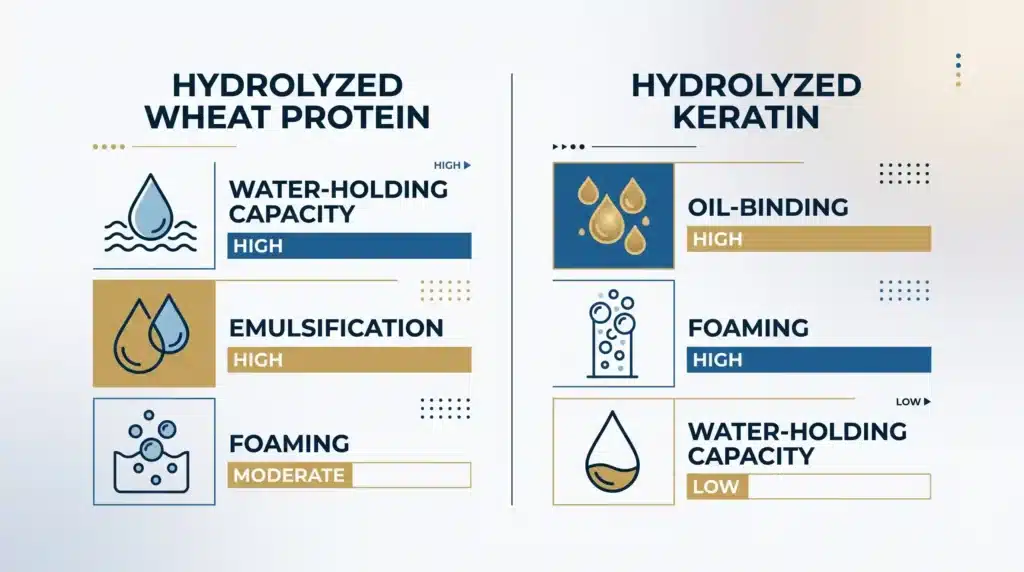
The functional performance of each hydrolysate is determined by peptide size, hydrophobicity, and amino acid sequence. In the hydrolyzed wheat protein vs keratin matchup, these properties often dictate the final application.
Water-holding capacity: The larger peptides and high glutamine content of hydrolyzed wheat protein enable it to form hydrated networks that trap water effectively. In bakery applications, this translates to improved dough handling, increased loaf volume, and extended shelf life through retarded staling. Hydrolyzed keratin, with its predominantly small peptides, does not form such networks and contributes minimally to water retention.
Oil-binding capacity: Hydrolyzed keratin demonstrates notable lipophilic affinity, binding up to 9.4 grams of oil per gram of protein. This property is valuable in high-fat food systems such as meat analogues, sausages, and filled snacks, where oil retention enhances juiciness and flavour release. Hydrolyzed wheat protein binds less oil but remains functional in emulsified systems.
Emulsifying activity: Hydrolyzed wheat protein stabilises oil-water interfaces by reducing interfacial tension and forming cohesive films around dispersed droplets. It is effective in dressings, sauces, plant-based milks, and creamers. Hydrolyzed keratin, due to its small peptide size and high free amino acid content, shows lower emulsifying indices, typically below 50%.
Foaming properties: Keratin hydrolysates generate substantial foam volume, with expansion ratios exceeding 120% in some preparations. This makes them suitable for aerated confectionery, mousses, and protein fluffs. Wheat hydrolysates foam moderately but produce more stable bubble structures.
Flavour characteristics: Hydrolyzed wheat protein is valued for its clean, neutral flavour profile, which allows incorporation into delicate formulations without significant taste modification. Hydrolyzed keratin often carries a characteristic brothy or slightly bitter note derived from sulfur-containing compounds released during hydrolysis. Flavour masking systems are typically required for keratin-containing products, adding formulation complexity and cost. However, advances in processing have yielded keratin hydrolysates with neutral sensory profiles—white to light yellow powders with no pungent odour and minimal taste impact.
Understanding these functional differences is essential when choosing between hydrolyzed wheat protein vs keratin for specific applications. The decision often comes down to whether water binding or oil binding is more important for your product.
5. Digestibility: Hydrolyzed Wheat Protein vs Keratin Absorption Efficiency
| Parameter | Hydrolyzed Keratin | Hydrolyzed Wheat Protein |
|---|---|---|
| In vitro digestibility | Up to 90% | > 85% |
| Primary absorption form | Free amino acids, di/tripeptides | Peptides, free amino acids |
| Absorption kinetics | Rapid | Moderate to sustained |
| Nitrogen retention | High | High |
The extensive hydrolysis applied to keratin results in a highly digestible product despite keratin’s natural resistance to enzymatic breakdown. Keratins are composed of approximately 90% indigestible protein when intact, due to extensive disulfide cross-linking. Hydrolysis promotes the disruption of disulfide, peptide, and hydrogen bonds, allowing peptides to become digestible and amino acids absorbable. In vitro assays consistently show digestibility values exceeding 90% for commercial hydrolyzed keratin products. The predominance of free amino acids and small peptides ensures that most of the ingested protein is absorbed in the proximal small intestine.
Hydrolyzed wheat protein is also readily digestible, with values above 85% in standard assays. However, the larger peptide fraction undergoes more gradual hydrolysis by intestinal brush-border enzymes, leading to a more sustained release of amino acids into circulation. This slower absorption profile may be advantageous for products designed to provide prolonged amino acid availability, such as meal replacements or nighttime recovery supplements.
In the hydrolyzed wheat protein vs keratin comparison, digestibility is less of a differentiator than molecular weight and amino acid composition, but it still matters for specific formulation goals.
6. Clinical Evidence: Hydrolyzed Wheat Protein vs Keratin for Health Outcomes
Hydrolyzed keratin has been the subject of multiple randomised, double-blind, placebo-controlled trials. In a 90-day intervention study with healthy women, daily supplementation with 500 mg of keratin hydrolysate produced statistically significant improvements in hair brightness, reduced hair shedding, and increased nail growth rate compared to placebo. A separate randomised controlled trial evaluating a novel keratin hydrolysate from poultry feathers demonstrated measurable improvements in facial skin appearance, hair, and nails over 90 days. Bioavailable metabolites produced after oral keratin hydrolysate intake have been shown to promote fibroblast anabolic and repair functions, while reducing oxidative stress-linked ER stress, senescence, and apoptosis—supporting the use of keratin hydrolysate in nutritional approaches for skin health. Doses of both 500 mg and 1,000 mg daily have shown significant improvements in skin and hair parameters by 45 and 90 days.
The proposed mechanism involves the provision of cysteine for keratinocyte proliferation and differentiation, as well as the activation of β-catenin signalling pathways that promote the transition of hair follicles from telogen (resting) to anagen (growth) phase. These findings are consistent with the established role of sulfur amino acids in maintaining the structural integrity of keratin-rich tissues.
Hydrolyzed wheat protein has been investigated primarily for its effects on gut health and exercise performance. The high glutamine content supports intestinal barrier function by maintaining tight junction integrity and reducing inflammation in the gastrointestinal tract. In athletic populations, wheat protein hydrolysates have been shown to reduce markers of muscle damage and accelerate recovery following eccentric exercise. However, no evidence supports a specific effect of wheat protein on hair, skin, or nail outcomes, as it does not provide the cysteine required for keratin synthesis.
This clinical evidence is perhaps the most important factor in the hydrolyzed wheat protein vs keratin decision for supplement manufacturers. If the goal is beauty-from-within, keratin is the only choice.
7. Regulatory Status: Hydrolyzed Wheat Protein vs Keratin Compliance
| Aspect | Hydrolyzed Keratin | Hydrolyzed Wheat Protein |
|---|---|---|
| EU regulatory status | Complies with Directive 2002/46/EC (food supplements) | Novel food cleared; no special restrictions |
| US regulatory status | Generally Recognised as Safe (GRAS) | Generally Recognised as Safe (GRAS) |
| Allergen concerns | Low (hydrolysis removes intact proteins) | Gluten (residual peptides present) |
| Labelling requirements | None specific | Must declare wheat/gluten |
| Suitability for vegan products | No | Yes |
Hydrolyzed keratin from poultry feathers or wool is not classified as a novel food in the European Union and is permitted for use in food supplements under Directive 2002/46/EC. The hydrolysis process effectively removes intact proteins, resulting in a very low allergenic potential.
Hydrolyzed wheat protein must carry appropriate gluten labelling in jurisdictions with allergen declaration requirements. Although hydrolysis reduces the immunoreactivity of gluten peptides, residual epitopes may still trigger responses in individuals with coeliac disease or severe wheat allergy. Products marketed as gluten-free cannot contain wheat-derived ingredients unless specifically certified as gluten-free from the starting material.
When considering hydrolyzed wheat protein vs keratin from a regulatory perspective, the gluten issue is often the deciding factor for products targeting sensitive populations.
8. Application Guide: Hydrolyzed Wheat Protein vs Keratin by Product Type
| Product Category | Recommended Ingredient | Justification |
|---|---|---|
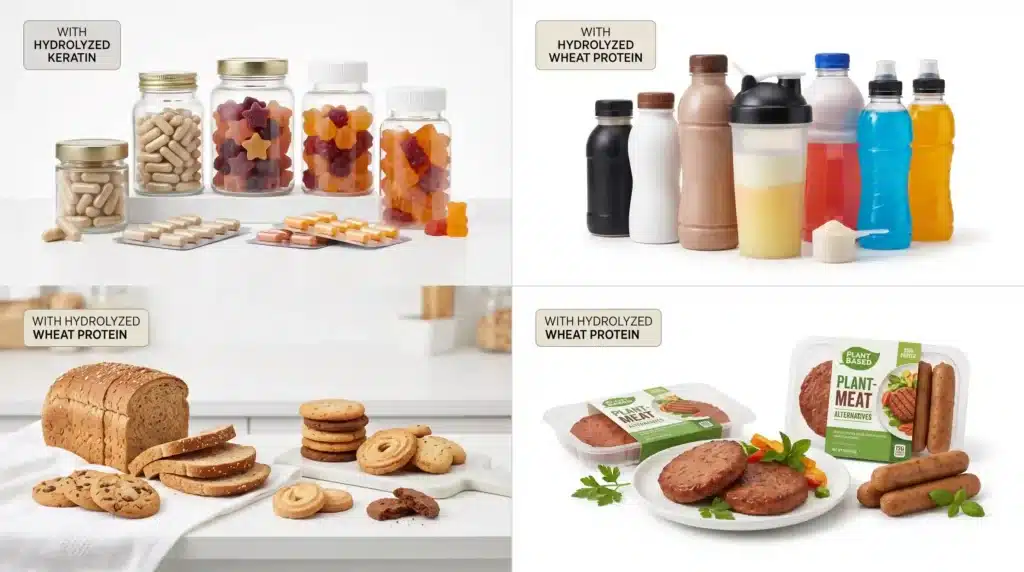
| Hair, skin, nail supplements | Hydrolyzed keratin | Provides cysteine; clinically documented efficacy |
| Protein shakes and sports drinks | Hydrolyzed wheat protein | Neutral flavour; good solubility; cost-effective |
| Bakery products (bread, biscuits) | Hydrolyzed wheat protein | Improves dough handling; water retention |
| Plant-based meat analogues | Hydrolyzed wheat protein (primary) + optional hydrolyzed keratin (for oil binding) | Wheat builds texture; keratin adds juiciness |
| Elderly nutritional supplements | Hydrolyzed wheat protein | Glutamine supports gut health; gentle digestion |
| Beauty functional ffoods/gummies | Hydrolyzed keratin | Rapid absorption; targeted benefits |
| Pet food formulations | Hydrolyzed keratin | Cost-effective protein from feather meal; high digestibility |
Combination products are also feasible. A typical approach uses hydrolyzed wheat protein as the bulk ingredient (70–90% of the protein fraction) with 5–10% hydrolyzed keratin added to enhance the sulfur amino acid profile and support beauty-related claims. Flavour management strategies must be implemented when keratin is included at detectable levels. This hybrid strategy is a popular outcome of the hydrolyzed wheat protein vs keratin analysis.
For manufacturers developing premium ingestible beauty products, sourcing high-quality hydrolyzed keratin with verified specifications is essential. Products with protein content ≥90%, average molecular weight strictly below 2,000 Daltons, and a neutral sensory profile provide the optimal foundation for supplement formulations. Atnutra supplies food-grade hydrolyzed keratin peptide powder engineered specifically for the dietary supplement industry, featuring ultra-low molecular weight for superior oral bioavailability, clean taste, and 100% water solubility.
9. Cost Considerations: Hydrolyzed Wheat Protein vs Keratin Pricing
Hydrolyzed wheat protein is significantly less expensive than hydrolyzed keratin, with a per-kilogram price differential of approximately 30–40%. This cost advantage reflects the lower raw material cost of wheat gluten and the simpler processing requirements. For high-volume applications such as bakery goods and beverage fortification, this price difference is often decisive.
However, the dosage requirements differ substantially. The effective daily dose for hydrolyzed keratin in supplements is typically 250–500 mg, whereas hydrolyzed wheat protein is often used at several grams per serving for protein enrichment. When calculated on a per-serving basis, the cost differential narrows considerably. Product developers should evaluate ingredient costs in the context of target dosage, not merely per-kilogram pricing.
When weighing hydrolyzed wheat protein vs keratin, both per-kilo and per-serving costs should be considered. The choice often shifts depending on whether you are formulating a low-cost bulk product or a premium targeted supplement.
Conclusion
Hydrolyzed keratin delivers high cysteine for hair, skin, and nail health—rapid absorption, clinically backed, but animal-derived and pricier. Hydrolyzed wheat protein offers a versatile, plant-based, cost-effective option with strong water binding and emulsification for bakery, beverages, and meat analogues. Neither replaces the other; the choice depends entirely on your application.