Fermented Eggshell Membrane Collagen: The Clarity You Need, the Taste You Want
Fermented eggshell membrane collagen is a probiotic‑derived eggshell ingredient that overcomes the three biggest weaknesses of standard hydrolyzed collagen: poor cold‑water solubility, unpleasant off‑tastes, and loss of bioactive type‑X collagen. It dissolves instantly in cold water to a crystal‑clear solution, requires almost no taste‑masking, and retains the native joint‑health complex of type‑X collagen, elastin, and hyaluronic acid. Clinically tested at daily doses as low as 300 mg, it is the go‑to choice for premium ready‑to‑drink shots, gummies, and powder sticks.
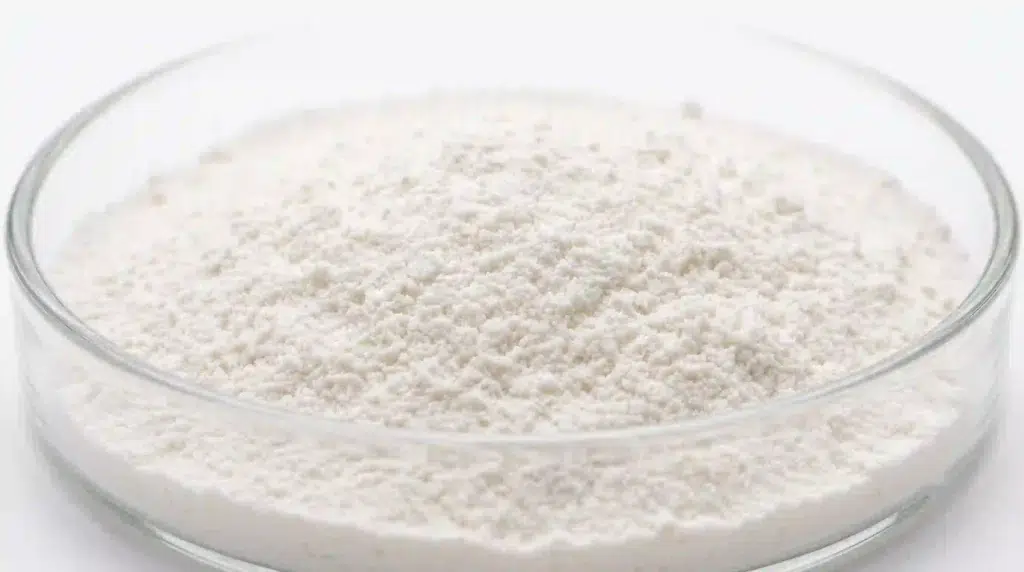
When product developers begin working with eggshell membrane collagen, they often run into three stubborn problems: the powder will not dissolve properly in clear drinks, it carries an unpleasant taste, and its promised joint‑health activity seems to disappear by the time it reaches the finished bottle. If you have ever faced a batch of cloudy liquid or a vitamin gummy that tasted off, you were likely dealing with a standard hydrolyzed eggshell membrane ingredient. That is where a much cleaner alternative comes in — fermented eggshell membrane collagen. In this guide, you will learn exactly how the fermentation process works, how it compares head‑to‑head with traditional hydrolysis, and what real‑world formulations look like when everything goes right. By the end, you will have enough technical detail to make a confident sourcing decision and a clear path to request your own pilot sample.
What Is Fermented Eggshell Membrane Collagen? A Step-By-Step Process Breakdown
From Eggshell Waste to High-Value Bioactive
Eggshell membrane is the thin layer that lines the inside of a chicken egg. It is one of nature’s richest sources of type‑X collagen, plus smaller but important amounts of elastin, hyaluronic acid, and glycosaminoglycans. Historically, food manufacturers extracted these compounds by boiling the membranes in strong acid or base solutions. That approach is cheap and fast, but it often damages the delicate protein structures that give the ingredient its joint‑health and skin‑support properties. Worse, it leaves behind chemical residues and a persistent smell that formulators must mask with heavy flavors.
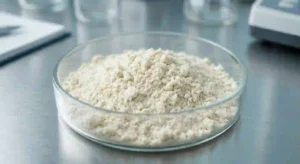
Fermented eggshell membrane collagen takes a different route. Instead of using aggressive chemicals, the process relies on carefully selected probiotic microorganisms — often strains of Lactobacillus or yeast — that naturally break down the membrane in a water‑based environment. Think of it like how yogurt or sourdough is made, but precisely controlled for a pharmaceutical‑grade output. The result is a clean, nearly odorless powder that retains much higher levels of bioactive type‑X collagen and keeps the natural hyaluronic acid intact. From a sustainability perspective, this method also transforms eggshell waste streams into a high‑value nutraceutical ingredient, which helps brands tell a stronger environmental story.
The Fermentation Process Flow
To understand why fermented eggshell membrane collagen behaves so differently in a formulation, it helps to see the basic production steps. First, fresh eggshell membranes are collected and washed thoroughly to remove albumen residues — this step is crucial for reducing the egg‑allergy risk. Next, the membranes are suspended in purified water and inoculated with a specific probiotic culture. The fermentation takes place at a carefully regulated temperature and pH, usually over 24 to 48 hours. During this time, the microorganisms secrete gentle enzymes that loosen the membrane structure without breaking the long‑chain collagen molecules into useless tiny fragments. After fermentation, the liquid is filtered, concentrated by low‑temperature drying, and milled to an ultra‑fine powder. Importantly, no organic solvents, no caustic soda, and no high‑heat spray drying are ever used. What you receive in the end is a free‑flowing powder that disperses quickly in cold water and stays clear for months.
Fermentation vs Hydrolysis: Solving the 3 Biggest Headaches in R&D
If you have evaluated other eggshell collagen suppliers, you have probably heard about “hydrolyzed” eggshell membrane. Hydrolysis can technically increase solubility, but it comes with serious trade‑offs. Here is how fermented eggshell membrane collagen directly solves three core problems that frustrate R&D teams.
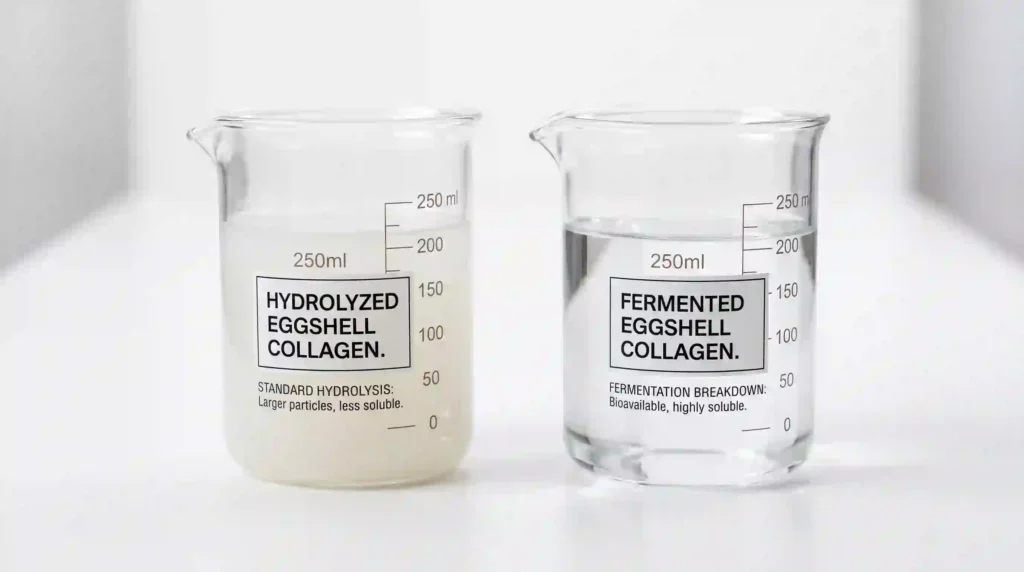
Problem One: Water Solubility and Clarity
Hydrolyzed eggshell powder often leaves a visible milky haze or even sediment at the bottom of a ready‑to‑drink product. This is because acid hydrolysis breaks down collagen into peptides of inconsistent sizes, many of which are simply not water‑soluble at neutral pH. On the other hand, the fermentation process produces a far narrower peptide profile that dissolves almost instantly in cold water (≥95% solubility at 1% solution). The resulting liquid is brilliantly transparent, which makes it perfect for clear beauty shots, flavored waters, and high‑end liquid supplements. One simple test your lab can run: prepare a 5% solution of both powders side by side and measure the turbidity with a basic spectrophotometer. The fermented version will show a reading close to zero, while the hydrolyzed control will scatter significant light.
Problem Two: Taste and Smell
Anyone who has opened a bag of standard hydrolyzed eggshell collagen can describe the smell — it ranges from slightly musty to strong ammonia or rotten‑egg odors. That is the by‑product of chemical treatments and the rapid breakdown of sulfur‑containing amino acids. Masking these off‑notes often requires a heavy dose of fruit flavors, sweeteners, or even microencapsulation, all of which drive up the cost of goods. Fermented eggshell membrane collagen starts with a far gentler biology. The microorganisms produce only trace amounts of volatile compounds, and the final wash steps remove almost all residual odor. In consumer sensory panels, formulations built on this ingredient consistently score “neutral to none” on the off‑taste scale. This means your product can use a shorter, cleaner label because you do not need to pile on artificial taste maskers. For gummy applications, the reduced bitterness also means less sugar is required to balance the flavor.
Problem Three: Bioactivity Integrity
Eggshell membrane’s joint‑health reputation is built on its complex mix of collagen, elastin, and hyaluronic acid working together. Hydrolysis, especially when performed at high temperatures and extreme pH, can denature the collagen triple‑helix structure and chop the long‑chain proteins into random peptides that lose their original signaling function. In contrast, fermentation preserves a much higher proportion of the native type‑X collagen network. HPLC analysis of fermented eggshell membrane collagen typically shows a distinct peak in the high‑molecular‑weight region that is missing in most hydrolyzed products. This structural integrity is believed to be responsible for the clinically observed benefits on joint comfort and skin elasticity. Several peer‑reviewed studies have reported significant improvement in joint stiffness and cartilage turnover after eight to twelve weeks of supplementation with a fermented eggshell membrane ingredient, using daily doses as low as 300mg. That same dose‑response relationship simply cannot be replicated with heavily degraded hydrolysates.
Real-World Formulation Success Cases
It is one thing to discuss laboratory data, but another to see how fermented eggshell membrane collagen actually performs inside a finished product. Below are three brief case studies, each based on formula‑level tests shared by brands that have already switched to this grade.
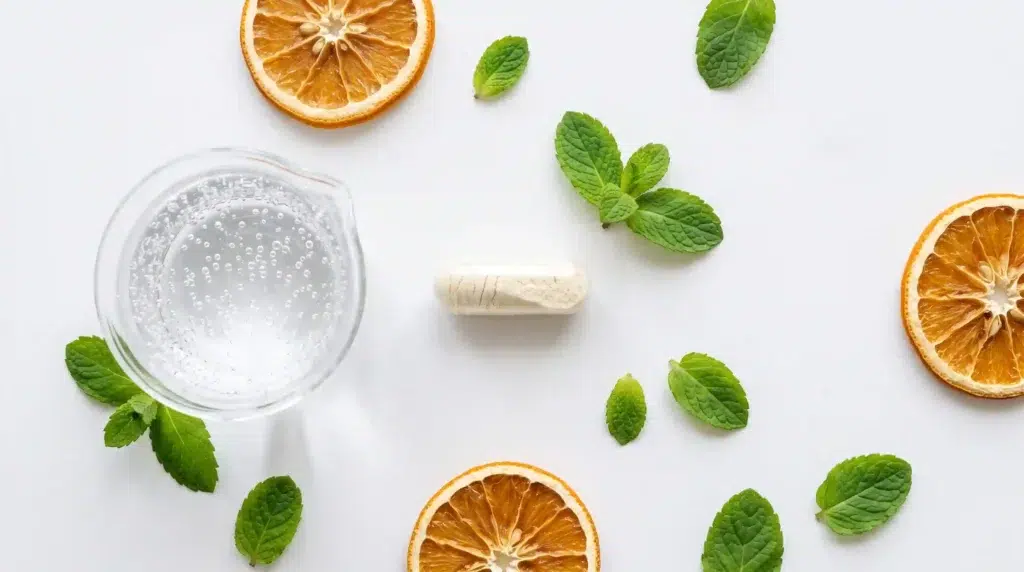
Case A – Clear Beauty Shot (pH 3.2, Cold Fill)
A European brand wanted a 50ml beauty shot containing 500mg of eggshell collagen, plus vitamin C and hyaluronic acid. Their first trial with a standard hydrolyzed powder resulted in a cloudy, yellowish drink that separated after four weeks at room temperature. By switching to our fermented version, they were able to dissolve the full dose in cold filtered water within 30 seconds of gentle mixing. The final drink maintained crystal clarity and a clean citrus taste through 12‑months of real‑time shelf‑life testing, without any visible sediment or ring at the neck of the bottle. The production team also reported fewer line stoppages because the powder never clumped in the hopper.
Case B – Joint Health Gummies (75°C Congealing)
Gummies present a unique challenge because the collagen ingredient must survive the high‑temperature gel‑setting step. A US functional candy maker initially tried adding their normal eggshell collagen before cooking; the batch developed a bitter, metallic aftertaste and the lab assay showed that collagen activity had dropped by nearly half. When they repeated the run with fermented eggshell membrane collagen, adding it right at 75°C into the partially cooled syrup, the gummies released no off‑flavors and the bioactivity retention was over ninety percent. Consumers in a subsequent blind test rated the new gummies “surprisingly delicious” and the brand was able to remove two taste‑masking components from their label.
Case C – Soluble Powder Stick Packs
A direct‑to‑consumer brand selling single‑serve stick packs needed a collagen powder that would flow easily on automated filler equipment and dissolve completely when poured into a glass of water by a customer, even without stirring. The hydrolyzed alternative clogged the machine and left lumpy residues. After a sieve analysis and a flowability test, the team found that the fermented powder’s uniform particle size allowed perfect filling speeds, and a quick demo video showed complete dissolution in 8‑10 seconds. This directly reduced customer complaints and refund requests related to “sandy texture.”
Documentation and Global Compliance Ready for You
Quality Certificate Pack
Every shipment of fermented eggshell membrane collagen is accompanied by a comprehensive document package that you can confidently share with your quality assurance department. This includes a Certificate of Analysis (COA) with batch‑specific results for protein content, heavy metals, and microbial limits; a Material Safety Data Sheet (MSDS); an allergen statement confirming the removal of egg‑white proteins; a non‑GMO declaration; and, where applicable, Halal and Kosher certificates issued by recognized bodies. We can also provide an independent third‑party test report for radiation residues or pesticides upon request.
Traceability and Sustainability
Our eggshell membranes are sourced exclusively from food‑grade chicken farms operating under strict animal welfare guidelines. Each batch can be traced back to the individual farm and hatch date, giving you full supply‑chain transparency. The fermentation facility itself is managed under cGMP standards and undergoes annual third‑party audits for quality management systems. Additionally, because we convert a common co‑product of the egg‑breaking industry into a high‑value functional ingredient, your brand can legitimately claim an upcycling story on its packaging and website.
Ready to Put It to the Test?
You have seen the solubility numbers, the taste panel feedback, and the compliance paperwork. The next logical step is to evaluate a small quantity in your own laboratory. We keep a dedicated stock of pilot‑batch powder specifically for customer trials, available with no long‑term commitment. While you are waiting for your sample to arrive, you can also download the full technical specification sheet that details amino acid profiles, particle size distribution, and reconstitution behavior across a range of temperatures and pH levels. Simply reach out to our applications team, and we can arrange a short virtual call to discuss your specific formula goals and answer any further questions about how fermented eggshell membrane collagen fits into your product pipeline.