What Is Type II Collagen?
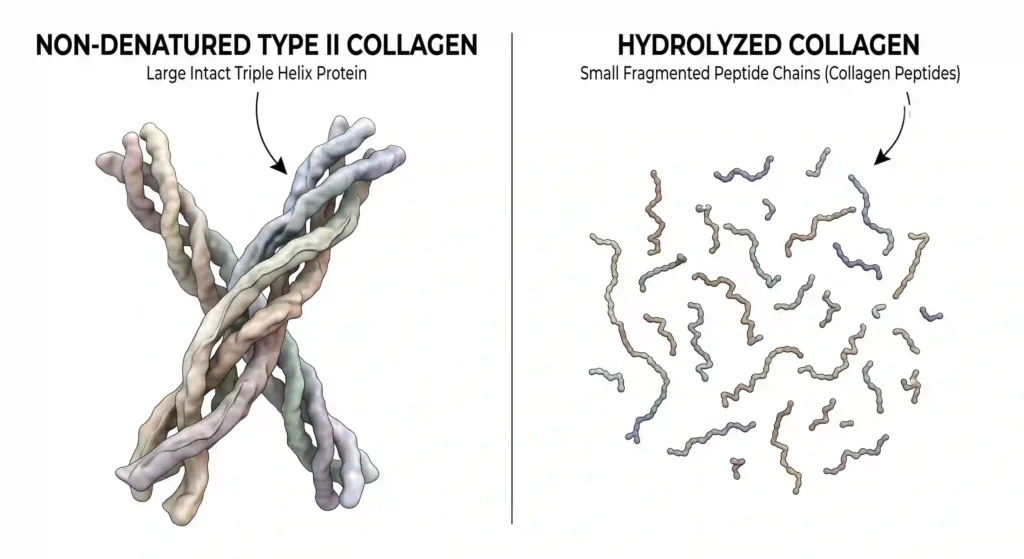
Type II collagen is the rope‑like structural protein that gives articular cartilage its load‑bearing strength. Sourced from chicken sternum cartilage, it reaches the supplement formulator in two functional states: non‑denatured, where the triple helix stays intact, and hydrolyzed, where the same protein has been cut into short, soluble peptides. That deceptively simple answer to “what is type 2 collagen” unfolds into a web of processing decisions, stability considerations, and analytical checks—all of which directly influence whether a finished product delivers on its label promises. 
Anyone searching for an answer to what is collagen type 2 will quickly find the terms collagen type ii, type ii collagen, and collagen type 2 used interchangeably. These naming differences reflect no meaningful chemical distinction, but they do hint at a larger reality: the raw material behind each jar of type II collagen powder is defined not just by its species of origin, but by every thermal, mechanical, and enzymatic step it endured along the way.
The Molecular Signature of Type II Collagen
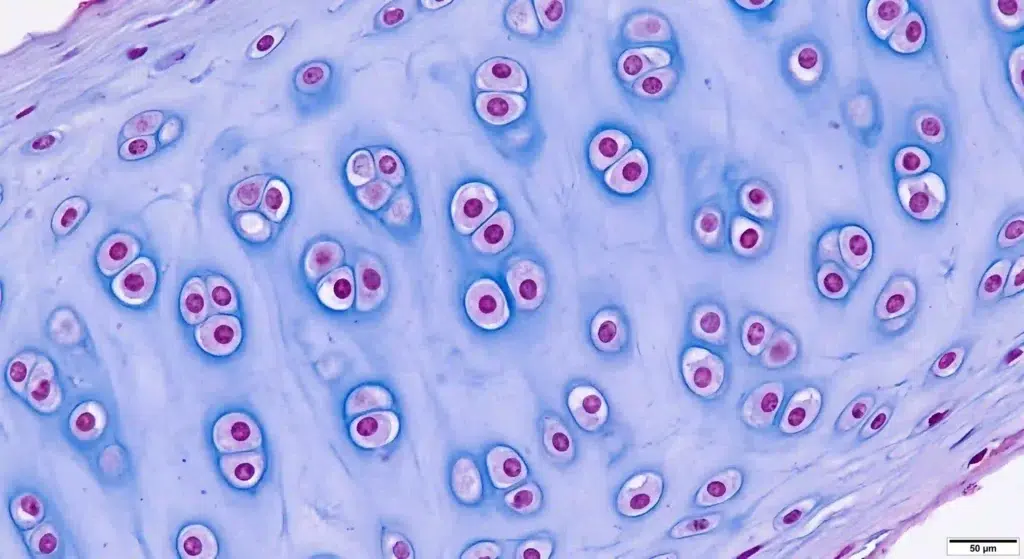
Collagen molecules are built around a triple‑helical rod, but what is type II collagen at the amino‑acid level? It is a homotrimer composed of three identical alpha‑1(II) chains. Every third residue in these chains is glycine, and the X‑position is frequently proline while the Y‑position carries hydroxyproline. This repetitive Gly‑X‑Y triplet fuels the tight winding that gives collagen its mechanical personality. The uniformity of the three chains—unlike the heterotrimeric architecture of type I collagen—creates a super‑coiled fibre with extremely regular spacing between cross‑linking sites. That regularity is one reason type II collagen can withstand decades of compression in a hip or knee.
Post‑translational modifications further shape the molecule. Prolyl hydroxylase and lysyl hydroxylase work on the nascent chains inside the cell, adding hydroxyl groups that stabilise the helix through hydrogen bonds. Outside the cell, galactosyltransferase and glucosyltransferase attach sugar moieties to specific hydroxylysine residues. These glycosylation events influence how nascent collagen molecules assemble into fibrils and how those fibrils later interact with proteoglycans. For a processor who wants to keep what is collagen type 2 in its native, bioactive conformation, those sugar tags are a silent quality indicator: harsh alkali or excessive heat strips them away, and once the glycosylation pattern is lost, the triple helix becomes far more prone to thermal denaturation.
Lysyl oxidase then oxidatively deaminates lysine and hydroxylysine residues in the telopeptide regions, creating aldehydes that condense into covalent cross‑links. The density of these cross‑links increases with the age of the bird, which is why cartilage from older chickens yields a type II collagen that is physically tougher and slower to hydrate. A supplier who controls flock age can tune the raw material to favour a specific grind‑ability or water‑holding capacity. Brands that ask about source‑age documentation gain a clearer picture of what is type 2 collagen is lot‑to‑lot, beyond the standard protein percentage.
From Sternum to Powder: The Full Manufacturing Path
The journey starts at the processing plant, where sternum cartilage is mechanically stripped of muscle, fat, and mineralised bone. What remains is a translucent, resilient tissue that must be cooled immediately to slow the activity of endogenous enzymes. Even a brief temperature spike during transport can initiate proteolysis, nibbling away at the telopeptides that anchor the triple helix. By the time the raw material enters the extraction suite, its initial quality already sets a ceiling on what is collagen type 2 could become in the final powder.
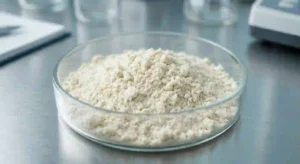
The processing path diverges at the grinding stage. For non‑denatured type II collagen, the cartilage is milled under ice‑cold water, often inside a jacketed grinding chamber that holds the temperature below 40°C. The resulting slurry passes through a train of sieves and low‑speed decanters that separate collagen fibrils from cell debris and residual fat. No enzyme touches this stream; every mechanical step is designed to preserve the native triple helix. After purification, the material is dried—usually by spray drying with a carefully balanced thermal profile, or by freeze drying when a customer specification demands the utmost in conformational preservation. The dry powder is then tested with conformation‑sensitive antibodies to confirm that the triple helix has survived intact.
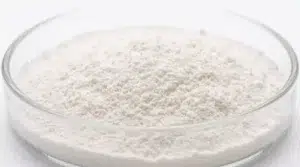
Hydrolyzed collagen type 2 follows a different blueprint. After a similar cold grind, the slurry is heated in a hydrolysis tank, where food‑grade proteases cleave the long alpha chains into shorter fragments. The temperature, pH, and enzyme‑to‑substrate ratio are all dialed in to achieve a target molecular weight distribution—commonly 2–5 kDa. When the hydrolysis reaches its end point, a rapid heat spike destroys the enzyme, and the peptide solution is clarified by filtration, concentrated under vacuum, and spray‑dried. The result is a fine, white powder that dissolves almost instantly in room‑temperature water. Swapping from one production route to the other on shared equipment creates a real risk of cross‑contamination: a trace of active protease in a non‑denatured batch can silently degrade the triple helix over the first few weeks of storage. Purpose‑built facilities that physically separate the two lines eliminate that risk at the source.
At Atnutra, our non‑denatured type II collagen and hydrolyzed type II collagen peptides are manufactured in dedicated suites under ISO 22000 and FSSC 22000 certification. Every batch is released against a full Certificate of Analysis that includes protein content, molecular weight profile, GAG quantification, heavy metal screening, and microbial limits.

Post‑Production Stability: Why Storage Conditions Matter
Once the powder leaves the dryer, the countdown to its eventual end‑use begins. Non‑denatured type II collagen is hygroscopic and thermally fragile; leaving it in a warm, humid warehouse will slowly convert a highly bioactive powder into ordinary collagen protein. This is why many producers ship non‑denatured material in vacuum‑sealed, foil‑lined bags with oxygen absorbers. Even after opening, the powder should be stored below 25°C and at relative humidity under 60%, and used within a few weeks if not immediately refilled into airtight containers. Any brand building a capsule product around non‑denatured what is type 2 collagen should budget for desiccant in the finished bottle and consider a cold‑chain distribution if shipping to tropical climates.
Hydrolyzed collagen type II peptides are far more forgiving, but they are not invincible. The peptide powder absorbs moisture from the air, and if the moisture content climbs above 8–10%, the powder can cake, leading to flow problems in high‑speed encapsulation or stick‑pack equipment. Caking also accelerates Maillard reactions if the formula contains reducing sugars, shortening the sensory shelf life. Stability protocols that track moisture uptake, colour, and solubility over 24‑month accelerated conditions give formulators the data they need to set realistic expiry dates and select appropriate packaging barriers.
Non‑Denatured vs. Hydrolyzed: The Choice That Shapes a Product
| Parameter | Non‑Denatured Type II Collagen | Hydrolyzed Type II Collagen Peptides |
| Temperature ceiling | Begins to denature above 40°C | Stable under typical food‑processing heat |
| Structural state | Intact triple helix with native cross‑links | Peptide fragments of 2–5 kDa average |
| Solubility in water | Forms a suspension; insoluble in practical terms | Readily soluble; yields a clear solution |
| Best‑fit dosage forms | Capsules, tablets, dry powder blends | Beverages, gummies, stick packs, dairy analogues |
| Typical active dose | As low as 40 mg of standardised material | 2–10 g per serving, depending on matrix |
| Key analytical method | Conformation‑specific ELISA | Size‑exclusion HPLC and standard protein assay |
| Moisture sensitivity | High; demands protective packaging | Moderate; controlled by drying and barrier film |
The two versions of type II collagen occupy distinct positions in a product portfolio. A non‑denatured capsule can sit in the premium joint‑health segment, supported by clinical data on oral tolerance. A hydrolyzed collagen type 2 drink mix or gummy, meanwhile, fits seamlessly into a broader wellness or beauty‑from‑within line, prioritising convenience and versatility. Neither is inherently superior; the decision rests on the target consumer, the manufacturing setup, and the story the brand wants to tell.
How to Read a Type II Collagen Certificate of Analysis
A one‑page COA can hide as much as it reveals if you only scan the protein number. The following markers tell you what is collagen type 2 powder in practical, useable terms.
Hydroxyproline‑based quantification. Kjeldahl nitrogen measurement can overestimate collagen content in cartilage‑derived powders because glycosaminoglycans also contain nitrogen. Amino‑acid analysis that quantifies hydroxyproline—a residue almost unique to collagen—gives a direct collagen read. A COA that reports both values provides the clearest picture of purity.
Molecular weight distribution (hydrolyzed only). A narrow, symmetrical peak on a size‑exclusion chromatogram signals consistent enzyme action and effective filtration. A broad shoulder on the high‑molecular‑weight side often means that large, undigested fragments remain, and these can precipitate out of a clear beverage within weeks. The supplier should be able to provide the chromatogram upon request, not just a summary number.
GAG and chondroitin sulfate levels. Native type II collagen carries a coating of proteoglycans, and the residual GAG content in the final powder typically falls between 2% and 8%. That percentage influences moisture uptake, electrostatic behaviour, and even the mouthfeel of a reconstituted drink. A fully stripped powder may behave differently in a formulation than one that retains its natural GAG complement, so knowing the number ahead of time avoids reformulation surprises.
Microbial and heavy‑metal limits. Aerobic plate count below 1,000 CFU/g, yeast and mould under 100 CFU/g, and absence of Salmonella and E. coli are industry baselines. Heavy metals—lead, arsenic, cadmium, mercury—must fall at or below the thresholds set by USP or EC regulations. Every batch should ship with an ICP‑MS report that lists these values explicitly.
Particle size and bulk density. These application‑specific parameters rarely appear on a generic COA, yet they govern how well the powder flows through an automatic encapsulator or disperses in a beverage. A bulk density of 0.35–0.55 g/mL is common for spray‑dried hydrolyzed type II collagen, but variations of even 0.05 g/mL can mean the difference between a capsule that hits its target fill weight on the first pass and one that requires constant equipment adjustment.
Formulating with Type II Collagen: Real‑World Points of Friction
The transition from raw powder to finished supplement rarely works exactly as planned on paper. Non‑denatured type II collagen, because of its heat and moisture sensitivity, demands that the blending room environment stay cool and dry. Some manufacturers pre‑condition the powder by holding it at 20°C and 30% RH for 24 hours before it enters the production stream, which improves flow consistency without sacrificing bioactivity. Adding an acidic excipient such as citric acid directly into the blend can slowly erode the triple helix over the product’s shelf life, so buffered fillers are often preferred even when they add a slight formulation cost.
Capsule filling with non‑denatured what is type 2 collagen also means watching the vibration settings on the encapsulator. Aggressive vibration can generate enough frictional heat to begin denaturing the protein at the powder‑metal interface. Swapping to a lower‑frequency fill cycle or using a vibratory feeder with cooling jackets often solves this problem without reducing line speed dramatically.
When the product format shifts to a gummy, the demands invert. Here, hydrolyzed collagen type 2 peptides must dissolve and remain stable in a hot sugar‑gelatin slurry before being deposited into starch molds. The peptide molecular weight determines how quickly it hydrates; a very fine powder hydrates fast but can clump, while a coarser granule wets more slowly yet disperses more evenly. The residual GAG content also influences gel strength, and a peptide with 5% GAG will often produce a slightly softer, more elastic gummy than one with 2% GAG. Getting the texture consistent batch after batch is part science, part art, and we have captured the key variables in our look at collagen type II gummy manufacturing, where temperature ramping and mould release are examined in detail.
Liquid formats bring their own list of challenges. Hydrolyzed type II collagen peptides that look perfectly clear in a water‑only solution can suddenly turn hazy when fruit extracts, mineral salts, or acidic preservatives are added. Tannins from green tea or grape seed extract are particularly prone to bind with peptides and form a slow‑settling sediment. The most efficient safeguard is a simple compatibility stress test: mix the planned formula at bench scale, hold it at 40°C for four weeks, and measure turbidity and pH weekly. If the product passes that accelerated regimen, it will likely remain stable through retail distribution. More solubility data and handling characteristics are available when we discuss type 2 collagen peptides in the context of ready‑to‑drink and powdered beverage applications.
Outside of individual ingredient behaviour, brands that work across collagen types often reach a point where they need to compare structural and functional profiles side by side. Type I collagen offers the tensile strength that skin and bone require, while type III often works in parallel with type I during early tissue repair. Type II collagen, with its homotrimeric helix and glycosylation pattern, is built for compressive environments. Choosing the right collagen—or combination of collagens—for a given product concept becomes much easier when the differences are laid out clearly. Our comparison of collagen type 1 vs 2 vs 3 walks through the application‑specific performance of each collagen class, which is particularly useful when building a multi‑collagen formula.
Regulatory and Market Access for Type II Collagen
What is collagen type 2 in a regulatory context varies slightly from one jurisdiction to the next, and the difference can shape both the product label and the logistics of international distribution. In the United States, type II collagen is generally sold as a dietary ingredient under the DSHEA framework, with structure‑function claims that must be supported by competent and reliable scientific evidence. The FDA does not pre‑approve such claims, but it does expect that a manufacturer has substantiation on file. For non‑denatured type II collagen, that substantiation often draws on randomised controlled trials examining oral tolerance mechanisms.
In the European Union, the picture is more prescriptive. Ingredients marketed for joint health frequently fall under the scope of the Nutrition and Health Claims Regulation (EC) No 1924/2006, which requires an EFSA‑approved health claim before any disease‑risk‑reduction or specific health benefit language can appear on pack. While no proprietary claim has yet been authorised specifically for non‑denatured type II collagen, many brands position their products under generic “maintenance of normal joint function” narratives, using careful wording that does not overreach the claim boundaries. Hydrolyzed collagen type II peptides often appear as a source of protein rather than as a bioactive ingredient, which is a simpler compliance route but may sacrifice some marketing differentiation.
Markets in Southeast Asia and Latin America frequently model their regulations on Codex Alimentarius guidelines or on the frameworks of major trading partners. A supplier that can deliver region‑specific documentation—translated COAs, certificates of free sale, and detailed allergen and origin statements—removes the largest friction point for brands looking to expand into new territories. At Atnutra, our documentation package is designed to streamline customs clearance and regulatory review in over 20 countries.
The Bigger Picture for Ingredient Strategy
Type II collagen is far more than a powder derived from chicken cartilage. It is a protein whose functional identity rests on precise handling—from the abattoir cold chain through extraction and drying, all the way to the final blend room. Understanding what type 2 collagen is means understanding that process, reading the data that accompanies each batch, and matching the correct form to the intended product experience. The brands that put that understanding into practice are the ones that deliver consistency, differentiation, and long‑term consumer trust.