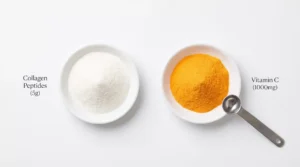
If you take 5–10 grams of hydrolyzed collagen peptides every day, you can expect to feel your skin becoming more hydrated and comfortable within 4 to 6 weeks. For visible improvements like smoother texture, less noticeable fine lines, and firmer, bouncier skin, the most consistent changes appear between 8 and 12 weeks of continuous use. This timeline is grounded in multiple clinical studies, but your personal experience can shift depending on your age, your overall nutrition, and the quality of the collagen you are actually ingesting.
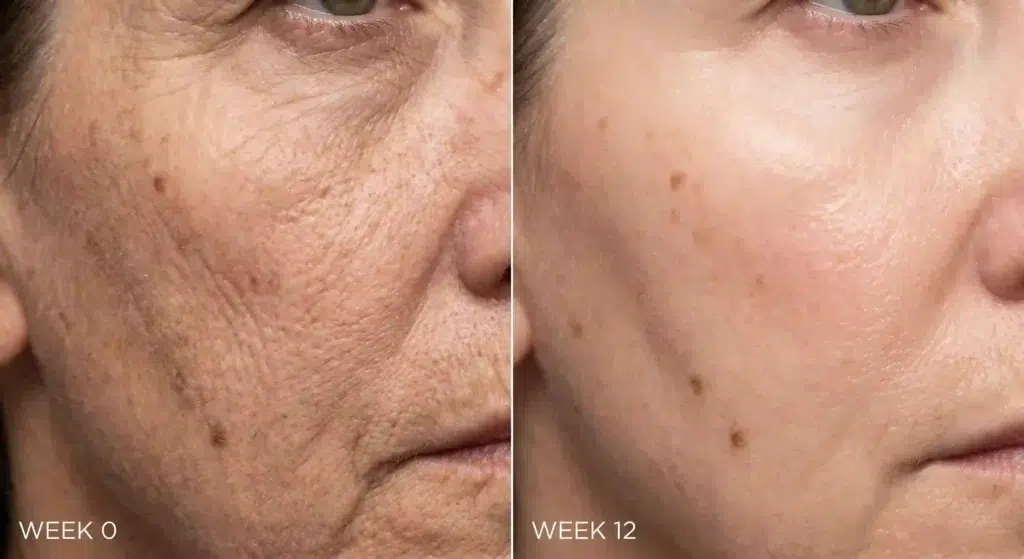
What to Expect: A Week-by-Week Collagen Timeline
| Time Period | What’s Happening Inside Your Skin | What You May Notice |
|---|---|---|
| Weeks 1–2 | Peptides enter circulation; fibroblasts begin to receive the “build” signal. Collagen synthesis slowly ramps up. | No visible change yet. Some people report slightly softer skin due to initial hydration support. |
| Weeks 3–4 | New collagen fibrils start to form in the dermis. The skin’s moisture barrier improves measurably. | Skin feels more supple and holds moisture better. Dryness or tightness may decrease. |
| Weeks 5–8 | Collagen density begins to increase visibly in imaging studies. Existing fragmented collagen is partially repaired. | Early texture improvements: skin looks smoother. Fine lines around eyes and mouth appear softened. |
| Weeks 8–12 | Dermal collagen network is significantly more organised. Elastin and hydration continue to improve. | Visible reduction in wrinkle depth. Firmer, bouncier skin. More even tone and glow. |
| Beyond 12 weeks | Ongoing maintenance. Collagen turnover stays elevated while daily supplementation continues. | Benefits are sustained and may gradually increase, especially when paired with sun protection and vitamin C. |
Walk into any beauty aisle and you will see collagen everywhere — powders, capsules, ready-to-drink shots, even collagen-infused coffee creamers. The promise is always the same: younger-looking, plumper, more radiant skin. But after the first few sips, almost everyone circles back to the same question — how long does it take for collagen to start working? The table above gives you a clear map. What follows explains why that timeline exists and how you can make your own results show up as quickly as possible.
Why Collagen Takes Time: The Biology of Slow and Steady Skin Repair
Collagen is a protein that forms a dense, fibrous network in the dermis — the middle layer of your skin. Think of it as the mattress springs that keep your skin firm and bouncy. Over time, due to ageing, sun exposure, and lifestyle factors, those springs wear out. The body’s own collagen production slows down, and the existing collagen becomes fragmented.
When you swallow hydrolyzed collagen peptides, they are broken down into small amino acid chains during digestion. These peptides travel through your bloodstream and reach the skin. There, they provide two things: the specific amino acids (especially glycine, proline, and hydroxyproline) that fibroblasts need to build new collagen, and a signaling effect that tells those same fibroblasts to increase production. In essence, you are giving your skin both the bricks and the instruction manual to repair and rebuild.
However, this process is not instant. Your skin’s natural turnover cycle — the time it takes for new cells to rise to the surface — is about 28–40 days in younger adults, and even longer as you age. Collagen peptides work in rhythm with this cycle. You need at least one full cycle before the early signs of increased hydration become measurable, and a couple more cycles before the deeper structural proteins reorganise enough to visibly reduce wrinkles. That is the biological foundation for the collagen peptides visible results time frame.
Clinical Evidence: The Science Behind the Timeline
| Study Summary | Collagen Type & Daily Dose | First Measurable Change | Most Noticeable Results |
|---|---|---|---|
| Asserin et al. (2015) — women aged 40–65 | 10 g hydrolyzed fish collagen | 4 weeks (skin hydration) | 8 weeks (wrinkle reduction), 12 weeks (elasticity) |
| Proksch et al. (2014) — women aged 35–55 | 2.5 g or 5 g specific collagen peptides | 4 weeks (improved hydration and elasticity) | 8 weeks (significant wrinkle reduction) |
| Kim et al. (2018) — adults with photoaged skin | 1 g low-molecular-weight peptide | 6 weeks (improved hydration, roughness) | 12 weeks (visible wrinkle improvement, elasticity) |
| Choi et al. (2019) — women with crow’s feet | 1.6 g collagen tripeptide | 4 weeks (slight fine line improvement) | 12 weeks (significant crow’s feet reduction) |
A clear pattern emerges: when someone asks how long does collagen take to work on skin, the skin’s moisture barrier and comfort typically improve within the first month. For “before and after” worthy changes, the collagen peptides visible results time frame usually falls between the 8th and 12th week of consistent use. While a few studies used very low doses, the majority of effective protocols use five to ten grams per day.
Key Factors That Shape Your Personal Results Timeline
| Factor | How It Affects the Timeline | Actionable Tip |
|---|---|---|
| Age & skin condition | Older skin with more collagen loss shows dramatic contrast but may take slightly longer; younger skin sees subtle, fast hydration. | Use before‑and‑after photos to track gradual changes you might otherwise miss. |
| Daily dosage | Below 5 g can work but often extends the timeline. Most effective clinical protocols use 5–10 g. | Start with 5 g and increase to 10 g if tolerated well. Never skip days. |
| Consistency | Skipping doses resets the peptide signal and leaves the skin without building blocks. | Attach collagen to a daily habit: coffee, smoothie, or oatmeal. |
| Vitamin C intake | Without vitamin C, enzymes that synthesize collagen work at a reduced rate. | Take collagen with citrus, berries, or a formula that already includes vitamin C. |
| Lifestyle (smoking, sugar, sun) | All three accelerate collagen breakdown, making it harder to see net gains. | Pair collagen with daily SPF and limit high-sugar foods and smoking. |
| Collagen type & quality | Poorly hydrolyzed collagen is less absorbable. Marine Type I often has a tighter molecular profile for skin, while high‑quality bovine is also effective. | Look for transparent specifications on molecular weight and amino acid content. A supplier should be able to provide this data — examine the peptide specs for marine collagen as a benchmark of what to expect. |
| Delivery form | Powders and liquids absorb slightly faster than capsules, but the difference shrinks over 12 weeks. | Pick the format you will actually use every single day. |
Among the factors listed above, ingredient quality is the one that can completely override everything else. If you are taking a poorly hydrolyzed collagen or a powder padded with fillers, you are essentially waiting for results that may never come. That is why, whether you are a consumer or a brand, it pays to understand what sits behind the label. For instance, a marine collagen peptide with a consistently low molecular weight below 3000 Daltons and a protein content above 90% will reliably deliver the amino acids your skin needs — which is why we openly share the technical data for our own marine collagen peptides. The better the peptide profile, the more closely your personal timeline will match the clinical research.
The vitamin C connection is another point worth lingering on. You can take the finest peptide powder every morning, but if your body lacks vitamin C, the enzymes that manufacture collagen simply cannot work at full speed. This is why some of the most effective collagen supplements come pre‑blended with vitamin C, and why a simple piece of fruit alongside your dose can actually shorten the time it takes for collagen to start working on your skin.
The Best Way to Take Collagen for Your Skin
Putting all the science and timelines together, here is a straightforward routine that gives you the best chance of seeing results within the collagen peptides visible results time frame:
- Use hydrolyzed collagen peptides — not gelatin or whole collagen. Only the hydrolyzed form is broken down into absorbable chains.
- Take 5–10 grams daily — this is the sweet spot supported by clinical research for skin hydration, elasticity, and wrinkle reduction.
- Pair it with vitamin C — a piece of fruit or a vitamin‑C‑enriched formula gives your fibroblasts the critical cofactor they need.
- Build an unbreakable daily habit — morning coffee, afternoon tea, evening smoothie. Attach it to something you already do without thinking.
- Document your progress — a simple selfie under the same lighting every four weeks will reveal changes that the mirror hides.

For product developers, these same points can be transformed into clear on‑pack instructions and educational content. When a customer knows exactly how to use the product and when to expect results, they are far more likely to stay loyal — and far less likely to return the product after a week.
Does Collagen Actually Help Your Skin? Answering the Skeptics
Given the sheer amount of marketing noise, it’s fair to ask does collagen actually help your skin. The evidence from multiple double‑blind, placebo‑controlled trials says yes — when you use the right type at the right dose. Collagen peptides work by providing the specific amino acids glycine, proline, and hydroxyproline that skin fibroblasts use to synthesize new collagen, and by sending signaling peptides that upregulate the whole process.
People also wonder whether does collagen intake help skin more than simply eating a high‑protein diet. While a protein‑rich diet supports overall tissue health, it does not flood the body with the unique amino acid profile found in collagen. So the effect is genuinely different. Similarly, questions like does consuming collagen actually help skin when you eat it through food (like bone broth) have a nuanced answer: bone broth does contain collagen, but it is not hydrolyzed, meaning the molecules are much larger and less absorbable. A concentrated peptide supplement is far more efficient — so yes, does eating collagen really help skin when it’s in peptide form; less so when it’s just in food.
Another layer: does eating collagen actually help skin compared to topical creams? Topical collagen cannot cross the skin barrier to reach the dermis where the scaffolding sits. Oral ingestion is the only way to directly influence the deep collagen network from the inside out. And when someone asks does ingesting collagen actually help your skin even if they are young, the answer is still positive — results may look like a sustained, healthy glow rather than dramatic wrinkle reversal, but prevention is always easier than repair.
Ingredient Quality: The Silent Driver of Every Success Story
The timeline tables and clinical studies assume one thing: that the collagen being consumed is of high quality. When a brand cuts corners with poorly processed raw materials, the timeline stretches, results become unreliable, and customers rightly ask “why isn’t this working?” This is where a reliable sourcing partner makes all the difference. When we work with brands, we encourage them to look beyond the basic specification sheet and into the full sourcing and quality documentation — because the origin, hydrolysis process, and third‑party purity data are what ultimately determine whether the product delivers on its promise.
The most important quality indicators to check include:
- Protein content above 90% — confirms you are paying for collagen, not maltodextrin or fillers.
- Consistent molecular weight below 3000 Daltons — smaller peptides are absorbed better and trigger stronger fibroblast responses.
- Neutral taste, no off‑odors, and undetectable heavy metals — indicators of clean manufacturing and high‑grade raw materials.
- Full traceability — knowing exactly where the collagen comes from (wild‑caught fish, grass‑fed cattle) builds consumer trust and brand authenticity.
- Enzymatic, tightly controlled hydrolysis — leads to a peptide profile that the body can actually use, rather than one that gets excreted too quickly or absorbed poorly.
When these quality pillars are in place, the customer’s collagen peptides visible results time frame becomes predictable and aligns with the published research — which is exactly what builds repeat purchases and word‑of‑mouth referrals. Many brands we work with also choose to accelerate their product development by starting with our pre‑formulated collagen peptide blends for skin health, which are designed to deliver the right dose, taste, and absorption profile right out of the gate. Whether you are launching a new SKU or upgrading an existing formula, having the peptide work done properly at the ingredient level removes the biggest variable from the equation.
Common Myths That Derail Collagen Expectations
“I’ll see results in a week.” Even the fastest‑acting peptides must work in sync with the skin’s natural renewal cycle. Realistically, noticeable wrinkle softening takes around two to three months.
“Collagen creams do the same thing.” The collagen molecule is far too large to pass through the outer layer of skin. Creams can provide surface moisture but cannot rebuild the deeper dermal matrix.
“I’m young, so I don’t need it yet.” Collagen production starts declining as early as age 25. Early supplementation is like investing in a retirement fund for your skin.
“All collagen powders are basically identical.” The source, hydrolysis process, purity, and molecular weight vary enormously. The right powder will quickly prove does collagen actually help your skin; a cheap one will leave users doubting the whole category.
Conclusion
So, how long does it take for collagen to start working? For most consistent users, the skin begins to feel more hydrated and comfortable within the first month. By the second month, texture starts to smooth. By the third month, firmness improves and fine lines look softer. This pattern is not a marketing invention — it is the clinical reality when high‑quality collagen is taken correctly.
For brand owners, the message is simple: source well, educate your customers honestly, and give them a clear roadmap of what to expect. When a customer’s own experience matches the collagen peptides visible results time frame you’ve described, they become your most powerful advocates. Whether you need marine, bovine, or custom blends, you can request samples and technical specifications directly — so that your brand’s collagen story is built on a foundation that works as fast as biology allows.