Quick Answer
Does collagen actually work for joint health? Yes, multiple clinical trials support its efficacy. The best choices for joint formulations are undenatured type II collagen (typically at a 40 mg/day dose) and hydrolyzed collagen peptides (5–10 g/day). Both are highly effective but operate through entirely different mechanisms. Symptomatic relief—such as a 20–40% average reduction in pain scores—typically begins to manifest within 8 to 12 weeks of consistent use. For supplement brands, choosing the right collagen for joint health depends entirely on your targeted delivery format, unit costs, and target market. This guide provides the complete decision-making framework.
Key Takeaways
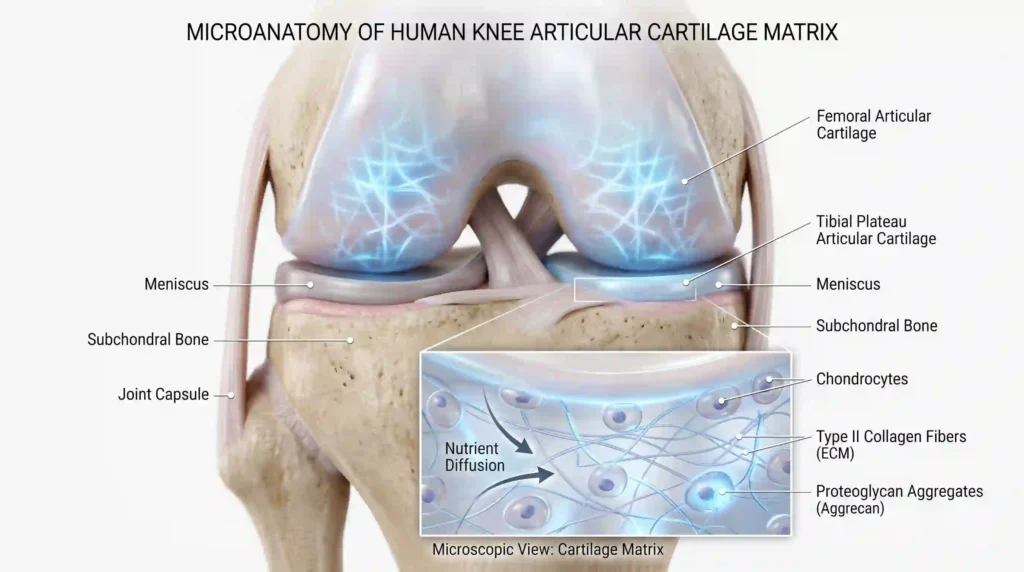
- Over 90% of the collagen found within articular cartilage is Type II.
- Hydrolyzed collagen peptides provide amino acids and act as bioactive peptide signals to stimulate cartilage synthesis.
- Undenatured type II collagen works via oral immune tolerance, modulating the immune system to protect endogenous cartilage.
- Clinical evidence is moderate to strong, but proper formulation relies on clinical dosages (5–10 g for peptides vs. 40 mg for undenatured Type II).
- Formulation choices directly impact product costs and permissible marketing claims.
The global joint health supplement market is experiencing unprecedented growth, with projections estimating a valuation of over $12 billion by 2027. This surge is largely driven by an aging demographic and the widespread prevalence of joint conditions; for example, roughly 528 million people worldwide are affected by osteoarthritis. To capture this growing consumer base, formulators are under immense pressure to source efficacious, science-backed ingredients.
While collagen was once pigeonholed as a nutricosmetic for skin and hair, its validated role in cartilage repair has transformed it into a cornerstone of modern joint health formulations. However, navigating a saturated raw material market filled with varied collagen types, extraction methods, and conflicting claims remains a complex challenge for supplement brands.
This guide covers everything you need to know about formulating with collagen for joint health—from mechanisms of action and clinical evidence to procurement, dosing, and safety. Before comparing specific ingredient grades, however, we must first establish why this protein is so foundational to the joint architecture itself.
What Is Collagen and Why Does It Matter for Joints?
Collagen as the Structural Foundation of the Body
Collagen accounts for roughly 30% of the total protein in the human body, serving as the primary component of the extracellular matrix.
| Collagen Type | Primary Location | Core Function |
|---|---|---|
| Type I | Skin, tendons, ligaments | Tensile strength and structure |
| Type II | Articular cartilage | Compression resistance and joint cushioning |
| Type III | Skin, blood vessels | Elasticity and early tissue repair |
While Type I is abundant throughout the body, Type II holds a special, dominant position in maintaining healthy joints.
The Role of Collagen in Articular Cartilage
Articular cartilage is a highly specialized connective tissue. The collagen fibril network (predominantly Type II) provides essential tensile strength, while proteoglycans trap water to give cartilage its shock-absorbing properties. In a healthy joint, collagen makes up approximately 60% of the dry weight of cartilage. Mechanical stress and oxidative damage degrade this network over time, impairing the joint’s ability to function smoothly.
Age-Related Collagen Decline and Joint Discomfort
After age 25, the body’s natural collagen synthesis rate steadily declines. This slowdown means the articular cartilage matrix cannot renew itself fast enough to keep up with daily wear and tear. Supplementing with exogenous collagen offers a scientific solution: providing either the direct substrate for repair or the cellular signals necessary to trigger endogenous production.
To achieve these structural and signaling benefits, brands must select the appropriate raw material. The market primarily categorizes these ingredients into three specialized forms.
Types of Collagen Used in Joint Supplements
Hydrolyzed Collagen Peptides (Type I & III)
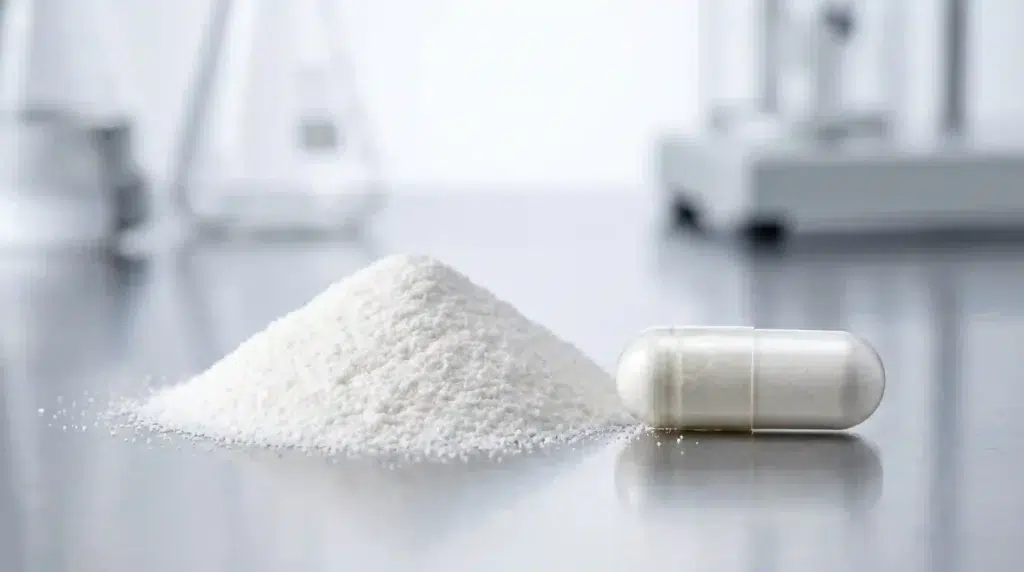
Extracted from bovine, porcine, or marine sources, this collagen undergoes enzymatic hydrolysis to break down long protein chains into low-molecular-weight peptides (typically 2–5 kDa). Highly standardized collagen peptides have proven effective for joint health by supplying the exact amino acid sequences needed for cartilage support. They are highly soluble and ideal for powders and beverages.
Undenatured Type II Collagen
Sourced primarily from chicken sternum cartilage, this form undergoes a gentle, low-temperature extraction process that preserves its native triple-helix structure and biological activity. It requires an exceptionally low dose, making it the premier choice for small capsules and tablets.
Hydrolyzed Type II Collagen (Chicken Collagen Peptides)
This is a middle ground: sourced from chicken cartilage but enzymatically hydrolyzed. It partially retains some Type II-specific peptide fragments and is a great differentiator for targeted joint powder formulas.
Which Type Is Best for Joint Health?
There is no absolute “best collagen for joints”—only the best choice for your specific product brief. Undenatured Type II is highly targeted and requires a low dose, perfect for dedicated joint capsules. Hydrolyzed peptides are the top choice for multi-functional beauty-and-joint powders where larger serving sizes are expected.
| Collagen Type | Source | Processing | Standard Dose | Ideal Format |
|---|---|---|---|---|
| Hydrolyzed Peptides | Bovine, Marine, Porcine | Enzymatic hydrolysis | 5–10 g | Powders, gummies |
| Undenatured Type II | Chicken sternum | Low-temp extraction | 40 mg | Capsules, tablets |
| Hydrolyzed Type II | Chicken sternum | Enzymatic hydrolysis | 2–3 g | Powders, softgels |
Selecting the right type of collagen is only the first step; understanding how each type functions biologically allows brands to make accurate, compliant claims. The mechanisms of action vary drastically depending on the ingredient’s molecular structure.
How Does Collagen Work for Joints? Mechanisms of Action
Amino Acid Substrate Hypothesis (Hydrolyzed Peptides)
When hydrolyzed collagen is ingested, it is broken down into specific amino acids (proline, glycine, and hydroxyproline). Isotope-tracing studies show these peptides cross the intestinal barrier, enter the bloodstream, and accumulate directly in articular cartilage, providing the raw materials needed for structural repair.
Bioactive Peptide Signaling
Beyond providing building blocks, specific di-peptides (such as Pro-Hyp) act as potent signaling molecules. They bind to receptors on chondrocytes (cartilage cells), stimulating the synthesis of new Type II collagen and proteoglycans, while simultaneously reducing levels of cartilage degradation biomarkers.
Oral Immune Tolerance (Undenatured Type II)
Undenatured Type II works entirely differently. Because its 3D structure is intact, it interacts with Peyer’s patches in the gut-associated lymphoid tissue. This interaction induces regulatory T-cells which migrate to the joints and release anti-inflammatory signals. This suppresses the immune system’s attack on the body’s own articular cartilage.
Comparative Summary Table
| Mechanism Feature | Hydrolyzed Peptides | Undenatured Type II | Hydrolyzed Type II |
|---|---|---|---|
| Site of Action | Cartilage matrix | Gut Lymphoid Tissue | Cartilage matrix |
| Key Molecules | Pro-Hyp, Gly-Pro | Native 3D epitopes | Amino acids + GAGs |
| Expected Effect | Matrix synthesis | Immune modulation | Synthesis & lubrication |
While the theoretical mechanisms—whether providing structural substrates or modulating immunity—are compelling, a raw material’s true value lies in its real-world efficacy. Fortunately, robust clinical data supports these biological theories.
Clinical Evidence: Collagen for Joint Pain and Osteoarthritis
Hydrolyzed Collagen Peptides in Human Trials
Research consistently validates the use of hydrolyzed peptides for joint discomfort. For example, a 12-week study (Zdzieblik, 2017) on athletes using 5g of specific collagen peptides showed a significant reduction in activity-related knee pain. Another 6-month trial (Benito-Ruiz, 2009) administering 10g of collagen hydrolysate to patients with knee osteoarthritis demonstrated significant improvements in joint comfort and mobility.
Undenatured Type II Collagen in Human Trials
The low-dose efficacy of undenatured Type II is equally well documented. A landmark 180-day trial (Lugo, 2016) compared 40mg of undenatured Type II collagen against a standard Glucosamine + Chondroitin combo. The collagen group experienced a 33% reduction in overall pain scores, outperforming the traditional joint ingredients.
What Results Can Consumers or Brands Expect?
Consumers should expect an 8 to 12-week timeline before experiencing significant relief. The best results are generally observed in populations with mild to moderate baseline joint discomfort.
Translating these clinical successes into a commercial product, however, requires strict adherence to evidence-based dosing. Including merely a “fairy dusting” of collagen will not replicate clinical trial results.
Collagen Dosage for Joints: Evidence-Based Recommendations
Hydrolyzed Collagen Peptides: How Much Per Day?
The clinically validated dosage ranges from 5 to 10 grams daily. This higher volume is required because the peptides must survive digestion, enter the bloodstream, and reach the joint matrix in high enough concentrations to trigger cellular signaling.
Undenatured Type II Collagen: Low Dose, High Response
The standard, clinically proven dose is precisely 40 mg per day. Because it acts as an immune trigger rather than a nutrient substrate, increasing the dose does not enhance the effect. Formulators must ensure their raw material is verified for biological activity, not just gross weight.
Can You Take More? Safety and Upper Limits
Hydrolyzed collagen is a safe protein source; large doses are generally well-tolerated but may cause mild bloating. For undenatured Type II, taking more than 40mg provides zero additional benefit and needlessly increases formulation costs.
Even at these full clinical doses, collagen remains an exceptionally well-tolerated ingredient. However, as with any dietary supplement, formulators must be aware of potential side effects and supply chain vulnerabilities.
Safety and Side Effects of Collagen Supplements
Commonly Reported Side Effects
Collagen is generally recognized as safe (GRAS). The most common side effects are mild gastrointestinal distress, such as bloating or a feeling of fullness. Allergic reactions are rare but possible with marine or bovine sources.
Quality Concerns: Heavy Metals, Contaminants
For B2B buyers, safety starts in the supply chain. Raw materials can carry heavy metals or biological contaminants if improperly processed. Always require third-party testing, complete Certificates of Analysis (COAs), and heavy metal screening before purchasing.
Securing a safe, high-quality ingredient is essential, but integrating it profitably requires strategic formulation. This is where many brands stumble, falling into the trap of overcrowded ingredient profiles.
Collagen Synergy Cost-Benefit Analysis for Joint Formulas
The Pitfall of “Kitchen Sink” Joint Formulas
Many joint supplements feature 8 to 10 active ingredients squeezed into a 2-gram serving size. The mathematical reality is that it is impossible to include clinical doses of all these ingredients in a standard capsule. Consumers are increasingly shifting away from this “label dressing” and toward products that offer clinically relevant doses of core ingredients.
Marginal Benefit Analysis of Common Joint Ingredients
| Ingredient | Clinical Dose | Est. Cost / Serving | Synergy with Collagen |
|---|---|---|---|
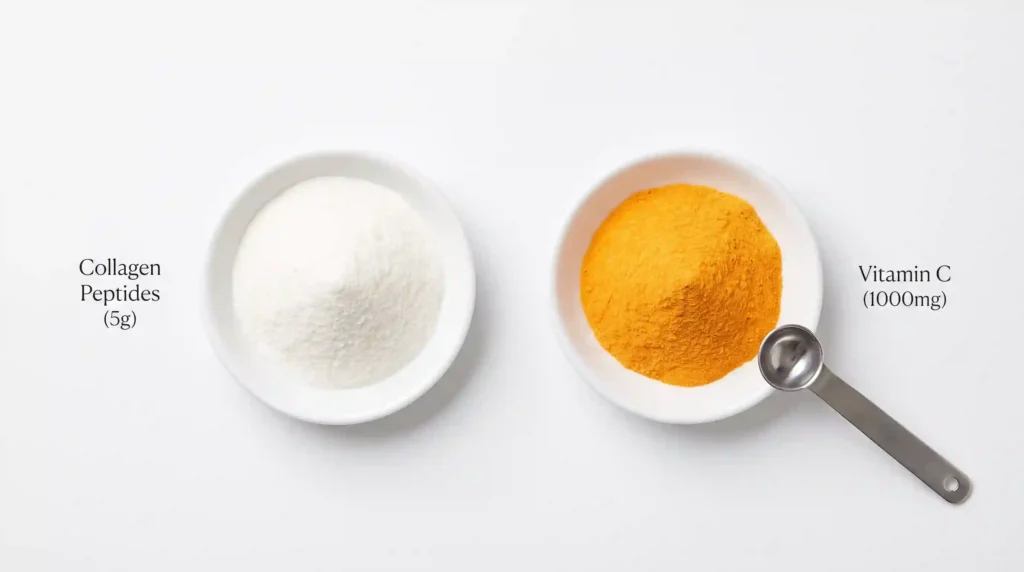
| Vitamin C | 50–100 mg | Low | Excellent: Crucial for collagen synthesis |
| Hyaluronic Acid | 80–200 mg | Moderate | Good: Supports joint lubrication |
| MSM | 1.5–3 g | Moderate | Low: Requires too much capsule space |
The “Less Is More” Argument from Consumer Reviews
Top-rated joint health products prioritize ingredient efficacy over ingredient quantity. By anchoring your formula with a full clinical dose of collagen and pairing it with low-cost, high-synergy cofactors like Vitamin C, you protect your brand’s gross margins while delivering superior consumer results.
Once the formula’s economic structure is optimized, the final step is vetting and securing the raw material itself. Choosing the right B2B supplier goes beyond just comparing price per kilogram.
How to Choose a Collagen Ingredient for Your Joint Supplement
Ingredient Type and Clinical Support
Your delivery mechanism dictates your choice. Powders and gummies require the high solubility of hydrolyzed peptides, whereas capsules are best suited for undenatured Type II. It is crucial to partner with a supplier that provides raw materials with robust clinical backing and verifiable biological activity.
Formulation Format Considerations
Manufacturing limitations must also be considered. Gummy manufacturing requires high heat, meaning undenatured Type II cannot be used, as its delicate 3D structure will denature and become useless. Hydrolyzed peptides, however, are highly heat-stable.
Supplier Qualifications and Certifications
Ensure your wholesale supplier can provide GMP, ISO, and GRAS certifications. Depending on your target market, Halal and Kosher certifications can also significantly expand your product’s global appeal.