Choosing between a complete and an incomplete protein is one of the first technical decisions a supplement developer faces. Whether you are creating a collagen beauty shot, a plant-based protein powder, or a ready-to-drink meal shake, this choice will affect everything from label claims to product stability. Below we explain the difference in simple terms, show when an incomplete protein is actually the smarter option, and offer a clear framework for making the right decision.
What does “complete” vs “incomplete” protein mean?
Your body needs 20 building blocks called amino acids to construct tissues like muscle, skin, and bone. Eleven of them can be produced internally; the other nine, known as essential amino acids (EAAs), must come from your diet.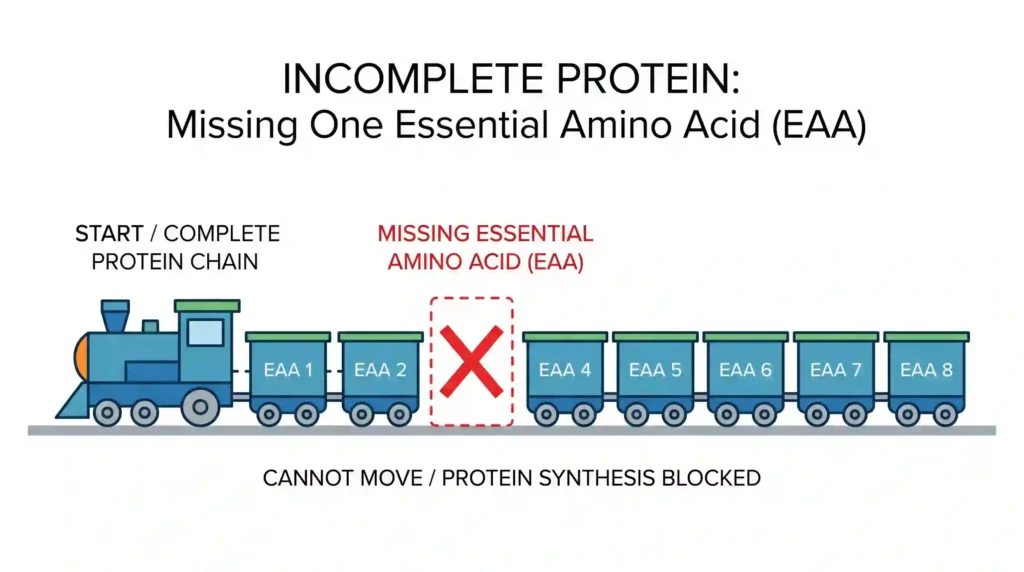
A complete protein provides all nine EAAs in quantities that the body can use. Examples include whey, eggs, and soy.
An incomplete protein has a shortage of at least one essential amino acid. Pea protein is low in methionine, rice protein lacks enough lysine, and collagen contains no tryptophan at all.
Think of it as a train: all nine cars must be present to set the train in motion. If one car is missing, the train cannot depart. Similarly, if a protein is missing an essential amino acid, your body cannot use the remaining eight to build new tissue efficiently.
Why an incomplete protein can be the ideal ingredient
At first glance, it might seem that only complete proteins are useful. But in oral supplement development, many of the most successful products are built around incomplete proteins — especially collagen peptides.

Collagen is the most common ingredient in beauty-from-within beverages and joint health supplements. It lacks tryptophan, making it a classic incomplete protein. Yet it remains the backbone of nearly every leading skin drink in Asia and Europe. The reason lies in its unique functional properties:
- Bioactive peptides – During digestion, collagen releases small peptide fragments (like prolyl-hydroxyproline) that travel to the skin and stimulate the body’s own collagen and elastin production. This targeted signaling mechanism does not require a full set of EAAs.
- Superior clarity – Collagen peptides dissolve in water to form a crystal-clear solution, even at high concentrations. This is critical for premium-looking RTD bottles.
- Neutral taste and heat stability – Collagen introduces virtually no flavour, allowing light fruity profiles without heavy masking. It also survives hot-fill pasteurization without clouding.
If you were to replace collagen with a complete plant protein (like a pea‑rice mix) in a clear beauty shot, you would likely end up with a cloudy, earthy‑tasting liquid that forms sediment over time. In this scenario, the incomplete protein wins not despite its nutritional “flaw,” but because of its practical advantages.
The same principle applies to other functional products. For example, our hydrolyzed collagen peptides enable a product to make a credible beauty claim while simplifying manufacturing — a combination that most complete proteins cannot match. Similarly, marine‑sourced collagen peptides offer comparable clarity and bioavailability, and they are particularly favoured in premium skincare formats where a subtle differentiation matters.
When does a product really need a complete protein?
The situation changes if your product is marketed as a meal replacement, a muscle recovery drink, or a daily protein source — especially if its label already says “high protein” or “complete amino acid profile.” In these cases, the amino acid gap becomes a legal and nutritional liability.
Regulatory agencies in markets such as the U.S., EU, and China do more than check whether all nine EAAs are present. They evaluate the protein quality score, typically the PDCAAS (Protein Digestibility‑Corrected Amino Acid Score) or DIAAS. Collagen receives a PDCAAS of zero because it lacks tryptophan. That means, under FDA rules, collagen’s protein cannot be counted toward the % Daily Value on a Nutrition Facts panel. A beverage containing 10 grams of total protein — 9 from collagen and 1 from whey — would legally be able to declare only 1 gram of protein. It could not claim to be a “good source of protein,” even if the amino acid profile looked acceptable on a spreadsheet.
Therefore, whenever a complete protein claim is required, a single incomplete source will not suffice.
How to create a complete protein system
The solution is to blend two or more protein sources that have complementary amino acid profiles. When combined, their respective deficiencies cancel out, resulting in a mixture that qualifies as complete.
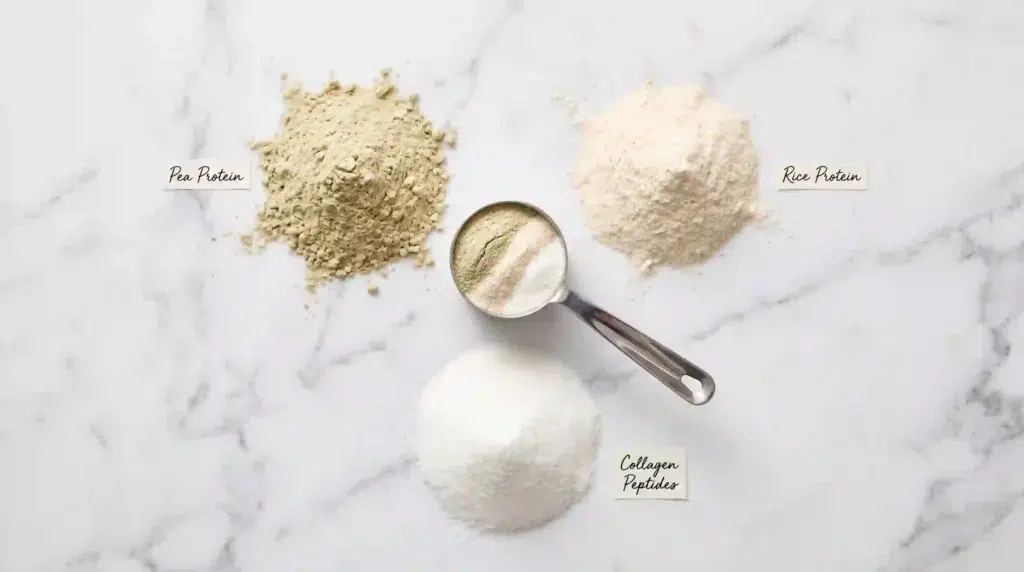
Here are three proven combinations used in commercial products:
- Collagen + Whey – Whey supplies tryptophan, histidine, and other EAAs that collagen lacks. A common ratio is 60‑70% whey to 30‑40% collagen. The whey carries the protein quality score, while the collagen delivers the bioactive peptides and keeps the sensory profile cleaner than a pure whey product.
- Pea + Rice (vegan) – Pea is low in methionine; rice is low in lysine. A blend of roughly 70% pea and 30% rice yields a balanced amino acid pattern that qualifies as complete.
- Collagen + free‑form EAAs – In markets like Japan and Korea, formulators keep a drink clear by using collagen as the base and adding small amounts of pure tryptophan, histidine, and methionine. This avoids the cloudiness that comes with mixing different whole proteins.
Important: Before finalizing any blend, always request a weighted amino acid profile from your supplier and verify the overall PDCAAS or DIAAS of the finished product. Adding just a pinch of whey or a single free amino acid to collagen will not rescue the protein quality score — the majority of the protein must come from a high‑quality source.
Manufacturing realities that many guides skip
A perfect amino acid balance on paper means nothing if the product becomes gritty, bitter, or unstable during processing. Here are three common problems and how to avoid them:
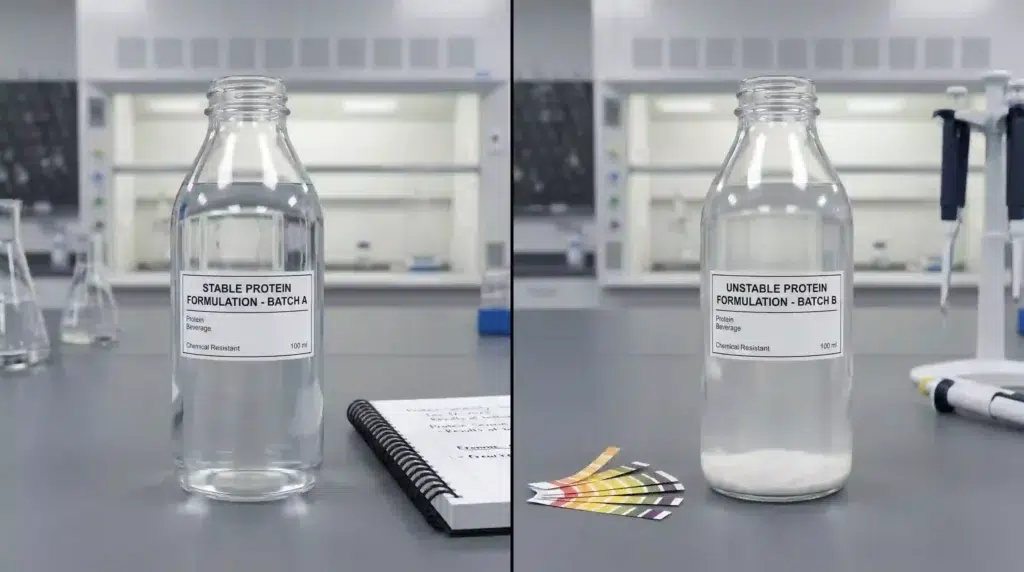
- Sediment in collagen‑whey RTDs – In acidic beverages (pH 3.5–4.0), whey proteins and collagen peptides can carry opposite electrical charges and form a fine sediment when heated. To prevent this, use a very low‑molecular‑weight collagen, hydrate it fully before adding whey, and fine‑tune the pH. Always run a hot‑fill pilot batch — not just a benchtop cold mix.
- Bitterness in complete plant blends – At serving sizes above 15‑20 grams, pea‑rice mixtures often develop an earthy, metallic bitterness that is hard to mask. Adding a small amount of collagen peptides (3‑5% of total powder) can soften this bitterness and improve mouthfeel without introducing a dairy note. Many hybrid beauty‑protein powders use this trick.
- Instability of free amino acids – Free tryptophan and methionine can degrade under heat or UV light and may react with sugars to produce off‑flavors over shelf life. Always request stability data from the amino acid supplier and test the final product in its intended packaging under accelerated conditions.
How leading brands approach the label
A look at the top‑selling nutricosmetics from Korea, Japan, and Europe reveals a clear pattern: almost none of them emphasize “complete protein” on the front label. Instead, they highlight:
- “10,000 mg collagen peptides”
- “Clinically tested for skin hydration”
- “With elastin and hyaluronic acid”
The protein content appears quietly in the Supplement Facts box. These brands understand that their consumer is comparing before‑and‑after skin results, not amino acid scores. Pushing a “complete protein” message would only dilute the beauty promise and invite price comparisons with ordinary whey shakes.
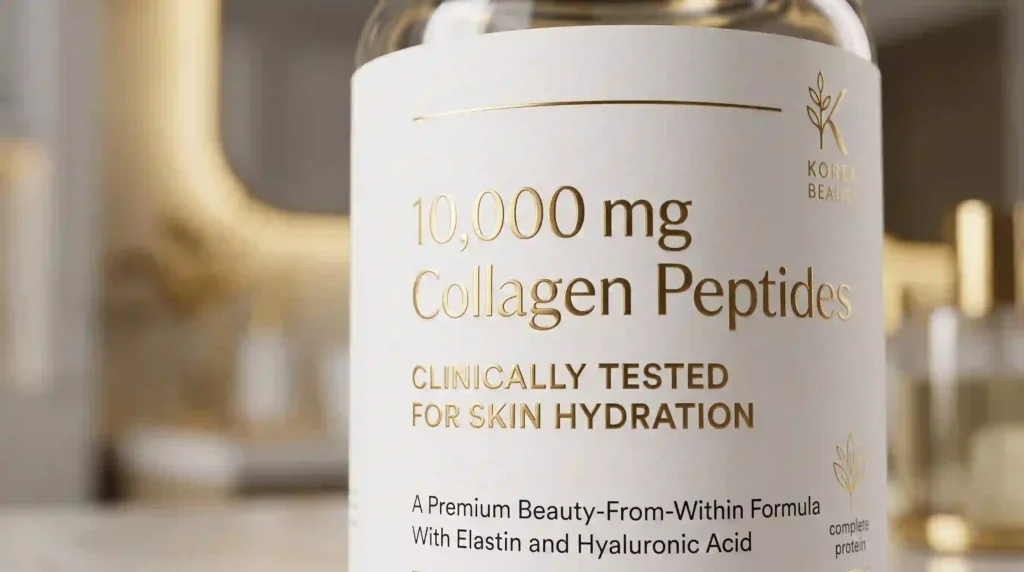
So before instructing your development team to hit a full EAA target, ask your brand team: “Will our customer pay more because the protein is ‘complete,’ or because she sees visible results?” In most cases, the answer leads back to a functional, technically incomplete protein as the core ingredient.
Decision framework at a glance
| Product Promise | Recommended Protein Strategy | Typical Base |
|---|---|---|
| Pure beauty / joint health | Do not chase completeness. Use a high‑function peptide. | 100% collagen or elastin peptides |
| Beauty + daily protein/muscle recovery | Blend a high PDCAAS partner with collagen. Partner must make up ≥60% of total protein for claims. | Whey + collagen (non‑vegan) or pea‑rice + active (vegan) |
| Ultra‑clear RTD with an EAA statement | Use collagen as base; add free EAAs to fill gaps. | Collagen + free EAA premix |
| Multi‑country launch | Verify protein claim rules early; don’t assume U.S. blends pass in the EU or China. | Custom pre‑blend from supplier |
When you need both the functional power of an incomplete peptide and the legal certainty of a complete profile, a custom pre‑blend is often the most efficient route. Many brands work with their ingredient supplier to obtain a single powder that already combines collagen with complementary plant proteins or amino acids — backed by the documentation needed to support your label. To discuss specific blend targets and markets, contact our team.