The Real Benefits of Bone Broth Protein (Collagen, Amino Acids, and More)

The Real Benefits of Bone Broth Protein (Collagen, Amino Acids, and More)


Quick Answer: The Science of Bone Broth Peptides

  • Core Value: The primary bone broth protein benefits do not stem from muscle-building anabolism, but from providing the exact biochemical precursors (peptides) required for human connective tissue regeneration. Regular consumption of bone broth protein benefits overall health.
  • Molecular Signature: Its unique bone broth amino acid profile is dominated by Glycine, Proline, and Hydroxyproline—a structural trio entirely absent in whey, pea, or soy isolates. These bone broth protein benefits are essential for various bodily functions.
  • Functional Applications: Clinically validated for reducing systemic inflammation, reinforcing the gastrointestinal mucosal barrier, and stimulating dermal fibroblast activity, thus showcasing the impressive bone broth protein benefits.
  • Formulation Reality: It is not a biologically complete protein. B2B formulators must utilize the PDCAAS method when designing compliant “High Protein” functional foods and beverages that highlight bone broth protein benefits.

A warm cup of bone broth surrounded by anti‑inflammatory ingredients, symbolizing the health benefits of bone broth protein. For decades, the sports nutrition and functional food industries have been hyper-focused on whey and plant isolates, evaluating ingredients solely on their ability to stimulate muscle protein synthesis. However, a significant paradigm shift is occurring. Product developers, clinical nutritionists, and R&D formulators are increasingly turning their attention to structural proteins, recognizing the unique bone broth protein benefits.

Unlike standard macronutrients, this specialized extract acts as a functional bio-active ingredient. In this technical review, we will deconstruct the specific molecular framework that drives these physiological advantages, analyze its applications in gastrointestinal and joint health, and provide actionable insights for brands looking to formulate with premium peptide powders, emphasizing the numerous bone broth protein benefits.

Deconstructing the Molecular Signature

The Dominance of the Structural Trio

To understand why this ingredient is disrupting the functional food sector, one must look closely at its specific bone broth amino acid profile. Traditional protein scoring methods often fail to capture the true value of structural peptides because they judge all proteins by their ability to support whole-body nitrogen balance, ignoring localized tissue repair and the undeniable bone broth protein benefits.

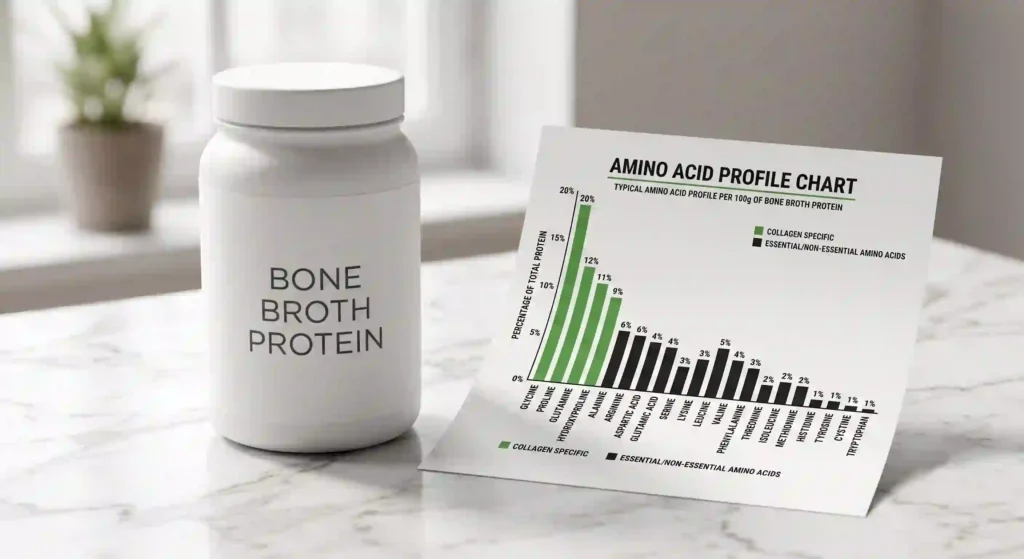
Muscle-building proteins (like whey or chicken breast) are rich in Branched-Chain Amino Acids (BCAAs) such as leucine, isoleucine, and valine. In stark contrast, collagen-derived broth protein is built upon a repeating sequence of three specific amino acids that account for over 50% of its total mass:

Amino AcidApproximate ConcentrationPrimary Physiological Function
Glycine33% (1 in every 3 amino acids)Acts as the flexible central axis of the collagen triple helix. Critical for the biosynthesis of glutathione (the body’s master antioxidant) and hepatic detoxification. This highlights the bone broth protein benefits for detoxification processes.
Proline10% – 12%Provides steric rigidity to the protein chain. Essential for wound healing, cartilage regeneration, and maintaining cardiovascular elasticity, showcasing significant bone broth protein benefits.
Hydroxyproline10% – 11%A highly specialized amino acid found almost exclusively in collagen. It provides thermal stability to the connective tissue matrix via extensive hydrogen bonding, contributing to the overall bone broth protein benefits.

This distinct profile means that supplementing with broth peptides does not compete with a standard high-protein diet; it complements it by filling severe modern dietary gaps in conditionally essential amino acids and enhancing the bone broth protein benefits.

Clinical Efficacy and Biological Mechanisms

When high-quality, enzymatically hydrolyzed peptides enter the bloodstream, they bypass standard digestive degradation and accumulate directly in target tissues (skin, joints, and intestines). This targeted delivery system is the foundation for the most highly sought-after collagen benefits in the nutraceutical space, further emphasizing the remarkable bone broth protein benefits.

A jar of bone broth protein powder with a list of amino acids showing its nutritional composition.

Articular Cartilage and Joint Inflammation

The degeneration of articular cartilage is the primary driver of osteoarthritis and athletic joint pain. Standard analgesics merely mask this pain. The peptides extracted from bovine or avian connective tissues serve as direct metabolic precursors for chondrocytes (the cells responsible for maintaining cartilage). By flooding the extracellular matrix with available proline and hydroxyproline, these peptides stimulate the de novo synthesis of Type II collagen and proteoglycans. Clinical trials consistently demonstrate that daily administration of low-molecular-weight collagen peptides significantly reduces joint stiffness and improves mobility markers in both elite athletes and geriatric populations, showcasing the bone broth protein benefits for joint health.

Dermal Fibroblast Stimulation (Nutricosmetics)

The structural integrity of the human dermis is dictated by a dense network of collagen fibers and elastin. As biological aging progresses, the activity of Matrix Metalloproteinases (MMPs)—enzymes that destroy skin collagen—outpaces new production. Ingestible peptides directly counteract this dermal degradation. By binding to specific receptor sites on fibroblast membranes, they trigger the endogenous production of hyaluronic acid and new Type I collagen, measurably improving skin elasticity, hydration density, and epidermal barrier function within 8 to 12 weeks of continuous use, demonstrating the bone broth protein benefits for skin health.

The Gastrointestinal Paradigm

Perhaps the most profound area of emerging research lies within the digestive tract. The relationship between glycine and gut health has become a focal point for formulators developing products for IBS (Irritable Bowel Syndrome), inflammatory bowel disease, and general digestive optimization, highlighting the critical bone broth protein benefits for gut health.

Gastrointestinal ChallengeMechanism of Action of Broth Peptides
Leaky Gut Syndrome (Intestinal Permeability)Glutamine and glycine directly upregulate the expression of Tight Junction proteins (such as Claudins and ZO-1), effectively “sealing” the paracellular gaps in the intestinal epithelium and preventing endotoxin translocation, which illustrates the bone broth protein benefits.
Gastric Mucosal InflammationGelatinous peptides form a highly viscous, protective biofilm over the gastric mucosa, shielding it from excessive stomach acid and mechanical damage during active digestion, providing further bone broth protein benefits.
Bile Acid InsufficiencyHigh concentrations of glycine are required by the liver to conjugate bile acids. Adequate glycine ensures efficient lipid emulsification and the absorption of fat-soluble vitamins (A, D, E, K), underlining the important bone broth protein benefits.

Formulation Regulations: Navigating Protein Quality

While the functional advantages are clear, R&D teams and marketing departments must navigate specific regulatory hurdles when bringing a broth-based product to market. The most common question encountered during the formulation phase is: is bone broth a complete protein from a regulatory standpoint?

An older woman drinking bone broth, illustrating the joint health benefits of bone broth protein.

The Missing Essential Amino Acid

The precise biochemical answer is no. By definition, a complete protein must contain all nine essential amino acids in specific biological ratios required for human growth. Broth-derived collagen is completely devoid of tryptophan and contains exceptionally low levels of methionine and cysteine. Therefore, relying on it as a sole source of dietary protein would lead to a negative nitrogen balance over time. This makes understanding the bone broth protein benefits crucial for proper supplementation.

FDA Labeling and the PDCAAS Method

In the United States, the FDA enforces strict guidelines regarding front-of-pack “High Protein” or “Good Source of Protein” claims. Brands cannot simply list the raw gram weight of the collagen powder on the nutrition facts panel without context. They must calculate the Protein Digestibility Corrected Amino Acid Score (PDCAAS), ensuring that the bone broth protein benefits are communicated effectively.

Because broth protein has a PDCAAS score of zero (due to the missing tryptophan), functional food brands must employ strategic formulation techniques. By blending the peptide powder with a complementary ingredient—such as pea protein isolate, rice protein, or adding synthetic tryptophan—formulators can legally balance the amino acid profile, achieve a high PDCAAS score, and legally dominate the packaging with high-protein claims while still delivering the functional benefits of collagen and the associated bone broth protein benefits.

Source Ultra-Pure Wholesale Peptide Powders

To fully realize these physiological benefits in your finished product, raw material sourcing is the ultimate determining factor. A poorly extracted, high-fat, or high-molecular-weight powder will ruin your formulation’s solubility, taste profile, and clinical efficacy.

Our manufacturing facility specializes in the production of enzymatically hydrolyzed, spray-dried peptide powders engineered specifically for the functional food and nutraceutical industries. We guarantee a neutral flavor profile, instantaneous cold-water solubility, and fully verified Dalton weight specifications, ensuring that the bone broth protein benefits are fully realized in your products.

Contact our technical team today to request a Free Sample, complete Amino Acid Profile data, and a Certificate of Analysis (COA).

Frequently Asked Questions

Does the molecular weight of the powder affect its health benefits?

Absolutely. Standard kitchen gelatin has a massive molecular weight (upwards of 100,000 Daltons), which digests slowly and gels in cold liquids. B2B spray-dried peptide powders undergo enzymatic hydrolysis, reducing the size to 2,000–5,000 Daltons. This drastically increases intestinal absorption (bioavailability) and allows for seamless formulation in ready-to-drink (RTD) cold beverages.

Can a vegan product replicate this specific amino acid profile?

Not natively. While formulators can engineer a synthetic blend of vegan amino acids mimicking the exact ratios of glycine, proline, and hydroxyproline, naturally occurring botanical proteins do not contain pre-formed collagen structures. The unique biological signaling provided by intact collagen peptides remains exclusive to animal-derived sourcing.

How does bone broth powder interact with the Maillard reaction in baked goods?

Due to its exceptionally high glycine content (an amino acid with a free amino group), broth powder is highly reactive during baking. It accelerates the Maillard reaction, leading to rapid browning. Formulators developing protein bars or baked goods must tightly control oven temperatures and baking times to prevent excessive darkening or the development of bitter off-flavors.

Picture of Yvonne Yang

Yvonne Yang

Providing advanced extraction protocols, custom formulation support, and regulatory compliance documentation for global nutricosmetic brands.

Send Us a Message

Table of Contents

Learn how we helped 100 top brands gain success.

Let's have a chat