Chicken Broth vs Bone Broth: Key Differences & Protein Comparison
Quick Answer: The main difference between chicken broth and bone broth lies in cooking time and protein concentration. Chicken broth is simmered for a short period using meat and vegetables, offering a lighter flavor with modest protein. Bone broth is simmered for up to 24+ hours using bones and connective tissues, extracting significantly higher levels of protein, collagen, and amino acids.
| Comparison Feature | Chicken Broth | Chicken Bone Broth |
|---|---|---|
| Primary Ingredients | Chicken meat, vegetables (mirepoix), and minimal bones. | Primarily roasted chicken bones, cartilage, and connective tissues. |
| Cooking Time | Simmered for 1–2 hours. | Slow-simmered for 12–24+ hours to maximize extraction. |
| Protein Content | Low (Typically 1–2g of protein per 8 oz serving). | High (Typically 9–10g+ per 8 oz serving; highly concentrated in powder form). |
| Collagen & Amino Acids | Trace amounts; lacks functional nutrition density. | Rich in naturally occurring Collagen (Type II), Glycine, Proline, and Glutamine. |
| B2B & Commercial Applications | Culinary flavor base for canned soups, sauces, and household cooking. | Raw material for dietary supplements, protein peptide powders, and sports nutrition. |
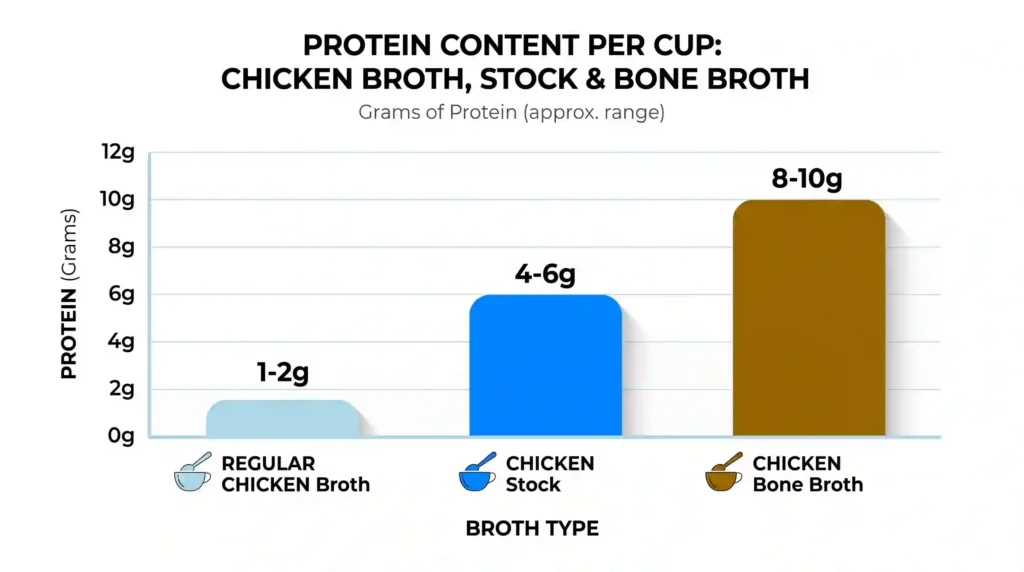
Chicken bone broth has way more protein than regular chicken broth. A cup of bone broth gives you about 8 to 10 grams of protein. A cup of ordinary chicken broth gives you just 1 to 2 grams. That is a difference of up to ten times. Same cup size, totally different nutritional value.
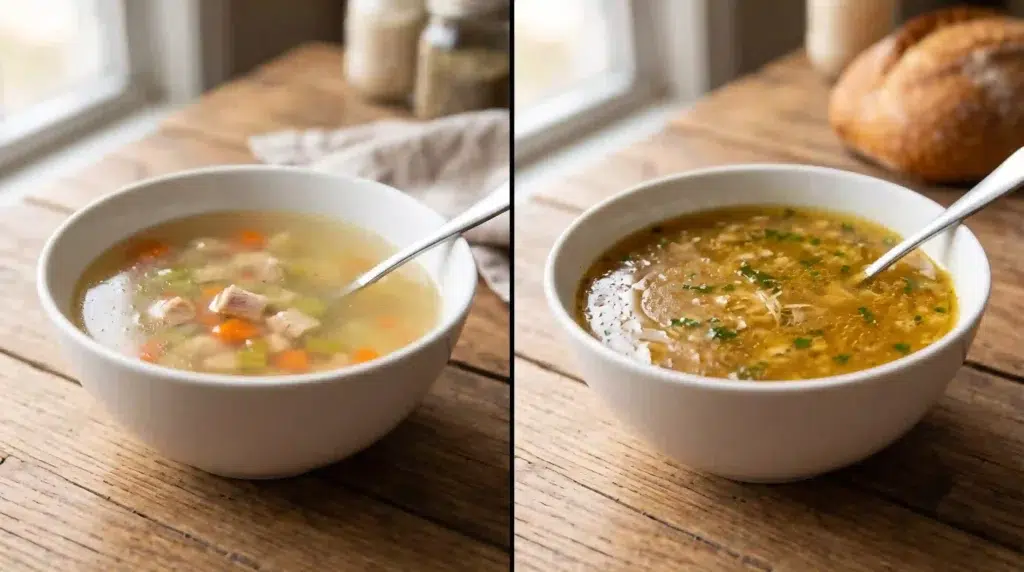
If you are in the business of formulating dietary supplements or health products, this nutritional gap is huge. While many consumers search for the general difference between chicken broth and bone broth for culinary reasons, food scientists know that the real distinction lies in the amino acid yield. This article explains why the numbers are so different, what that means for bioavailability, and why sourcing concentrated bone broth powder is a game-changer for manufacturers.
Let us start with the basics.
What is the Difference Between Bone Broth and Chicken Broth?
To understand why the protein counts are so different, you have to look at how each one is made. It comes down to two things: what goes into the pot, and how long it stays on the stove.
Chicken broth is a quick cook. You take some chicken meat, maybe a few bones, throw in some vegetables and seasonings, and let it simmer for about 30 minutes to 2 hours. What you get is a thin, light liquid that tastes good in soups. But here is the catch—there is almost no protein in it. Most of the protein stays in the meat that you throw away. Only a tiny bit leaks out into the water. The heat is not on long enough to break down the connective tissue, and the bones (if any) are not given enough time to release their collagen.

Chicken bone broth is a whole different story. You take chicken bones, usually with joints and connective tissue still attached, and you simmer them for a long time—12 to 48 hours. This long, slow cooking breaks down the tough connective tissue and releases a protein called collagen into the liquid. When you cool it down, it turns into a jelly-like texture. That jelly is the collagen. That is the protein you are paying for.
The simmering time is not the only difference. The temperature matters too. Bone broth is usually kept at a low, gentle simmer—just below boiling—for hours on end. This slow extraction pulls out not only collagen but also minerals like calcium, magnesium, and phosphorus from the bones themselves. Chicken broth, on the other hand, is often boiled or simmered at higher temperatures for a shorter time, which extracts flavor but not much else.
Ultimately, the extended simmering time and specific bone-to-water ratio are what transform a simple culinary liquid into a nutrient-dense raw material. Long cooking gives you more protein. Short cooking gives you very little.
There is also the matter of ingredients. Chicken broth often includes a lot of vegetables and seasonings that add flavor but contribute zero protein. Bone broth, by contrast, is built around bones and connective tissue—the very parts of the animal that are richest in collagen. The water-to-bone ratio in bone broth is carefully controlled to maximize extraction. In chicken broth, the water-to-meat ratio is not designed for protein extraction at all; it is designed for flavor. This is another reason why the chicken broth vs bone broth protein comparison shows such a massive gap.
This brings us to the next logical question: just how big is the protein gap in real numbers?
Bone Broth vs Chicken Broth Protein: Comparing the Numbers
Let us put the numbers side by side. For one cup (about 240 ml), here is what you typically get:
| Product Type | Protein | Calories |
|---|---|---|
| Regular Chicken Broth | 1–2 grams | 10–15 |
| Chicken Stock | 4–6 grams | 30–40 |
| Chicken Bone Broth | 8–10 grams | 40–50 |
Take a moment to look at that. Regular chicken broth barely has any protein—just 1 or 2 grams. Chicken stock is a bit better at 4 to 6 grams. But chicken bone broth blows them both out of the water with 8 to 10 grams. That is a huge jump.
Think about it this way: if you drink one cup of bone broth, you get the same protein as drinking five cups of regular chicken broth. That is a lot of liquid to swallow for the same benefit. The data speaks for itself. With nearly ten times the concentration, bone broth is the undisputed winner for nutritional density. The bone broth wins by a landslide.
Now, some people might say, “But I can just drink more chicken broth to get the same protein.” Sure, you could. But that means consuming five times the volume, five times the sodium, and five times the calories for the same protein payoff. That does not make much sense from a nutrition standpoint. Bone broth gives you more protein in a smaller, more efficient package.
Another thing to consider is the cost per serving. If you are buying pre-made liquids, bone broth is usually more expensive per carton. But when you look at the cost per gram of protein, the picture changes. You are paying for actual nutrition, not water. Many buyers find that bone broth powder, in particular, works out to be more economical in the long run. If you are formulating a product and need a reliable protein source, the question of does bone broth have more protein than chicken broth becomes a practical business decision as much as a nutritional one.
Let us put this in perspective with a quick comparison. Suppose you need 10 grams of protein for a serving of your product. With chicken broth, you would need about 5 cups, which would also deliver around 500 mg of sodium and 75 calories. With bone broth, you need just 1 cup, delivering roughly the same calories but far less sodium. And if you use bone broth powder, you need only a small scoop. For product developers, this tenfold concentration gap makes a massive difference in formulation efficiency and cost-effectiveness.
But numbers only tell part of the story. The type of protein you get from each broth is just as important as the amount. This is where the bone broth vs chicken broth protein conversation gets even more interesting.
Beyond the Grams: The Collagen and Amino Acid Advantage
When we compare protein in chicken broth vs bone broth, we cannot stop at the gram count. The amino acids inside that protein matter just as much. Think of protein as a chain made of different links. The links are amino acids. Different proteins have different links.
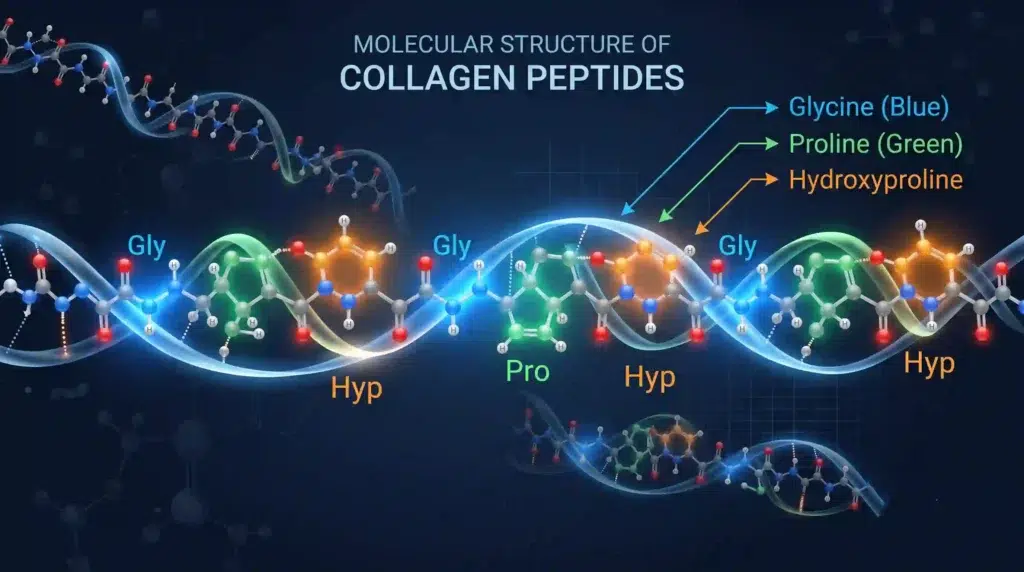
Most of the protein in bone broth comes from collagen. Collagen is the stuff that holds our bones, skin, and joints together. It is packed with specific links that are hard to find in other foods: glycine, proline, and hydroxyproline. These are great for your joints, your gut lining, and your skin.
Let us break these down one by one.
Glycine is the most abundant amino acid in collagen. It plays a role in building muscle tissue, converting food into energy, and supporting a healthy immune system. Some people also take glycine to help with sleep and relaxation, because it has a calming effect on the nervous system. When comparing these two liquids, glycine is one of the standout differences. Regular broth has very little of it.
Proline is another key component. It helps stabilize the structure of collagen, making it strong and resilient. Proline is also involved in wound healing and the repair of damaged tissues. The proline content alone tells you a lot about which option is better for connective tissue health.
Hydroxyproline is unique to collagen. You will not find much of it in muscle meat or plant proteins. It is what gives collagen its triple-helix structure, which is what makes it so strong. When you consume hydroxyproline, your body uses it to rebuild and repair your own connective tissues. This amino acid is virtually absent from chicken broth, making the nutritional comparison even more one-sided.
On the other hand, the protein in regular chicken broth comes mostly from the muscle meat. Muscle protein is great for building muscles, but it does not have much glycine or proline. It has a different set of links. It is rich in branched-chain amino acids like leucine, isoleucine, and valine, which are excellent for triggering muscle protein synthesis after a workout. But if you are looking for joint or gut support, muscle protein does not do much.
This is a key part of the nutritional debate. If you want protein for muscle building, chicken broth is okay. But if you want protein for joints, skin, and gut health, bone broth is the clear winner. It gives you the specific building blocks that regular broth just cannot provide. And if you are developing a product for a specific health concern, understanding this amino acid difference helps you choose the right ingredient from the start.
The gut health angle is worth mentioning too. The gelatin and amino acids in bone broth are known to support the intestinal lining. Some people with leaky gut or other digestive issues find that bone broth helps soothe their symptoms. Chicken broth, while comforting, does not have the same level of these gut-supporting compounds.
Now that we understand the quality difference, it is worth looking at how your body actually uses these two kinds of protein once they are consumed. This is where the real-world impact of protein in chicken broth vs bone broth becomes clear.
Bioavailability: How Your Body Processes Collagen Peptides
Once you consume protein, your body breaks it down into individual amino acids and small peptides. These are then absorbed into your bloodstream and sent to various tissues that need them.
When you drink chicken bone broth, your body gets a flood of collagen-specific amino acids. These are routed to your joints, skin, and gut lining, where they are used for repair and maintenance. This is why many athletes and older adults use bone broth as part of their daily routine. The protein in chicken broth vs bone broth is not just about what goes into your mouth—it is about what your body can actually do with it.
When you drink regular chicken broth, your body gets mostly muscle-type amino acids. These are routed primarily to your skeletal muscles. They are useful, but they do not serve the same purpose as collagen amino acids. Your body cannot turn muscle protein into collagen on a one-to-one basis. It needs the right building blocks to do that job. This is a critical point in the protein in chicken broth vs bone broth conversation.
So the protein in chicken broth vs bone broth is not just a difference in quantity. It is a difference in purpose. One is for muscle. The other is for connective tissue. This is why athletes who care about joint health often choose bone broth over regular chicken broth. And it is why older adults concerned about skin elasticity and bone density tend to prefer bone broth as well.
This distinction becomes especially important when you consider how people actually use these products. Someone recovering from an injury, for example, needs collagen-building amino acids far more than muscle-building ones. Someone with joint pain from arthritis would benefit more from bone broth protein than from chicken broth protein. Understanding this helps you choose the right product for the right need. When you look at protein in chicken broth vs bone broth through this lens, the choice becomes obvious.
Let us also talk about absorption. The protein in bone broth is already partially broken down by the long cooking process. This means your body can absorb it more quickly and with less digestive effort. The protein in chicken broth, by contrast, is largely intact and requires more work from your digestive system. This is another practical difference in the protein in chicken broth vs bone broth comparison that many people overlook.
With that understanding in place, let us look at how liquid bone broth gets transformed into the powdered form that is so popular in the supplement industry. The processing method has a big impact on the final protein quality.
From Liquid to Powder: Sourcing Premium Bone Broth Peptides
Liquid bone broth is good, but it is heavy and goes bad quickly. This is where turning it into powder changes the game. When we spray- or freeze-dry bone broth, we remove the water and leave the protein behind.
The result is a fine powder that packs a massive protein punch. Good chicken bone broth protein powders reach 95% to 97% protein content on a dry basis. That means almost all the powder is pure protein. You cannot do this with liquid chicken broth because there is hardly any protein in it to concentrate. This difference in concentration capability is a practical aspect of the protein in bone broth vs chicken broth story that matters a lot for manufacturers.
The process is straightforward, but each step requires care to preserve the quality of the protein. Let us walk through each stage in detail so you can see exactly how the protein in bone broth vs chicken broth gets concentrated into a usable powder form.
1. Extraction
The first step is making the bone broth itself. Chicken bones—usually backs, necks, and feet—are loaded into large stainless steel kettles. Water is added, along with a small amount of acid (often vinegar or citric acid) to help pull minerals out of the bones. The mixture is heated to a gentle simmer and held there for 12 to 48 hours. During this time, the collagen in the connective tissue breaks down into gelatin and eventually into smaller peptides. The longer the extraction, the more protein you get. This is why the answer to does bone broth have more protein than chicken broth starts with the extraction time.
2. Hydrolysis
After extraction, the liquid contains large protein molecules. These are too big to dissolve easily in cold water and can be hard for some people to digest. Hydrolysis solves this problem. Enzymes are added to the liquid, which cut the large proteins into smaller pieces called peptides. The goal is to get the molecular weight down to about 3,000 to 5,000 Daltons. At that size, the protein dissolves instantly in cold water and is absorbed very quickly by the body. This step is what gives bone broth powder its superior solubility compared to regular chicken broth.
3. Filtration
The hydrolyzed liquid still contains fat, cartilage fragments, and other solids. These are removed using fine filters, sometimes as fine as 50 nanometers. This creates a clear, clean liquid that is ready for concentration. Some manufacturers also use centrifugation to spin out the fat. The filtration step ensures that the final protein in bone broth vs chicken broth powder is pure and free from impurities.
4. Concentration
The filtered liquid is then passed through an evaporator, which removes a large portion of the water. This reduces the volume and makes the drying step more efficient. The concentrate is thick and rich, with a protein content of about 20% to 30%. At this stage, the protein in bone broth vs chicken broth concentration gap becomes very obvious—chicken broth simply cannot be concentrated to this level because it lacks the protein to begin with.
5. Drying
The final step is spray drying. The concentrated liquid is sprayed into a hot air chamber. The water evaporates instantly, leaving behind fine powder particles. The powder is then collected, tested, and packaged. The drying method affects the final quality of the protein in bone broth vs chicken broth powder, which is why good manufacturers use precise temperature controls.

This powder is a clean-label ingredient. It mixes easily into shakes, protein bars, and even soups. And here is the important point: when we look at does bone broth have more protein than chicken broth in powder form, the difference is even bigger because the bone broth powder is so concentrated. A scoop of bone broth protein powder can contain 10 to 15 grams of protein in a 15-gram serving. That is 70% to 100% protein by weight. Liquid chicken broth, by comparison, is about 95% water and only 1% protein.
Now that we know how the powder is made, let us go over what you need to look for when buying it. The sourcing decisions you make will directly affect the protein in bone broth vs chicken broth quality in your finished products.
What to Look for in Quality Powders
If you are sourcing this powder for your business, here are the simple things to check to make sure you are getting the good stuff. These factors will determine whether your final product delivers on the promise of high protein content.
- Protein Content: Look for 95% or higher on a dry basis. Lower than that means you are paying for fillers, not protein. Some lower-quality powders use maltodextrin or other carbohydrates to bulk up the product. Always check the label.
- Molecular Weight: A weight of 3,000 to 5,000 Daltons is best. It dissolves easily in cold water and is absorbed quickly. If the molecular weight is too high, the powder may not dissolve well. If it is too low, the peptides may taste bitter.
- Sodium Level: Low sodium (below 0.7%) is better. It gives you more control when you mix it with other flavors. High sodium limits your formulation options and can make the final product taste too salty.
- Heavy Metal Testing: Always ask for third-party test results. You do not want lead or arsenic in your products. Good suppliers test every batch and provide certificates of analysis.
- Clean Label: Look for hormone-free and antibiotic-free sources. Customers care about this stuff today. They want to know that the animals were raised responsibly.
- Flavor Profile: A good chicken bone broth protein powder should have a neutral or mild chicken taste. It should not be overly salty or bitter. If the powder has an off-taste, it will be hard to formulate into consumer products.
- Solubility: Test the powder in cold water. It should dissolve completely without clumping. Poor solubility is a sign of poor processing. For ready-to-drink products, solubility is critical.
- Microbiological Standards: Make sure the product meets basic safety standards—low total plate count, no Salmonella, no E. coli.
These points are crucial when you compare protein in bone broth vs chicken broth for your final product. The quality of the raw material defines the quality of your end product. Paying attention to these details will ensure that your customers get the full benefit of the superior protein in bone broth vs chicken broth.
Once you have sourced a high-quality powder, the next question is: what can you actually do with it? The versatility of bone broth protein opens up many product opportunities.
Best Uses for Chicken Bone Broth Protein in Supplements and Foods
The beauty of this ingredient is its versatility. Because it has a neutral flavor, you can put it in almost anything. Here is a closer look at the main application categories. Each one leverages the unique nutritional density of premium bone broth peptides.
Dietary Supplements
Capsules and drink mixes are the most common supplement forms. Consumers like the convenience of a powder they can mix into water or juice. When they check the label, they want to see high protein numbers. Given the choice between standard broth and concentrated bone broth powder, they will prioritize the one with the higher yield. Many supplement brands also use bone broth protein in collagen blends, where it pairs well with other collagen sources like fish or bovine. The clean-label appeal makes it a favorite in this category.
Sports Nutrition
Post-workout shakes and joint support formulas love this stuff. Athletes put a lot of stress on their joints, and the collagen-specific amino acids in bone broth help with recovery. Some sports nutrition companies add it to recovery drinks, protein bars, and even pre-workout formulas. This dense nutritional profile is especially relevant here because athletes need both quantity and quality. They want protein that builds muscle and protects their joints at the same time. This dual benefit makes it a superior raw ingredient for recovery formulations.
Functional Foods
Think protein bars, protein coffee, or even soups. You can add bone broth protein without changing the taste. Some brands have launched bone broth-infused coffee creamers, oatmeal, and snack chips. The neutral flavor makes it easy to incorporate into both sweet and savory products. This versatility has become a major selling point for innovative food brands, as consumers increasingly seek out functional, health-boosting ingredients in their everyday snacks.
Meal Replacements
Weight management and meal replacement shakes often use bone broth protein as a source of high-quality nutrition. It provides satiety and supports lean muscle mass. When combined with other protein sources, it creates a well-rounded amino acid profile. Many meal replacement products target consumers who want convenient nutrition without sacrificing quality, and bone broth protein fits that brief perfectly. Highlighting this premium ingredient helps brands position their products more effectively in a crowded market.
Protein Beverages
Ready-to-drink protein shakes and protein waters are another growing segment. Bone broth protein powder dissolves clearly and does not leave a gritty texture, which makes it ideal for bottled beverages. Some brands have launched bone broth protein shots and drinkable packets that consumers can take on the go. These products appeal to busy professionals and health-conscious individuals who want a quick protein boost without the heaviness of a full meal.
Baked Goods and Snacks
Protein bars, muffins, and crackers can all benefit from the addition of bone broth protein. It adds nutritional value without altering the texture or flavor significantly. Unlike some plant proteins that can be chalky or grainy, bone broth protein blends smoothly into doughs and batters. This makes it a favorite among formulators who want to boost the protein content of everyday snacks.
Private Label Manufacturing
If you are making your own brand, bone broth protein is a hot selling point. It tells the customer you are using premium ingredients. Private label manufacturers are increasingly offering bone broth protein powders, capsules, and ready-to-drink beverages. The growing consumer awareness around bone broth benefits makes it an easy product to market. Educating your audience about this superior amino acid profile helps build trust and brand authority.
No matter the application, the advantage is the same. Concentrated bone broth protein gives you a unique amino acid profile that standard culinary broth just cannot match. This is the real reason why sourcing the right raw material matters—it directly translates to the benefit your end customer receives. By formulating with premium bone broth peptides, your product already has the competitive edge built in.
The Bottom Line: Bone Broth vs Chicken Broth Protein—The Winner Is Clear
Let us bring it all together. Bone broth has much more protein than chicken broth. We are talking 8 to 10 grams versus 1 to 2 grams per cup. That is a tenfold difference. When customers ask does bone broth have more protein than chicken broth, you can confidently say yes—and show them the numbers.
But it is not just about the count. The protein in bone broth is rich in collagen-building amino acids—glycine, proline, and hydroxyproline—that support your joints, skin, and gut. Chicken broth just offers muscle meat protein. It is good, but it does not have the same benefits. This is the deeper story behind the protein in chicken broth vs bone broth comparison.
If you are making supplements or functional foods, chicken bone broth protein powder is a no-brainer. It is concentrated, easy to use, stable, and delivers real value. When you compare bone broth vs chicken broth protein for your products, the winner is clear.
The facts are simple, and the numbers do not lie. Bone broth wins—not by a small margin, but by a large one. And now you have all the information you need to understand why.
Looking for a Reliable Wholesale Peptide Partner?
If you are formulating a new supplement or functional food and need high-purity bone broth protein powder, our manufacturing team is ready to help. We provide full COAs, clean-label sourcing, and scalable wholesale supply.