Introduction
If you’ve ever struggled with morning stiffness, creaky knees, or joint pain that limits your daily activities, you’ve probably searched for something beyond the usual glucosamine and chondroitin. In recent years, a specific form of collagen has been gaining serious attention in medical research and the supplement industry alike: type II collagen peptides.
But what exactly are type II collagen peptides, and how do they differ from the collagen powders you see everywhere? More importantly, does the science back up the claims that they can actually improve joint health or even help with arthritis? In this comprehensive guide, we’ll dive deep into the mechanism, clinical evidence, and practical usage of type II collagen — with a special focus on its unique oral tolerance pathway and the critical difference between undenatured and hydrolyzed forms.

You’ll discover:
- Why type II collagen works completely differently from type I & III.
- How it may help with osteoarthritis, morning stiffness, and even exercise recovery.
- What the optimal dosage is (hint: it’s much smaller than you think).
- Answers to frequently asked questions that often get left out of other articles.
Whether you’re a consumer exploring joint-support supplements or a brand looking to expand your ingredient portfolio, this article will give you an unbiased, research-backed perspective on type II collagen peptide benefits.
What Are Type II Collagen Peptides?
To understand type II collagen, let’s first zoom out. Collagen is the most abundant protein in our body, making up our skin, bones, tendons, ligaments, and cartilage. There are at least 28 known types, but the first three — type I, type II, and type III — account for about 90% of the total collagen in humans.
Type I is found in skin, bone, tendons, and teeth. Type III is found alongside type I in skin and blood vessels. Type II, however, is the principal collagen in cartilage — the flexible connective tissue that cushions our joints.
Structurally, type II collagen forms a dense network of fibrils that provide tensile strength and resilience to cartilage. While type I and III are often bundled into “beauty” collagen for skin, type II is specifically targeted at joint function and immunomodulation.
The term “type II collagen peptides” can be a bit confusing, because the supplement market offers two very different products under that label:
- Undenatured (native) type II collagen — extracted at low temperatures from chicken sternum cartilage, retaining its natural triple-helix structure and bioactive epitopes.
- Hydrolyzed type II collagen — produced by high-temperature enzymatic breakdown, which destroys the delicate three-dimensional structure and turns it into smaller peptides (similar to standard collagen powders).
As we’ll see later, this distinction is not just technical; it determines whether the supplement actually triggers the oral tolerance mechanism (the key to its joint benefits) or merely provides amino acids like any other protein.
How Type II Collagen Works — The Oral Tolerance Mechanism
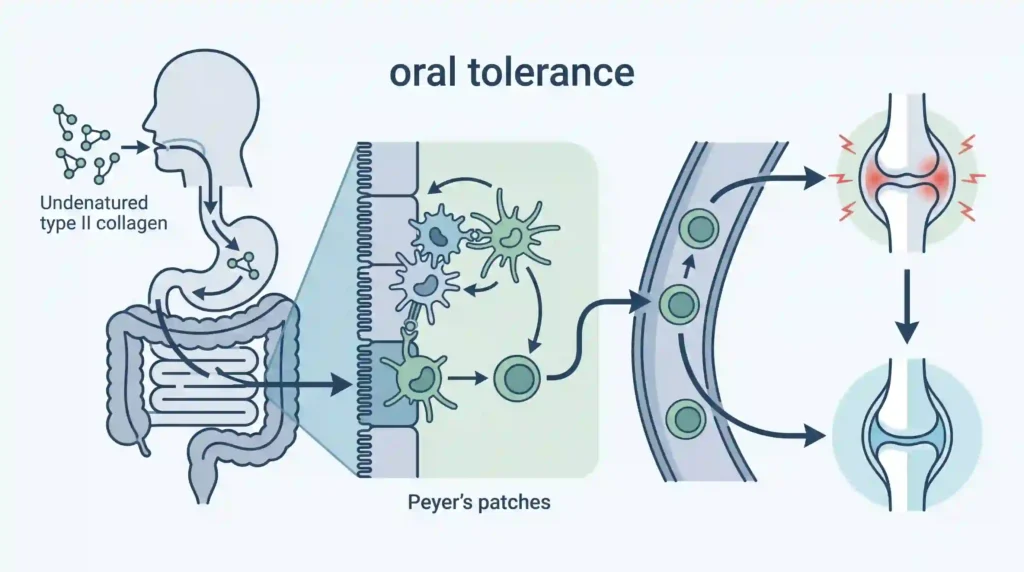
One of the biggest misconceptions about type II collagen is that it works simply by giving your body the building blocks to rebuild cartilage — like adding bricks to a wall. This is not how undenatured type II collagen functions. Instead, it uses a fascinating immunological pathway called oral tolerance.
What Is Oral Tolerance?
Think of your immune system as a security force that patrols your body for intruders. In autoimmune conditions like rheumatoid arthritis, this security force mistakenly attacks your own joint cartilage (where type II collagen is abundant). The body essentially loses its tolerance to its own collagen.
Oral tolerance works by “teaching” the immune system to stop attacking its own tissues. When you consume small amounts of undenatured type II collagen, specialized immune cells in your gut — called Peyer’s patches — encounter the intact collagen epitopes. These cells then signal the rest of the immune system to suppress the attack on cartilage, effectively “switching off” the autoimmune response.
This mechanism was first clearly described in the 1990s and has since been replicated in multiple clinical studies. The takeaway: undenatured type II collagen acts as a signal, not as a building material. This explains why the effective dose is measured in milligrams (typically 40 mg), not grams.
Why Must It Be Undenatured?
The term “undenatured” means that the collagen has not been broken down by heat or harsh processing. If the protein is hydrolyzed — as is done to make most collagen peptides soluble — the three-dimensional structure is lost, and the key epitopes that the immune system recognizes are destroyed. As a result, hydrolyzed type II collagen essentially acts like any other protein source; it may support general tissue repair as amino acids, but it will not trigger oral tolerance for joint-specific benefits.
This distinction is absolutely critical when choosing a supplement. Many products simply label themselves “type II collagen” without specifying whether they are undenatured or hydrolyzed. We’ll cover how to read a label later in the guide.
7 Scientifically Proven Benefits of Type II Collagen Peptides
The unique mechanism translates into a range of joint health benefits and beyond. Here are the top benefits supported by human clinical trials — primarily using undenatured type II collagen (often branded as UC-II®).
Relief from Osteoarthritis Pain and Stiffness
Osteoarthritis (OA) is the most common form of joint disease, affecting over 32 million adults in the U.S. alone. It occurs when the protective cartilage wears down over time, leading to pain, swelling, and reduced mobility.
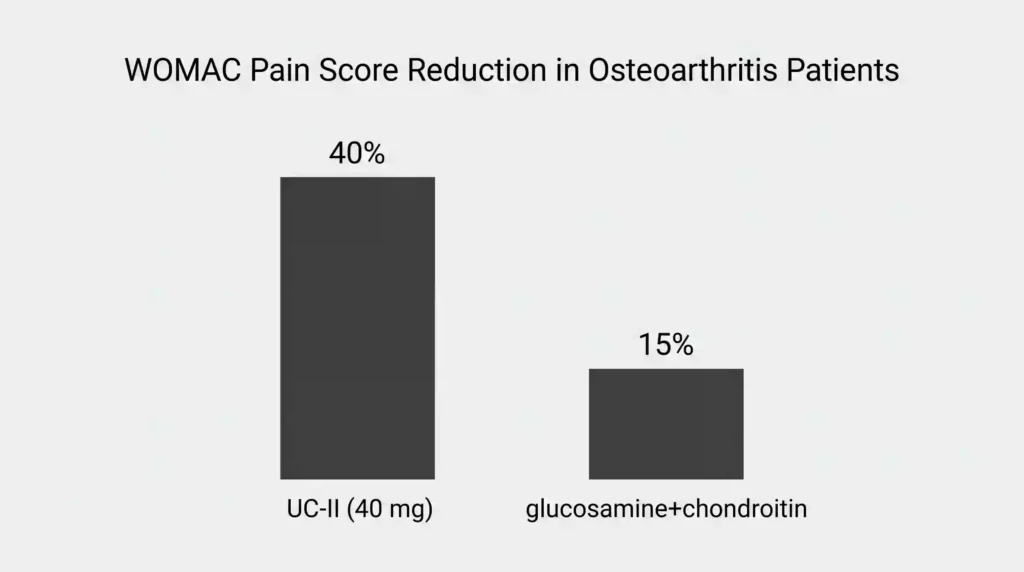
Multiple randomized controlled trials have demonstrated that 40 mg per day of undenatured type II collagen can significantly reduce OA symptoms. One landmark study published in the International Journal of Medical Sciences compared UC-II® (40 mg) with a combination of glucosamine (1,500 mg) and chondroitin (1,200 mg) in subjects with knee OA. After 90 days:
- The UC-II group showed a 40% reduction in WOMAC pain score (a standardized pain and function assessment), compared to 15% in the glucosamine + chondroitin group.
- The UC-II group also reported better improvements in daily activities such as stair climbing.
Other studies have reported similar effects on joint pain, stiffness, and physical function, often with improvements noticeable within 4 to 6 weeks.
Key point for consumers: This research suggests that a tiny daily dose of undenatured type II collagen can outperform larger doses of traditional joint supplements.
Reduced Morning Stiffness and Better Mobility
For many arthritis sufferers, mornings are the hardest part of the day. Joints feel rigid and painful until they “warm up.” Clinical trials have specifically measured morning stiffness as an endpoint, and the results are encouraging.
In a study involving 55 subjects with knee OA, those taking UC-II for 120 days had a significant decrease in morning stiffness compared to the placebo group. Patients reported being able to start their day faster and with less discomfort, which directly translates to a better quality of life.
This effect is likely linked to the immunomodulatory action that dampens overnight inflammation in the joint capsule.
Exercise Recovery and Joint Protection for Athletes
Intense physical training — whether it’s running, weightlifting, or team sports — places repeated stress on joints. This can cause low-grade inflammation and micro-damage to cartilage over time. Because oral tolerance can “pre-teach” the immune system to ignore minor cartilage insult, undenatured type II collagen might help athletes stay in the game longer.
A randomized, double-blind study on healthy, physically active adults found that 40 mg of UC-II per day for 120 days:
- Improved knee joint extension and flexibility.
- Showed a trend toward reduced exercise-induced joint pain.
- Was well tolerated with no serious side effects.
While more research is needed, these early results have made type II collagen a popular ingredient in sports nutrition formulas — especially for older athletes or those with a history of joint issues.
Modulating the Immune Response in Autoimmune Arthritis
The most groundbreaking potential of undenatured type II collagen lies in its ability to target the underlying immune dysfunction in diseases like rheumatoid arthritis (RA). RA is an autoimmune disorder where the body’s immune system primarily attacks the synovial membrane in joints, but the process also involves anti-collagen antibodies.
Several studies — including animal models and small human trials — have shown that oral type II collagen can reduce the severity of RA symptoms by inducing regulatory T cells that suppress the self-destructive immune response. A Chinese clinical trial with RA patients observed that those receiving type II collagen had less joint swelling and tenderness than the control group.
However, it’s crucial to note that the evidence in RA is still considered preliminary, and current guidelines often recommend it as a complementary approach rather than a standalone treatment. Anyone with RA should continue their prescribed medications and consult a rheumatologist before adding high-dose supplements.
Can Type II Collagen Improve Skin?
This is a common question, and the short answer is: probably not directly — at least not the way type I collagen does. Type II collagen is not a major component of skin tissue; skin primarily relies on type I and type III.
That said, some indirect benefits might exist. Chronic joint inflammation can increase systemic oxidative stress, which in turn damages skin collagen. By calming joint-driven inflammation, undenatured type II collagen could theoretically help maintain skin health. A few small studies have reported improvements in skin hydration and elasticity after taking type II collagen supplements, but the effects are modest compared to the skin benefits of hydrolyzed type I collagen.
If your primary goal is skin appearance, a high-quality type I/III collagen peptide (often marine or bovine) is a better choice. Type II collagen should be reserved for joint and immune concerns.
Gut Health and Systemic Inflammation
The link between oral tolerance and gut health is an exciting area of research. The Peyer’s patches in the small intestine don’t just tolerate cartilage antigens; they play a role in general immune homeostasis. Some researchers hypothesize that the oral tolerance triggered by type II collagen could have a broader anti-inflammatory effect, potentially benefiting conditions like inflammatory bowel disease (IBD) or leaky gut syndrome.
At this point, however, direct clinical evidence in humans for gut health is lacking. Most data come from mechanistic studies or extrapolations from autoimmune arthritis research. So while the future is promising, it’s too early to recommend type II collagen solely for gut health.
Cartilage Regeneration — What the Early Evidence Shows
“Can collagen regrow cartilage?” That’s one of the most sought-after questions. The realistic answer is that no supplement has yet proven to fully regenerate lost cartilage in humans. However, animal studies using high-dose undenatured type II collagen have shown dose-dependent protection of cartilage thickness and even stimulation of chondrocytes (cartilage-building cells).
In a rat model of osteoarthritis, the group receiving type II collagen showed less cartilage erosion and synovial inflammation than the control group. But laboratory animals are not humans, and the histological improvements observed under a microscope don’t always translate into functional recovery in people.
For now, think of type II collagen as a powerful protector that slows or prevents further cartilage breakdown, rather than a magic regrowth bullet.
Undenatured Type II Collagen vs. Hydrolyzed Collagen — The Critical Difference
If you remember only one thing from this article, let it be this: undenatured is not just a marketing word. It defines whether the product will actually deliver the joint-specific benefits you’re looking for.
| Feature | Undenatured Type II Collagen (e.g., UC-II®) | Hydrolyzed Type II Collagen (or general “chicken collagen”) |
|---|---|---|
| Structure | Intact triple helix with bioactive epitopes | Broken down into small peptides; no bioactivity |
| Mechanism | Oral tolerance (immune modulation) | Amino acid building blocks (nutritional support) |
| Effective dose | 40 mg per day | 10–20 g per day (or more) |
| Primary benefit | Joint pain relief, anti-inflammatory | General protein source; minor skin/hair support |
| Heat stability | Easily destroyed; requires low-temperature extraction | Already broken down; stable |
| Typical source | Chicken sternum cartilage | Various animal cartilages (or hide/bone) |
| Label identification | “Undenatured type II collagen,” “UC-II®,” “native collagen” | “Hydrolyzed collagen type II,” “collagen peptides (chicken)” |
Manufacturers often prefer hydrolysis because it yields a product that dissolves easily in water and mixes into beverages. But for joint health, undenatured collagen — usually encapsulated to protect it from stomach acid — is the research-backed choice.
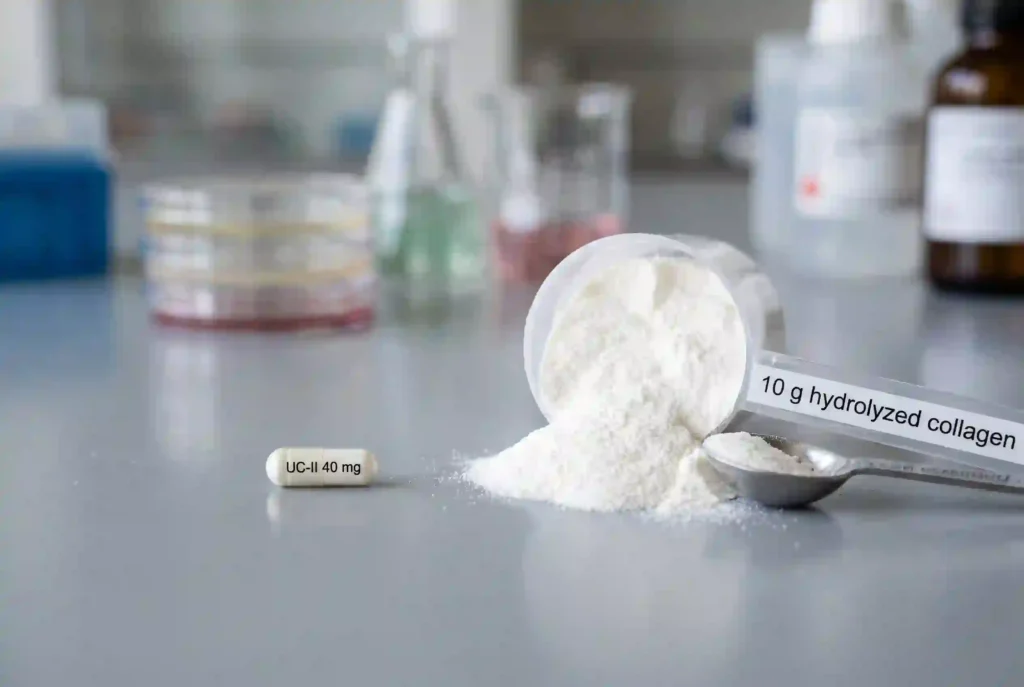
Pro Tip: If you want the joint-specific benefits, look for supplements that explicitly state they contain UC-II® (the patented and most clinically tested source) or “undenatured type II collagen” and have a daily serving of about 40 mg.
Optimal Dosage, Timing, and How to Take Type II Collagen
Dosage: The standard clinical dose for undenatured type II collagen is 40 milligrams per day, taken in a single capsule. Some brands offer 10–20 mg doses, but research shows that 40 mg yields the most reliable effect. Importantly, taking more does not necessarily mean better results; the oral tolerance mechanism can be overwhelmed by excessive antigen loads, potentially negating the benefit.
For hydrolyzed type II collagen, there is no established effective dose for joint-specific outcomes because it works as a general protein. If you still choose to use it, typical serving sizes range from 5 to 20 grams, and you won’t get the same immune-mediated effects.
Timing: Since oral tolerance requires the peptide epitopes to reach the small intestine intact, it’s generally recommended to take undenatured collagen on an empty stomach — 30 minutes before a meal or at bedtime. This minimizes protein-degrading enzymes in the gut and ensures maximum bioavailability of the intact molecule.
Complementary nutrients: Type II collagen can be safely combined with:
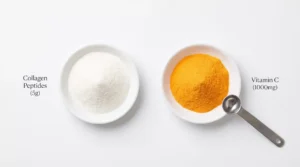
- Vitamin C – enhances collagen synthesis (though it doesn’t directly affect oral tolerance).
- Turmeric / Curcumin – adds anti-inflammatory synergy.
- Hyaluronic acid – often paired in joint formulas to support synovial fluid viscosity.
Food Sources of Type II Collagen and Why Supplements Matter
Type II collagen is abundant in chicken cartilage — think the gristle on chicken bones, especially the sternum. Bone broths made from chicken feet or carcasses contain small amounts, but the long cooking times and high heat effectively denature the collagen, rendering the immune epitopes inactive.
Even if you could consume raw or lightly cooked chicken cartilage, reaching a 40 mg dose of intact undenatured collagen would be difficult and inconsistent. That’s why supplements — standardized to provide a precise, low-dose, native protein — are the most practical way to replicate the conditions used in clinical studies.
For vegetarians and vegans, there is currently no plant-based alternative that can mimic oral tolerance to type II collagen. The supply remains entirely animal-derived.
Potential Side Effects and Safety Considerations
Type II collagen, especially the undenatured variety, has a very favorable safety profile. In the clinical studies, side effects were typically mild and similar to placebo:
- Common mild effects: Nausea, stomach upset, belching — often when taken on a full stomach or when the individual is sensitive.
- Allergy risk: Because type II collagen is derived from chicken sternum, individuals with known chicken or egg allergies should exercise caution. Most manufacturers use a latex-free, GMO-free, and avian-source-pure extraction process, but cross-contamination is possible.
- Pregnancy & breastfeeding: There is a lack of safety data in these populations, so the general recommendation is to avoid use or consult a healthcare provider.
- Autoimmune disease: Although oral tolerance is the intended mechanism, anyone with severe autoimmune comorbidities should speak with a rheumatologist before starting, because immunomodulation could theoretically interact with disease progression in unpredictable ways.
Overall, at the 40 mg daily dose, type II collagen is considered safe for long-term use by most healthy adults.
Choosing the Right Type II Collagen Peptide Supplement — and How We Fit
After reading all this, it’s clear that not all type II collagen products are created equal. To summarize your buying checklist:
- Look for “undenatured” or “UC-II®” on the label.
- Check the dosage: 40 mg per capsule is ideal; avoid products that hide the form in a proprietary blend.
- Certifications: Third-party tested for purity, manufactured in GMP facilities, and preferably from a reputable source like Lonza.
- Form: Capsules are preferred over powders because they protect the sensitive protein until it reaches the small intestine.
At Atnutra, we specialize in sourcing premium, clinically backed collagen ingredients for brands around the world. Our portfolio includes high-purity undenatured type II collagen (standardized to 25–40 mg per serving) with documented lot-to-lot consistency and traceable origin. We work with formulators to develop joint health products that meet real clinical standards — not just marketing hype.
If you’re developing a functional beverage, capsule, or gummy that needs a proven joint ingredient, reach out to our team for a sample or a formulation consultation. We also provide technical documentation and regulatory support to help you bring your product to market faster.
Your joint health journey — whether personal or professional — starts with the right science. Choose type II collagen that actually works.