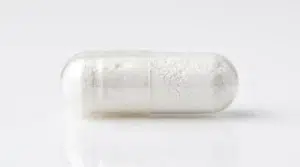
Will collagen interfere with your prescriptions? For the overwhelming majority of medications—statins, blood pressure drugs, antidepressants, birth control, painkillers—the answer is a straightforward no. The only real caution involves high‑dose hydrolyzed collagen powders and the blood thinner warfarin, where a small risk of altered clotting exists. Meanwhile, thyroid medication requires a simple time buffer, and the low‑dose undenatured type II collagen capsules show no interactions at all. 
This is the question that brings most people here: “does collagen interact with any medications,” “does collagen powder interact with any medications,” “do collagen supplements interact with any medications.” The answer splits cleanly along the type and dose of collagen. In this guide, we will address whether collagen interacts with any medications.
What Does Collagen Do for Your Body?
Collagen is the structural scaffolding of your body—it holds skin taut, cushions joints, and reinforces bones. Production declines from our twenties onward, leading to the familiar signs of aging: fine lines, creaking knees, and brittle nails.

Supplementing with collagen gives your body raw materials to repair and maintain that scaffold. But not all collagen is the same; different types target different tissues, and the form (powder vs. capsule) directly influences both results and safety.
| Collagen type | Main job | Found in supplements from | Best for… |
|---|---|---|---|
| Type I | Skin, bone, tendons | Bovine, marine, chicken | Skin hydration, elasticity, bone support |
| Type II | Cartilage | Chicken sternum | Joint pain, osteoarthritis |
| Type III | Muscles, blood vessels | Bovine, porcine | Often combined with Type I for overall structure |
| Type V & X | Cell membranes, cartilage | Minor role in blends | Usually not the main selling point |
Most people start with Type I & III powders for skin and general wellness, or Type II (often as “undenatured” UC‑II) capsules for joint‑specific concerns. The dose and form matter enormously when it comes to interactions, which we’ll cover shortly.
Health Benefits of Collagen: What Works, and How Strong Is the Evidence?
You’ll hear collagen praised for everything from glowing skin to a pain‑free golf swing. The truth is that some areas are backed by robust clinical trials, while others are still theoretical. Here’s a realistic look at the science.
| Benefit | Best collagen type | Typical dose | Strength of evidence |
|---|---|---|---|
| Skin (fewer wrinkles, better hydration) | Hydrolyzed Type I & III | 2.5–10 g/day | Strong (multiple RCTs) |
| Joint pain (osteoarthritis) | Undenatured Type II (UC‑II) | 40 mg/day | Strong for UC‑II; moderate for high‑dose hydrolyzed |
| Exercise‑induced joint ache | Hydrolyzed Type I & III | 10 g/day | Moderate |
| Bone density | Hydrolyzed Type I | 5–10 g/day | Emerging, promising |
| Nail strength | Hydrolyzed Type I & III | 2.5 g/day | Small studies, high user reports |
| Gut lining support | Types I, II, III | Varies | Mechanistic plausibility, limited direct trials |
When people ask “does collagen help joints?” the evidence says yes—especially if you choose the undenatured Type II form. A 2016 trial published in Nutrition Journal gave people with knee OA either 40 mg UC‑II or placebo for 180 days. The collagen group had significantly less pain, less stiffness, and better physical function, with no safety concerns whatsoever (Lugo et al., 2016). For skin, multiple studies using hydrolyzed Type I and III report significant improvements in elasticity and wrinkle depth after 8–12 weeks.

A bonus tip: vitamin C is required for your body’s own collagen synthesis, so taking your supplement with a vitamin‑C‑rich food or a small vitamin C pill can theoretically enhance the effect. This isn’t a must‑have, but it’s a cheap and easy optimization.
Collagen Supplement Side Effects
Collagen is remarkably well tolerated. In dozens of clinical trials, adverse events are no more common than with a placebo. Still, a few real‑world notes:
- Digestive fullness: High‑dose powders (15–20 g) can feel heavy on an empty stomach. Start with a half scoop or blend it into a smoothie.
- Fishy aftertaste or burps: Low‑quality marine collagen can cause an unpleasant aftertaste. Choose chicken or grass‑fed bovine if you’re sensitive, or stick with reputable brands that remove odor.
- Allergy: Rare, but if you have a known allergy to cow, fish, or chicken, avoid supplements derived from that source. Stop use and speak to a doctor if you notice hives, swelling, or trouble breathing.
- Quality concerns: Because supplements aren’t tightly regulated in every country, look for products that are third‑party tested for heavy metals and contaminants. Reputable brands will often display a certification from NSF, USP, or similar.
Side effects are even less likely with undenatured type II collagen (UC‑II) simply because the effective dose is a tiny 40 mg capsule—a fraction of a gram—so there’s almost nothing to upset the stomach or trigger allergies.
Does Collagen Interact with Any Medications?
This is the question that brings most people here: “does collagen interact with any medications,” “does collagen powder interact with any medications,” “do collagen supplements interact with any medications.” The answer splits cleanly along the type and dose of collagen.
Hydrolyzed collagen powders (Types I & III, 10–20 g/day)
At these high protein loads, only two interactions matter:
- Warfarin (Coumadin): One published case report described a warfarin patient whose INR rose after starting 20 g of hydrolyzed collagen daily. The suspected reason is that certain collagen peptides contain RGD motifs that can weakly affect platelet aggregation in lab studies. It’s a low risk, but real. If you’re on warfarin and want to use a high‑dose powder, your doctor should monitor your INR more frequently for the first few weeks. For newer anticoagulants (Eliquis, Xarelto) no interactions are reported, so the concern is specific to warfarin.
- Levothyroxine (Synthroid, others): Collagen peptides, like any protein or calcium‑containing meal, can slow or reduce absorption if taken at the same time. Simply take your collagen powder at least four hours apart from your thyroid medication, and the interaction disappears.
For all other drug classes—beta blockers, ACE inhibitors, statins, SSRIs, metformin, NSAIDs—there are no documented interactions with hydrolyzed collagen. So when someone asks “does collagen powder interact with any medications,” the evidence says “not unless warfarin is involved, and even then it’s manageable.”
Undenatured type II collagen (UC‑II, 40 mg/day)
This form is in a different league. The dose is far too small to create a meaningful protein load. Instead, it works by exposing your gut‑associated immune tissue to tiny amounts of type II collagen, teaching your body not to attack its own cartilage. Clinical trials that tracked blood work found zero changes in clotting, liver enzymes, or kidney function. Even in people taking methotrexate or NSAIDs for arthritis, no negative interactions appeared. The answer to “do collagen supplements interact with any medications” for this type is a confident no.
Drug‑collagen interaction quick reference
| Medication class | Hydrolyzed powder (10–20 g) | UC‑II capsule (40 mg) |
|---|---|---|
| Warfarin | Monitor INR closely | No known interaction |
| Thyroid hormones | Take 4 hours apart | Take 4 hours apart (to be extra safe) |
| Blood pressure drugs | No interaction | No interaction |
| Antidepressants (SSRI, SNRI) | No interaction | No interaction |
| Statins | No interaction | No interaction |
| Metformin | No interaction | No interaction |
| NSAIDs (ibuprofen, naproxen) | No direct interaction | No interaction reported |
| Immunosuppressants | No known interaction | Discuss with your doctor |
The main message: if you’re holding a bottle of UC‑II, the medication worry disappears almost entirely. If you’re holding a big tub of powder, the only red flag is warfarin—and that’s a manageable one.

Should I Be Taking Collagen?
The decision comes down to your main goal, your current health, and—as we’ve just explained—your medication list. To help you decide, run through these three simple questions:
- What do you want to improve?
Joints → choose UC‑II 40 mg capsule daily.
Skin or nails → choose hydrolyzed Type I & III powder (2.5–10 g daily).
Both → you can take both forms together, or choose a high‑quality multi‑type powder. - Are you taking any medications?
On warfarin? → Avoid high‑dose powder or get your INR monitored. UC‑II is safer.
On thyroid pills? → Schedule your collagen at least 4 hours apart.
On other meds? → No known interaction. - Do you have any special health conditions?
Autoimmune disorder? → Talk to your doctor before using UC‑II (it modulates immunity).
Pregnant or nursing? → Limited safety data; it’s wise to hold off or get your provider’s okay.
Advanced kidney disease? → Count collagen toward your daily protein allowance if your doctor limits protein intake.
A collagen supplement is a strong option if:
- You have joint stiffness, osteoarthritis, or exercise‑related aches.
- You’ve noticed skin losing elasticity, or you want to soften fine lines.
- You rarely eat collagen‑rich foods like bone broth or chicken skin.
- You’re active and want an extra layer of joint protection.
You might pause or talk to your doctor if:
- You’re on warfarin and only have access to high‑dose powder (quick check: UC‑II might solve this).
- You have a significant autoimmune condition.
- You’re pregnant or nursing.
Remember: collagen isn’t a quick fix. Skin changes often appear around week 8; joint improvements take 12–24 weeks. Consistency and patience matter.