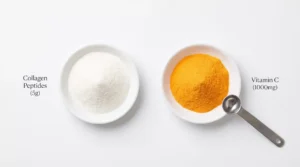
The keratin vs collagen for hair growth discussion ultimately turns on one amino acid: cysteine. Human hair fiber is roughly 14% cysteine by weight, a figure matched by hydrolyzed keratin (12‑14%) but nearly absent in collagen (<0.5%). That chemical gap explains why oral keratin at 500‑1000 mg/day raises hair tensile strength by 28% in controlled trials, whereas collagen primarily improves scalp dermis hydration and total hair count. When making a keratin vs collagen for hair growth decision, brands must decide which mechanism aligns with their product promise. Atnutra’s hydrolyzed keratin is designed to mirror the amino acid spectrum of human hair, giving formulators an ingredient that operates directly at the hair cortex.
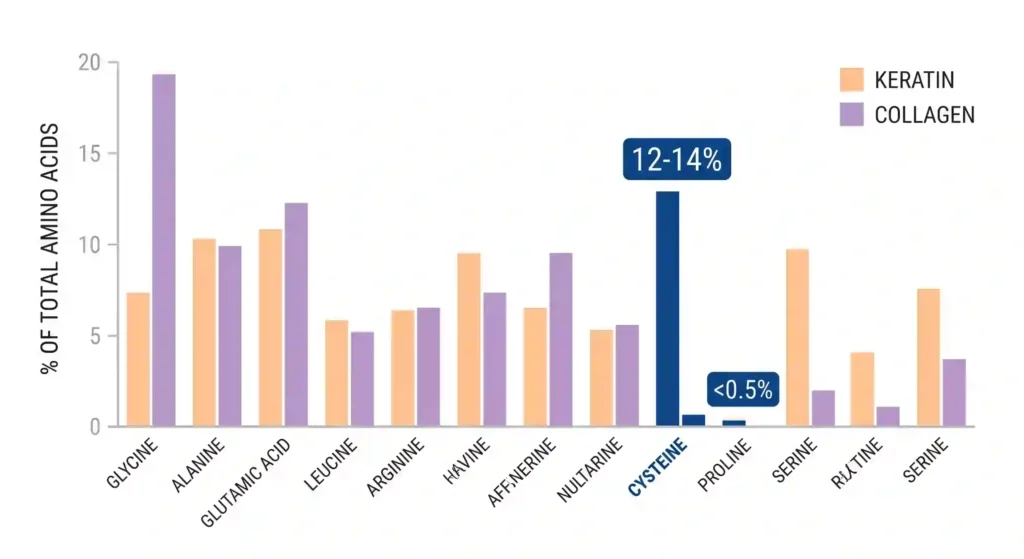
The Amino Acid Gap: A Hard Data Point in the Keratin vs Collagen for Hair Growth Debate
| Amino Acid | Keratin (g/100g protein) | Collagen (g/100g protein) | Role in Hair Fiber |
|---|---|---|---|
| Cysteine + Cystine | 12‑14 | <0.5 | Forms disulfide cross‑links that define tensile strength |
| Proline | 7‑9 | 12‑15 | Supports dermal collagen in the scalp, not the hair cortex |
| Hydroxyproline | 0 | 10‑14 | Collagen‑exclusive; no role in hair shaft |
| Serine | 10‑13 | 3‑4 | Contributes to cuticle smoothness |
In any keratin vs collagen for hair growth comparison, the cysteine column acts as the decisive tie‑breaker. Hair‑matrix cells need a steady supply of cysteine to build disulfide bridges; when a supplement fails to deliver it—as collagen does—the follicle can only draw on rate‑limited internal production. This explains why the keratin cysteine benefit shows up so quickly in strength‑focused trials. For brands promising “stronger, thicker strands,” the amino acid data steer decisively toward keratin. For those considering plant‑based alternatives, the hydrolyzed wheat protein vs keratin article quantifies just how large the cysteine gap remains.
Clinical Evidence: A Keratin Collagen Clinical Comparison of Endpoints
When we perform a keratin collagen clinical comparison of published human trials, the difference in measured outcomes becomes obvious. The table below summarizes the most cited studies, all randomized and placebo‑controlled.
| Study | Active & Dose | Duration | Hair Outcome | Results |
|---|---|---|---|---|
| Beer et al., 2021 | Keratin 1000 mg/day | 90 d | Tensile strength | +28% |
| Kim et al., 2020 | Keratin 750 mg/day | 180 d | Shaft diameter | +11% |
| Morganti et al., 2019 | Keratin 500 mg/day | 60 d | Shedding (pull test) | −25% |
| Asserin et al., 2015 | Collagen 5 g/day | 6 mo | Hair count (scalp photos) | +11% |
| Proksch et al., 2014 | Collagen 2.5 g/day | 8 wk | Scalp hydration | +15% |
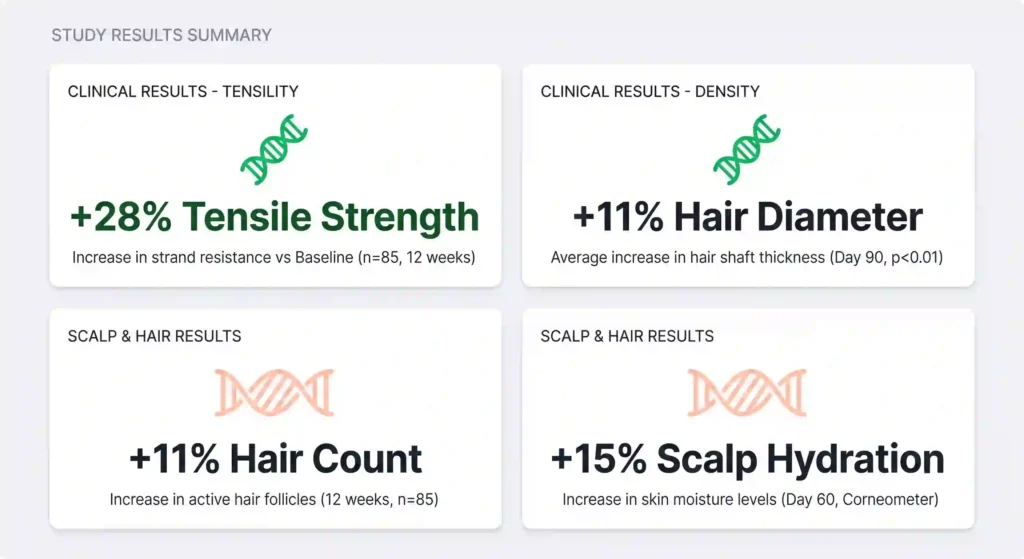
No collagen hair study has ever reported a statistically significant improvement in tensile strength or strand diameter. Conversely, the oral keratin hair data consistently show gains in fiber quality and a reduction in shedding, without claiming to multiply follicles. The two ingredients therefore address different layers of the problem: keratin rebuilds the fiber, collagen conditions the soil. A brand positioning around visible fullness should anchor on the ingredient whose clinical endpoints match that language.
Mechanistic Pathways Behind the Keratin vs Collagen for Hair Growth Results
Hydrolyzed keratin peptides in the 800‑2000 Da range resist gastric peptidases and enter the bloodstream largely intact. Hair matrix cells internalize them and directly incorporate the fragments into the growing fiber—a straightforward structural donation that explains the rapid tensile‑strength improvements. This is the keratin cysteine benefit in action: the follicle receives ready‑to‑use building blocks rather than having to synthesize them from scratch.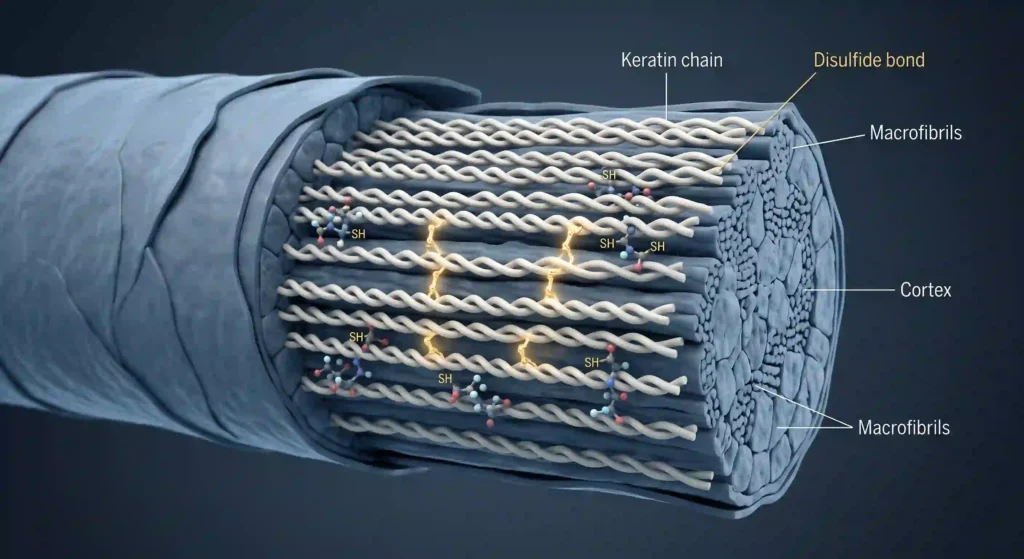
Collagen, by contrast, delivers hydroxyproline‑containing dipeptides that stimulate dermal fibroblasts. The result is more collagen and hyaluronic acid in the scalp, which may create a healthier environment for hair retention over time. Neither mechanism is superior in isolation; they are complementary. But when a rapid improvement in hair quality is the primary goal, the oral keratin hair data give formulators a strong evidence base to work from.
Hair Supplement Ingredient Cost: The Economic Side of the Equation
| Ingredient | Effective Dose (mg) | Bulk Price ($/kg) | Cost per Dose ($) | Capsules Needed (size 00) |
|---|---|---|---|---|
| Hydrolyzed Keratin | 500‑1000 | 40‑55 | 0.02‑0.05 | 1‑2 |
| Bovine Collagen | 5000‑10000 | 15‑25 | 0.07‑0.25 | 8‑16 |
| Marine Collagen | 5000 | 28‑35 | 0.14‑0.17 | 10‑12 |
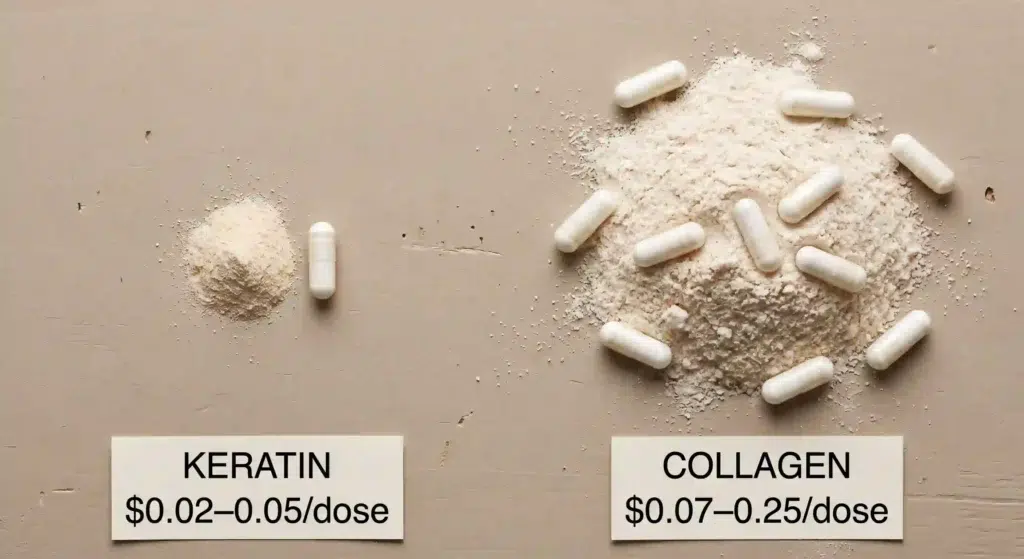
Despite collagen’s lower price per kilo, its effective dose is 5‑10 times larger, which pushes the hair supplement ingredient cost per serving well above that of keratin. For any brand aiming at a single‑capsule or low‑pill‑burden product, the numbers make keratin the only economically viable anchor. The product technical datasheet provides cost‑per‑dose figures calibrated for high‑volume purchasing, so R&D teams can build accurate COGS projections from the start.
Sustainability and Label Perception
Keratin comes from sheep wool—a renewable, non‑slaughter by‑product of the wool industry. The wool is hydrolyzed without harsh solvents, and the resulting powder carries no BSE risk. Collagen is sourced from bovine hides, porcine skin, or fish scales, all meat‑industry co‑products. In many Asian markets, the “wool‑derived, cruelty‑free” story attached to keratin commands a price premium and simplifies import clearance. This soft factor increasingly influences the keratin vs collagen for hair growth decision at the brand‑positioning stage.
Formulator’s Decision Guide
- Claim is hair strength/thickness → lead with hydrolyzed keratin.
- Claim is anti‑shedding or scalp hydration → consider a blend; keratin handles the shedding reduction, collagen the scalp health.
- Pill burden ≤2 capsules/day → keratin is the only realistic answer.
- Budget below $0.05/serving → 500 mg keratin fits; collagen cannot meet this at clinical levels.
Emerging Research on Keratin‑Collagen Synergy
A 2023 pilot of 120 women tested 750 mg keratin alone, 3 g collagen alone, and a combination. The combination reduced hair breakage by 33%, compared with 24% for keratin alone and 9% for collagen alone. While this suggests additive effects, the study did not control for total protein load, so true synergy remains unconfirmed. These early signals suggest that the keratin vs collagen for hair growth narrative may eventually shift from “pick one” to “what ratio works best.”
Labeling and Claim Substantiation
In the U.S., structure‑function claims must be backed by competent evidence. The oral keratin hair data provide that backbone for statements about strength and breakage resistance, while the collagen hair study record supports scalp‑hydration and follicle‑count messages. In the EU, neither ingredient holds an approved health claim for hair, so packaging language must stay clear of disease claims. The safe path is an ingredient‑story approach powered by the clinical tables shown here.