The central rule for handling keratin in oral formats is temperature control. Standard food‑grade keratin must never exceed 60 °C during processing. Dry blends require a 1:1 pre‑blend with a carrier; beverages demand a high‑solubility grade added after all acids; gummies call for post‑cook addition. Each format operates within a narrow parameter window, and a deviation of even a few degrees can shear the peptide chains that deliver the ingredient’s structural benefits. This guide maps those windows, drawn from full‑scale manufacturing runs. The processing thresholds described below were validated on Atnutra’s hydrolyzed keratin line, which supplies brands across all three formats.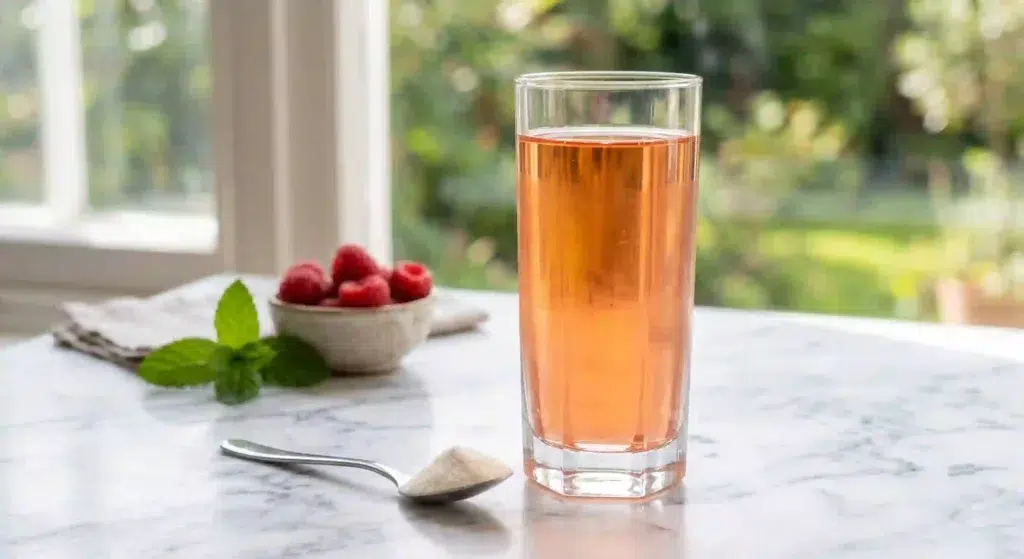
Working with Keratin in Capsules and Tablets
Encapsulation is the most dose‑efficient route because a single size‑00 capsule can carry up to 500 mg of keratin, leaving enough room for a flow aid. The blending protocol begins with a pre‑mix: keratin and microcrystalline cellulose are combined 1:1 in a V‑blender for 10 minutes at 25 rpm, passed through a 30‑mesh screen, and returned to the blender. This step locks in uniformity and prevents the keratin from separating during transfer. The main blend, containing any additional actives like biotin or zinc, then mixes for another 15‑20 minutes under low shear. High‑shear mixers are avoided because friction can push the localized temperature beyond the safe ceiling and denature the peptides.
For size‑00 gelatin or HPMC capsules, total fill weight targets 700 mg, with keratin occupying 300‑500 mg. The fill should exhibit less than ±3% weight variation across 100 capsules. If variation tops 5%, the root cause is usually bulk‑density inconsistency, solved by tightening the D50 spec to 100‑200 µm and ensuring a Hausner ratio below 1.25. Magnesium stearate is added at 0.5‑1% during the final 3 minutes of blending to lubricate without over‑coating the peptides. A dissolution check in simulated gastric fluid at pH 1.2 should show ≥80% peptide release within 30 minutes; slower release calls for a reduction in the hydrophobic lubricant or a switch to sodium stearyl fumarate.
Tablet compression follows a similar logic but demands a slightly coarser granule. Wet granulation with a water‑ethanol binder is performed while keeping the product bed at ≤50 °C via jacketed cooling. After fluid‑bed drying at 50 °C to reach 3‑5% moisture, the granules are pressed at 10‑15 kN to a hardness of 8‑12 kp. Higher force causes capping because keratin lacks the plastic deformation behavior of MCC. The exact flow and density values listed on the product information page should be cross‑referenced with the tablet‑press manufacturer’s recommendations before committing to a full production batch.
Incorporating Keratin into Powdered Beverages and Ready‑to‑Mix Formulas
The most frequent mistake in beverage work is treating keratin like collagen or whey. The solubility envelope is both pH‑ and temperature‑sensitive. A high‑solubility grade with an average MW of 1200 Da and solubility above 25 g/100 mL is the only suitable choice for clear liquids. The powder must be introduced after all acidic components have dissolved and the pH is buffered to 3.5‑4.2. Adding keratin directly into a low‑pH concentrate triggers localized acid hydrolysis that releases volatile sulfur notes. The correct order is: water, buffer, acids, keratin powder, then heat‑sensitive flavors and colors.
Sedimentation is another common defect. Keratin peptides, being amphiphilic, can self‑associate into visible particles if the ionic strength exceeds 0.5 M. Using deionized water or a low‑sodium buffer system suppresses this. For shelf‑stable clear beverages, 0.10‑0.20% high‑acyl gellan gum or 0.15% iota carrageenan creates a weak gel network that suspends the peptides without pushing perceived viscosity above 5 cP. Hot‑filling at 85 °C for 15‑20 seconds is permissible only after keratin is fully dissolved; if this thermal exposure risks peptide loss, an alternative is UHT processing of the base liquid followed by aseptic dosing of a keratin slurry. The slurry is made by dispersing keratin in 4 °C water at 20% solids, homogenizing at 150 bar, and injecting into the cooled sterile base. This split‑stream method preserves the peptide profile. For a full walk‑through of hydration and stability techniques, the drink formulation guide provides step‑by‑step instructions.
Keratin in Gummies and Soft‑Chews
Gummy manufacturing throws the toughest thermal challenge at keratin. The candy base cooks at 110‑115 °C to hit 78‑82 °Brix. Keratin added at this stage would undergo immediate peptide‑backbone hydrolysis and Maillard browning. The proper technique waits until the cooked mass cools to below 65 °C—confirmed by an inline thermocouple—before introducing the powder. At this temperature, the mass is fluid enough to mix but thermally safe. A heat‑stable grade is usually chosen, sifted and blended over 2‑3 minutes, then deposited into starch moulds within 10 minutes to avoid premature gelling.
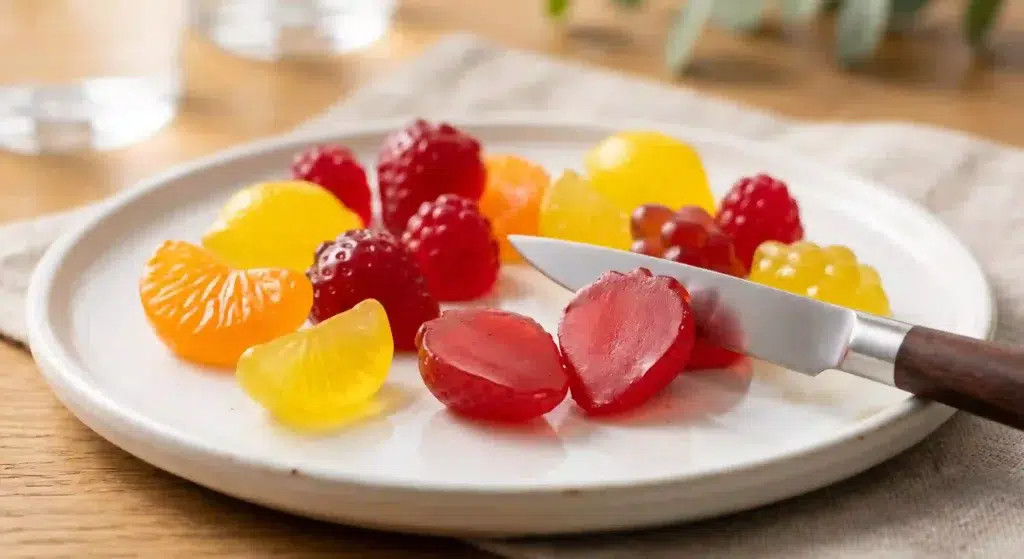
The heat‑stable grade gains its resilience through a proprietary cross‑linking treatment that does not block absorption. The trade‑off is a slightly lower protein floor (≥88% versus ≥90%) and a firmer bite. If the brand promise is a soft, melt‑away texture, the formulator may switch to a standard grade and use a cold‑depositing process: cool the base to 55 °C, mix in the keratin, and deposit at 50 °C. This lowers water activity but extends starch‑drying time from 24 to 48‑72 hours. Regardless of the grade chosen, the finished gummy should undergo cysteine analysis to confirm peptide recovery above 90%. A lower number signals thermal loss and requires the cooling protocol to be re‑evaluated.
Alternative Formats: Bars, Chocolates, and Sublinguals
In functional bars, proteins are typically added post‑bake through a binder syrup. For keratin, the binder should be warmed to exactly 42 °C to soften it without damaging the peptides. The powder is folded in over 5 minutes of paddle mixing before the bar is compressed and packed. Water activity must stay below 0.65 to block Maillard reactions. For chocolate, keratin is lipophobic and will not disperse directly into cocoa butter. The solution is a dry pre‑blend: keratin plus an equal weight of powdered sugar or cocoa, slowly folded into the molten chocolate at 30 °C, then stone‑mill refined to a particle size under 30 µm. Sublingual tablets require a fine‑powder grade (D50 <80 µm), 5% crospovidone as superdisintegrant, and direct compression at 5‑8 kN. The resulting tablet disintegrates in under 30 seconds, with taste‑masking handled by a sucralose‑menthol system that covers the savory note.
Troubleshooting Recurring Process Failures
- Hopper bridging. Keratin arches over the dosator, stopping fill. Pre‑screen through a 40‑mesh sieve, add 0.5% colloidal silica, and keep RH below 40% in the hopper. If the problem persists, the bulk density is too low—request a denser grade.
- Maillard browning in dry beverages. Even at ambient temperature, keratin reacts with reducing sugars like fructose. Switch to non‑reducing sweeteners (sucrose, allulose, monk fruit) and pack in nitrogen‑flushed foil sticks.
- Off‑notes in clear liquids. Keratin peptides can adsorb volatile flavors, muting the fruit profile and amplifying a woolly note. Add 0.02% β‑cyclodextrin before the keratin and pair with a bold top‑note such as passionfruit.
- Gummy sweating after 2 months. Excess moisture exudation signals an incomplete starch‑drying cycle. Increase the pectin: gelatin ratio and drop the target water activity to 0.55‑0.60, measuring with a dew‑point instrument.
Scale‑Up Considerations
Processes tuned on a 1‑kg lab blender do not scale linearly. In a 500‑kg bin blender, the same keratin‑MCC pre‑blend that needed 10 minutes in the lab may require 20 minutes. In a fluid bed granulator, the product core temperature often runs 3‑5 °C above the inlet air setpoint—a drying setting of 50 °C could mean 54 °C inside the bowl, still safe but close to the limit. A worst‑case trial run at the upper temperature boundary should confirm peptide recovery above 95%. Investments in jacketed vessels and cryogenic‑nitrogen injection often pay back within three years by eliminating thermal loss and the need to over‑formulate.
Cleaning Validation in Shared Facilities
Although keratin is not a major allergen, cross‑contamination with milk, soy, or gluten from previous runs must be controlled. Swab tests after a milk‑based product should show β‑lactoglobulin below 5 ppm on all product‑contact surfaces. For keratin carryover, a visual clean standard is usually sufficient, but strict vegan lines must also include dedicated scoops and dust‑collection filters. Understanding these operational constraints helps brands negotiate better lead times and minimum order quantities in co‑manufacturing agreements.
Stability Protocols That Link Process to Shelf Life
At least three pilot batches per format should undergo accelerated stability at 40 °C/75% RH for 12 weeks, with additional samples at 30 °C/65% RH for 24 weeks. Monthly tests track cysteine content, dissolution, visual precipitation, and chew texture. If cysteine loss exceeds 10%, the entire process chain must be scrutinized. Capsules failing dissolution at month 3 often point to excessive magnesium stearate or gelatin‑cross‑linking—switching to HPMC capsules usually resolves it. Gummies that grow too chewy after 6 months signal over‑drying; a higher‑barrier film plus a slightly larger desiccant sachet can restore the moisture equilibrium. These stability insights complete the picture of how to formulate with keratin across dosage forms. For a comparison of how another protein handles the same process variables, the hydrolyzed wheat protein vs keratin analysis documents differences in heat tolerance and flavor interaction.