9 Foods High in Type 2 Collagen: Why Whole Foods Fail Clinical Standards
Executive Summary: The most concentrated foods high in type 2 collagen include poultry sternal cartilage, mammalian trachea, and marine cartilage. While incorporating these ingredients into a daily diet provides excellent baseline nutrition, standard culinary preparation (boiling, roasting) thermally denatures the protein’s native triple-helix structure. Consequently, dietary foods with type 2 collagen cannot deliver the active, undenatured macromolecules required to trigger immune-mediated joint support. Achieving clinical efficacy requires specialized, low-temperature commercial extraction.
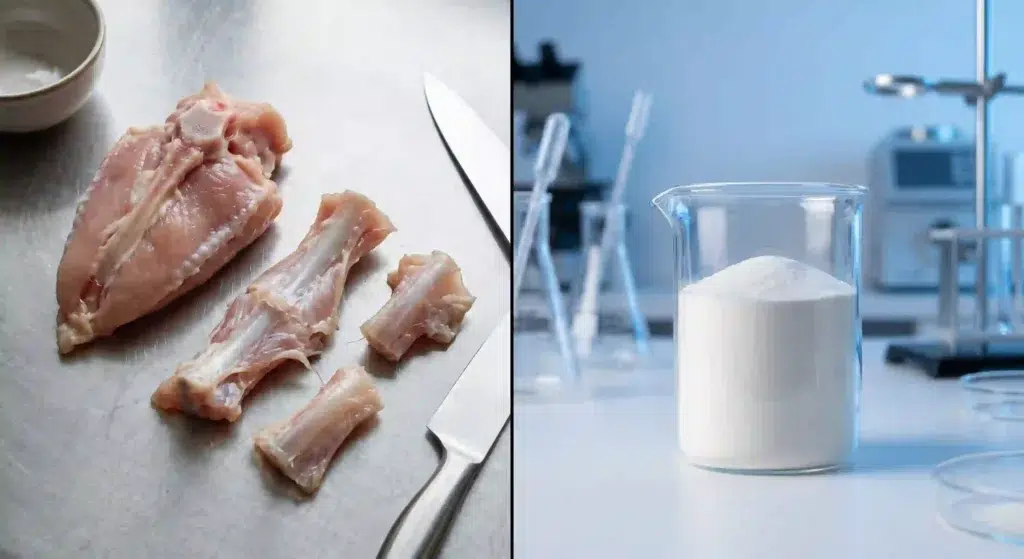
The concept of obtaining targeted joint support directly from a daily diet is highly appealing. The underlying logic is straightforward: if natural aging and mechanical wear degrade human articular cartilage, consuming cartilage-rich diets should logically provide the body with the materials to repair it. This premise has driven immense consumer interest toward identifying natural foods high in collagen type 2.
However, the transition from a raw anatomical structure to a biologically active nutrient inside the human body is highly complex. Many nutritional guides highlight various broths and specific meat cuts as therapeutic, yet they frequently overlook the delicate biochemistry of the protein molecule itself. Specifically, they fail to account for the structural degradation that occurs when a highly sensitive protein matrix is subjected to culinary heat.
For product formulators, understanding this fundamental gap between dietary intake and clinical efficacy is critical. If your R&D team is evaluating broader protein categories for different applications, our complete comparison guide details how these structural families differ. Here, however, we are focusing exclusively on raw sources of type 2 collagen, evaluating both the anatomical yield of the animal and the precise thermal limits of the protein.
The Big 9: Anatomical Profiling of Natural Type 2 Collagen Sources
Cartilage exists in several forms within the animal kingdom. While skin and tendons are packed with Type I collagen, the articular cartilage that cushions skeletal joints is composed of hyaline cartilage. Hyaline cartilage is the exclusive biological origin for the specific peptide matrix required for joint formulations. Below is a comprehensive analysis of the nine primary type 2 collagen sources, evaluated by their biochemical profiles and industrial viability.
Poultry-Derived Hyaline Cartilage
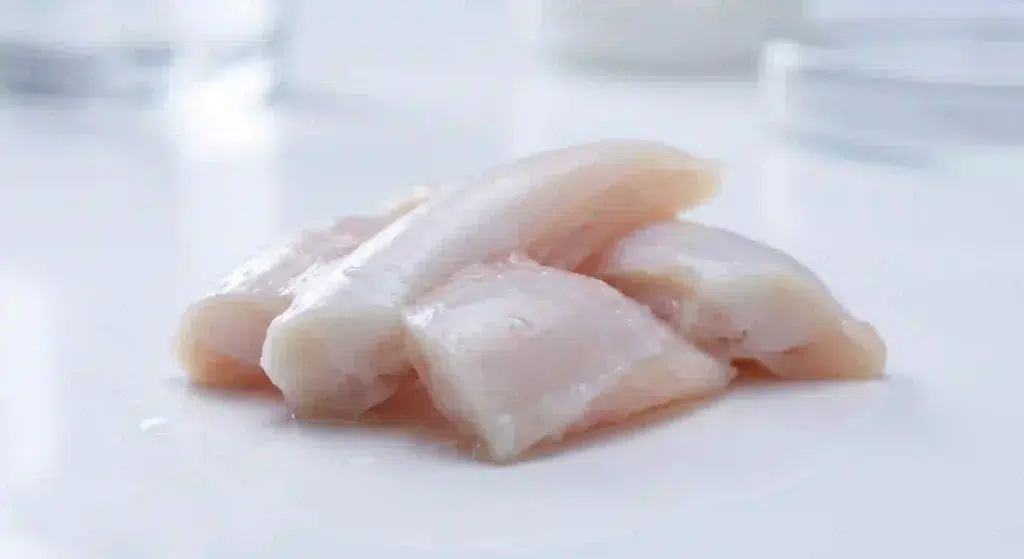
Avian cartilage represents the global standard for commercial extraction. Due to its high density, predictable supply chain, and relatively low fat content, poultry consistently ranks at the top of viable foods high in type 2 collagen.
| Raw Material Origin | Biochemical Composition | Industrial Viability vs. Culinary Use |
|---|---|---|
| 1. Chicken Sternal Cartilage | The sternum (breastbone) features a thick, distinct plate of hyaline cartilage. It possesses a pristine matrix of native protein, endogenous hyaluronic acid, and chondroitin sulfate. | This is the premier raw material for commercial extraction. Low-temperature enzymatic processes can isolate the active protein cleanly. In culinary settings (roasting), the matrix melts entirely into generic gelatin. |
| 2. Chicken Feet and Combs | These are highly concentrated foods with collagen type 2. The feet contain numerous small articular joints, while the combs hold exceptional concentrations of hyaluronic acid. | Traditionally deep-fried or braised for hours, causing total peptide bond destruction. Industrially viable, but processing requires costly defatting and advanced filtration to isolate the target molecules. |
| 3. Turkey Necks and Gizzards | The cervical vertebrae of turkeys are encased in thick cartilage rings. Turkey provides a slightly higher anatomical yield per bird compared to standard broiler chickens. | Consumers typically subject turkey necks to high-heat roasting or prolonged boiling. As a commercial raw material, it is effective but faces supply chain limitations compared to the immense scale of the chicken industry. |
Mammalian and Bovine Connective Tissues
Mammalian tissues are heavy, abundant, and extensively utilized in the pet nutrition sector. However, isolating the specific target protein from massive, intertwined structural tissues presents unique extraction challenges.
| Raw Material Origin | Biochemical Composition | Industrial Viability vs. Culinary Use |
|---|---|---|
| 4. Beef and Pork Trachea | The mammalian windpipe consists of rigid cartilaginous rings. This structural density makes trachea one of the most prominent type 2 collagen sources utilized in raw canine diets. | Trachea is exceedingly fibrous. Making it edible for human consumption requires intense pressure cooking, which permanently alters the 3D protein structure necessary for gut immune recognition. |
| 5. Pork Trotters (Knuckles) | While trotters are technically foods high in collagen type 2 due to the joint tissue, their matrix is overwhelmingly diluted by Type I collagen (skin) and subcutaneous fat. | They provide excellent broad-spectrum nutrition in stews. However, isolating pure Type II protein from the vast amounts of Type I collagen makes trotters economically inefficient for targeted commercial extraction. |
| 6. Rib Tips and Bone Ends | The smooth articular cartilage capping the ends of rib bones contains the precise protein matrix necessary for human joint support. | These are extremely low-yield foods with type 2 collagen. The required volume of consumption to harvest even one milligram of active protein makes this source impractical for both culinary and commercial purposes. |
Marine Cartilage and Traditional Broths
Marine ingredients are capturing market share due to strong sustainability metrics. Concurrently, the nutritional industry must address the biochemical realities of traditional bone broths.
| Raw Material Origin | Biochemical Composition | Industrial Viability vs. Culinary Use |
|---|---|---|
| 7. Salmon and Shark Cartilage | Marine sources of type 2 collagen naturally boast exceptional concentrations of chondroitin sulfate. Salmon cartilage is rapidly replacing shark due to ecological sustainability mandates. | Marine extracts are highly effective but mandate rigorous, expensive screening for oceanic heavy metals and environmental toxins prior to integration into functional foods. |
| 8. Fish Maw (Dried Swim Bladder) | Predominantly composed of Type I collagen for skin elasticity, certain species contain unique trace amounts of Type II fibers within the bladder structure. | Extreme market pricing, speculative valuation, and a total lack of batch-to-batch standardization make fish maw an unviable candidate for scalable B2B extraction. |
| 9. Slow-Simmered Bone Broth | Created by simmering animal bones for 12 to 48 hours. It is the most universally recommended option among foods with collagen type 2 in popular media. | Prolonged thermal exposure converts all structural collagen into generic gelatin. While highly beneficial for intestinal lining health, bone broth contains zero active, undenatured type II molecules. |
The Biochemistry of Denaturation: Why Diet Alone Falls Short
The discrepancy between dietary intake and targeted joint relief lies within the laws of protein biochemistry. When analyzing why regular consumption of foods high in collagen type 2 fails to replicate the joint mobility results demonstrated in clinical trials, three distinct physiological barriers emerge.
The Breakdown of the Triple-Helix Architecture
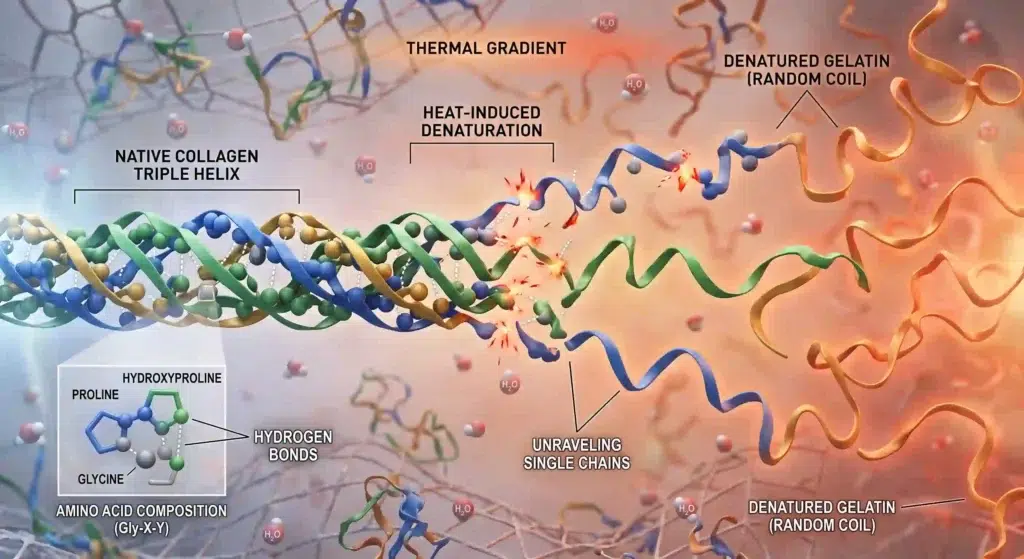
Before investigating dietary implementation, formulators often research what type 2 collagen is at a molecular level. Native collagen is structured as a microscopic, three-stranded rope, scientifically referred to as a triple helix. These three polypeptide chains are held together by delicate hydrogen bonds. For undenatured type II collagen to function correctly in the human body, it must maintain this exact three-dimensional architecture.
The standard culinary techniques utilized to prepare foods high in type 2 collagen—such as roasting, pressure-cooking, and deep-frying—operate at temperatures ranging from 160°F to over 400°F (71°C to 200°C). However, the hydrogen bonds maintaining the collagen triple helix begin to permanently unravel and denature at approximately 104°F (40°C). By the time any natural dietary source is cooked to a safe internal temperature, the active protein structure is completely obliterated. The resulting meal delivers generic amino acids, but the highly specific, active structural matrix is permanently lost.
The Mechanism of Oral Tolerance
Understanding why the triple helix matters requires examining the gut’s immune system. Undenatured type II collagen does not work by simply absorbing into the bloodstream to build new cartilage. Instead, it operates through an immune-modulating process known as “Oral Tolerance.”
When the intact triple helix passes into the small intestine, it is recognized by specialized lymphatic tissues called Peyer’s patches. These patches sample the protein and dispatch regulatory T-cells (Tregs) to the joints. These T-cells instruct the body’s immune system to stop secreting collagenase (the enzyme that destroys joint cartilage) and reduce inflammation. If a person consumes cooked foods with type 2 collagen, the denatured protein cannot bind to the Peyer’s patches. Without the intact structure, the regulatory T-cells are never activated, and the therapeutic joint-saving cascade never occurs.
Molecular Weight and the Absorption Barrier
Assuming an individual attempted to bypass thermal degradation by consuming completely raw sources of type 2 collagen, a secondary barrier exists: molecular weight. The native, undenatured collagen molecule is exceptionally large, measuring approximately 300 kilodaltons (kDa). A molecule of this magnitude cannot passively diffuse across the intestinal epithelium into the bloodstream.
While the undenatured form is meant to remain large to trigger the Peyer’s patches, formulators also use a second type of collagen designed specifically for blood absorption: hydrolyzed collagen peptides. Industrial hydrolysis utilizes precise enzymatic shearing to cleave the massive 300 kDa molecule into tiny di-peptides and tri-peptides (weighing just 2 to 3 kDa). These microscopic peptides absorb rapidly, entering the synovial fluid where they directly stimulate chondrocytes (cartilage cells) to synthesize new tissue. It is biochemically impossible to achieve this precise enzymatic hydrolysis by simply boiling bones on a kitchen stove.
Formulation Strategy: Engineering the Clinical Dose
For research and development teams creating modern dietary supplements, functional beverages, or joint health gummies, heavily marketing the concept of whole foods high in collagen type 2 serves as an excellent foundational narrative. However, actual product formulation demands standardized, industrial extracts.
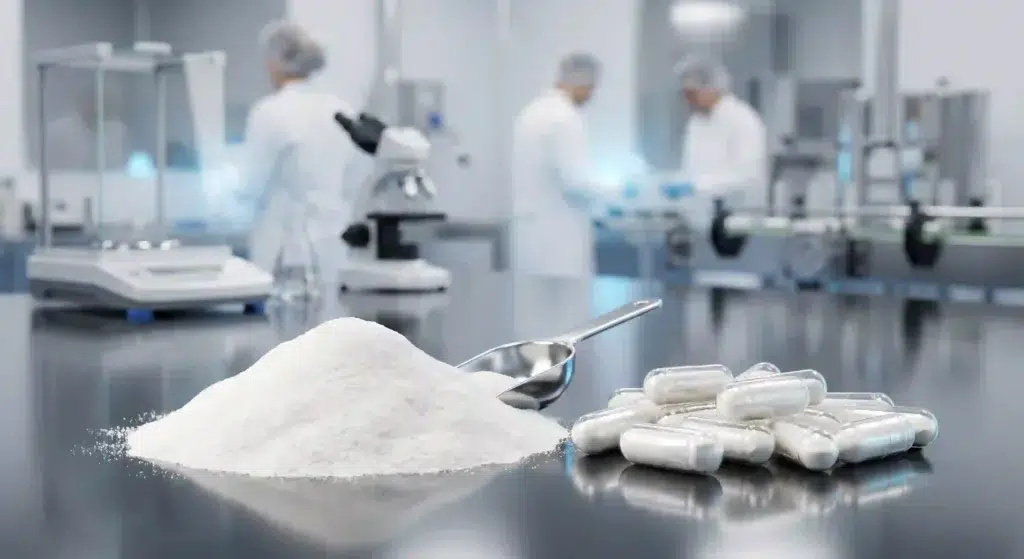
When sourcing these commercial raw materials, formulators must select between two distinct clinical pathways based on the intended delivery mechanism:
- Undenatured Type II Collagen: Extracted using patented, ultra-low-temperature processes that prevent the breaking of hydrogen bonds. Because it relies on the immune-signaling oral tolerance mechanism, it requires a remarkably low clinical dose (exactly 40mg per day). This makes it the absolute premium choice for small capsules, softgels, and highly concentrated joint-care formulas.
- Hydrolyzed Type II Peptides: Processed via aggressive but controlled enzymatic hydrolysis to ensure 100% water solubility. This format is administered in larger therapeutic doses (typically 1 to 3 grams per serving), making it the optimal structural ingredient for functional protein powders, ready-to-drink (RTD) beverages, and sports nutrition bars.
Navigating the thermal stability of these ingredients during manufacturing is equally critical. For example, if a production facility is integrating these proteins into chewy confectionary formats, strict adherence to thermal thresholds during the pectin boiling phase is mandatory. Detailed engineering protocols for this process can be found in our technical breakdown on collagen type II gummy manufacturing.
Professional formulators seeking verified type 2 collagen sources must demand rigorous analytical proof from their wholesale suppliers. A generic specification sheet detailing “total protein” is insufficient. Reputable suppliers provide a comprehensive Certificate of Analysis (COA) confirming exact molecular weight distribution. For undenatured extracts, the supplier must provide ELISA (Enzyme-Linked Immunosorbent Assay) testing results, which specifically identify and quantify the surviving intact three-dimensional structure of the protein.
If your manufacturing facility is transitioning away from inconsistent dietary ingredients and requires a scalable, clinically validated supply chain, we invite you to review the rigorous technical specifications of our wholesale type II collagen peptides.
Conclusion: The Necessity of Standardized Extraction
Incorporating traditional foods high in type 2 collagen into a daily routine provides excellent, broad-spectrum systemic nutrition. Slow-cooked meats and broths supply essential amino acids, trace minerals, and macronutrients vital for overall cellular health.
However, the nutritional industry must delineate between general dietary wellness and targeted clinical interventions. Extracting reproducible therapeutic value from natural foods with type 2 collagen is scientifically unfeasible outside of a highly controlled, low-temperature manufacturing environment. For brands committed to delivering measurable joint mobility improvements and securing repeat consumer loyalty, sourcing standardized, rigorously tested bulk extracts remains the only viable formulation path.