
Brown Rice Protein for Plant-Based Protein Powder Formulations
ATNUTRA Brown Rice Protein Powder is available in 80% and 85% protein grades for dietary supplement and plant-based protein powder applications. Qualification should start with the exact grade and particle-size specification, followed by dispersion, suspension, sensory and complete-formula testing under realistic use conditions.
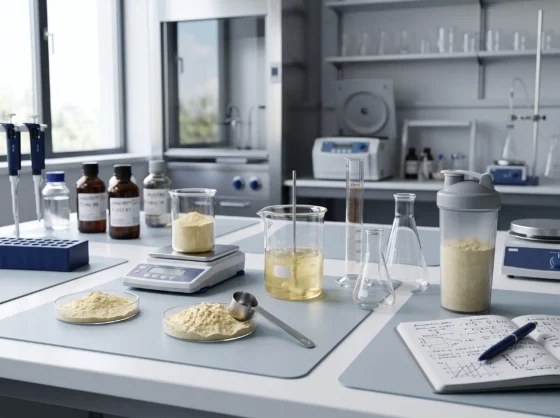
Start With the Exact Brown Rice Protein Grade
Use the current specification to define the selected grade before evaluating formulation behavior. Solubility, suspension and mouthfeel should still be tested in the intended finished system.
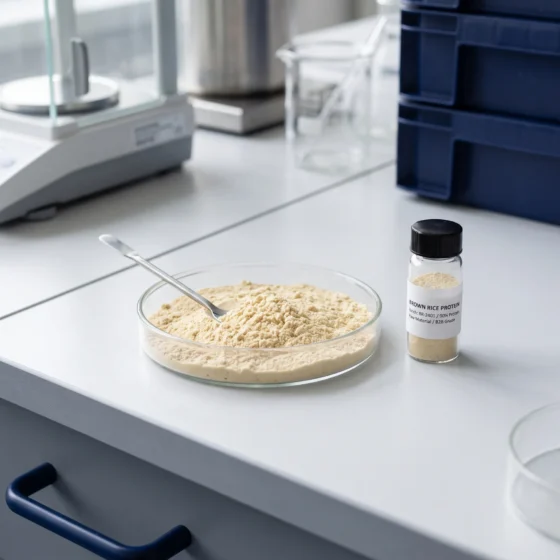
Do Not Treat Every Brown Rice Protein Grade the Same
Protein level, particle size and process history can change how a plant-protein ingredient behaves in a powder system. Start with the exact grade, then test the factors that matter to your formulation.
Currently Verified
Confirm or Test for the Selected Grade
What R&D Teams Should Test in a Plant-Based Protein Powder
These are evaluation dimensions for the selected grade, not guaranteed performance claims for every Brown Rice Protein formulation.
Wettability & Dispersion
Measure how quickly the powder wets, whether clumps form and how it disperses under the intended mixing method.
Solubility & Suspension
Differentiate dissolved material from suspended protein and observe whether the system remains visually uniform.
Sedimentation
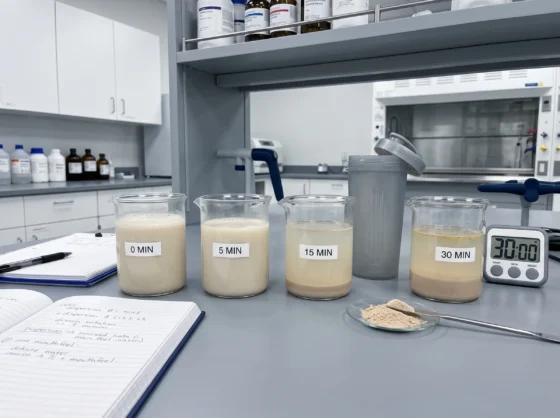
Record visible sediment immediately after mixing and again after a relevant standing period.
Particle Texture & Mouthfeel
Assess grittiness, chalkiness and perceived particle texture at the actual protein load.
Sensory
Evaluate color, cereal or rice notes, astringency and flavor interaction in the complete flavored system.
Formula Conditions
Repeat testing under realistic concentration, water volume, pH, temperature and co-ingredient conditions.
Evaluate Brown Rice Protein Under Realistic Use Conditions
Use a representative sample to reproduce the intended concentration, preparation method and standing time before commercial qualification.
Use Typical Data for Review — Not as Guaranteed Specifications
The current technical sheet includes typical nutritional and amino-acid data for formulation review. These values are explicitly identified as typical and should not be treated as guaranteed specifications for every lot.
Selected Typical Amino-Acid Data
Selected Typical Nutrition Data
Documents to Review Before Commercial Qualification
Request the latest applicable files for the selected grade and current certification scope before commercial approval.
Product Specification
Review current grade, protein level, particle size, pH and quality criteria.
Representative COA
Use current batch reporting to support lot-level qualification.
Nutrition & Amino-Acid Data
Review typical data separately from guaranteed specification fields.
Allergen / GMO Information
Confirm applicable declarations and test scope for the selected project.
Origin / Raw Material
Confirm Oryza sativa raw-material and applicable origin documentation.
Certification Documents
Review current certificates according to the applicable grade and certification scope.

Product Selection vs Formulation Evaluation
Use the application pathway to decide where an ingredient may fit. Use the formulation pathway to evaluate how the selected grade behaves in the intended powder system.
Brown Rice Protein Formulation Questions
What protein grades does ATNUTRA Brown Rice Protein offer?
The current specification lists 80% and 85% protein grades, measured on a dry basis using N × 6.25. Confirm the exact grade on the current specification before qualification.
What particle size is available?
The current specification lists 300 mesh or particle size according to client requirements. Particle size is one formulation variable and does not by itself guarantee solubility, dispersion or mouthfeel.
Is ATNUTRA Brown Rice Protein highly soluble?
The current specification does not establish a universal solubility performance claim. Evaluate the selected grade under the intended protein load, pH, temperature and mixing conditions.
How should suspension and sedimentation be evaluated?
Observe the system immediately after preparation and again after a relevant standing period, using the intended concentration and mixing method.
Does the technical sheet include amino-acid data?
Yes. The current technical sheet includes typical amino-acid data, but it explicitly states that those values are typical and are not specifications.
Is the product certified organic?
The current specification lists EOS & NOP Organic among available certifications. Confirm the applicable grade, current certificate and scope before using an organic claim or certification logo.
Can I request a sample before qualification?
Yes. Request the current specification, available documentation and an evaluation sample for formulation testing.
Does ATNUTRA formulate the finished protein powder?
ATNUTRA supplies dietary supplement ingredients and technical information for ingredient qualification. Finished-product formulation should be validated by the customer's R&D or formulation team.
Evaluating Brown Rice Protein for a Plant-Based Protein Powder?
Tell us the required grade, intended dosage format, target protein load, preparation method, destination market and expected commercial quantity. We can provide available specifications, documentation, an evaluation sample and quotation.