
Beef Bone Broth Protein Powder for Nutraceutical Formulations
High-protein Beef Bone Broth ingredient for B2B sourcing, with a NLT 97% protein specification and 3,000–5,000 molecular-weight range. Review batch analytical data, technical qualification points and commercial sourcing requirements below.
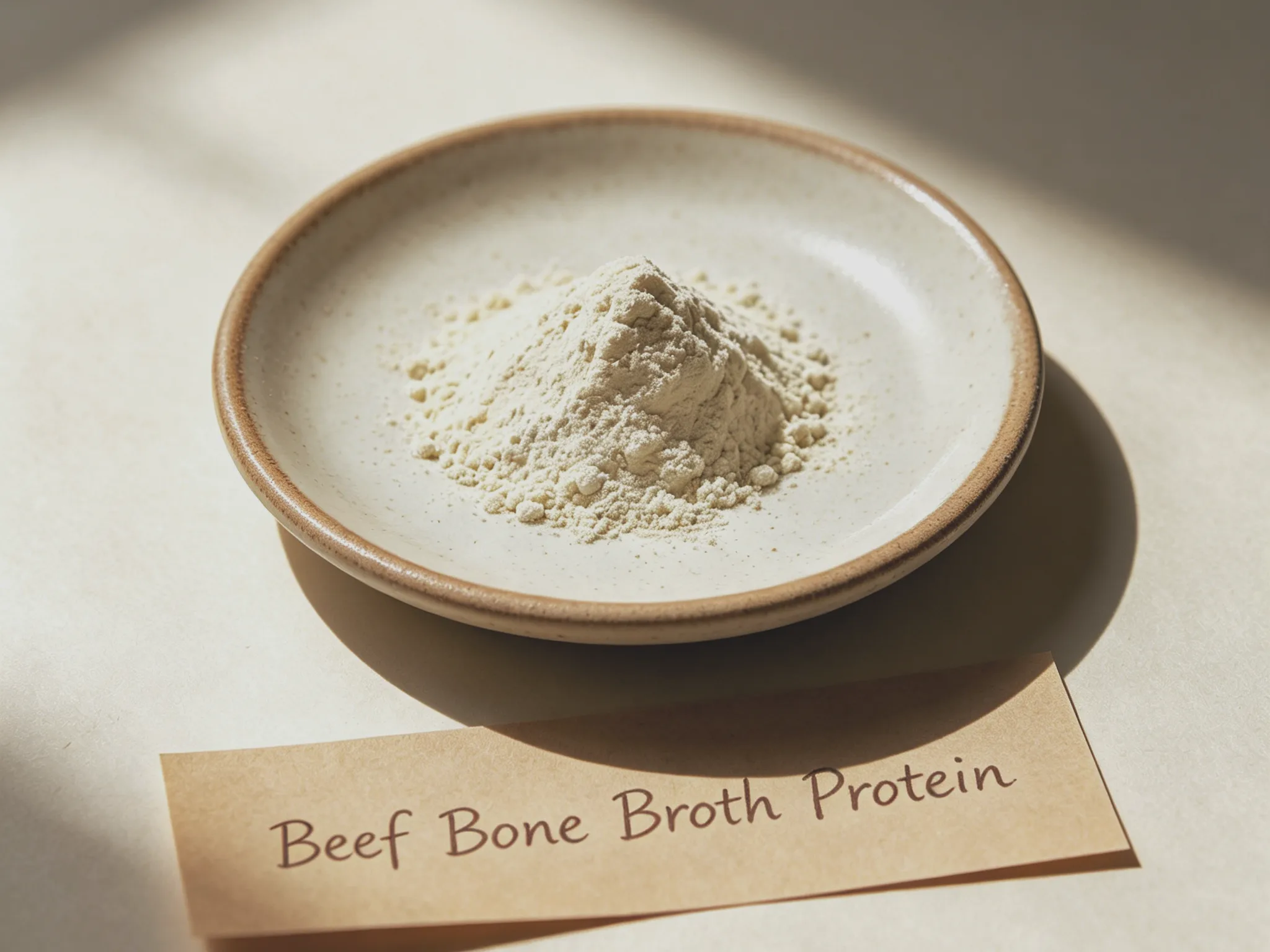
High-Protein Beef Bone Broth Powder
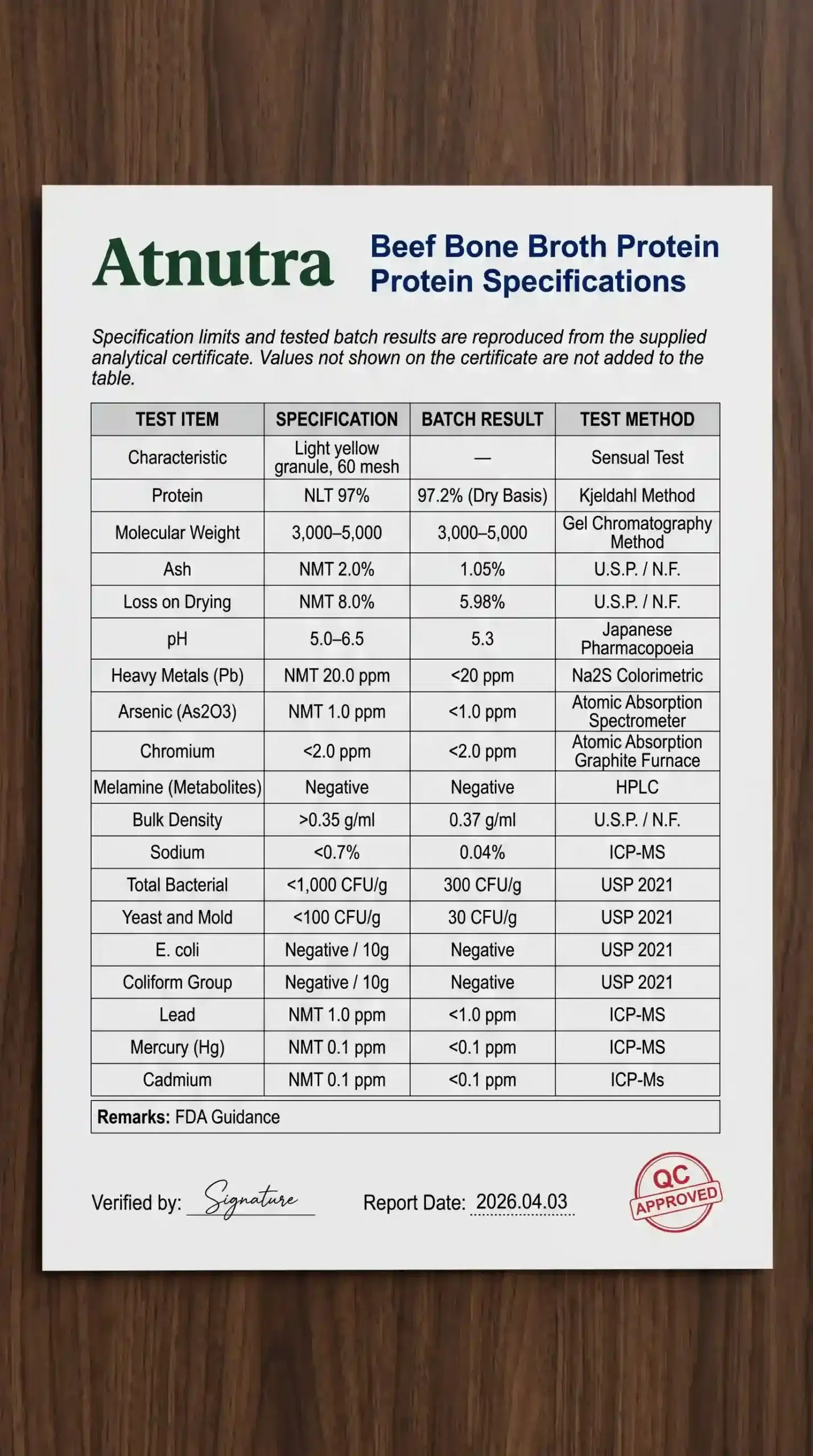
The Certificate of Analysis identifies the material as Beef Bone Broth and controls protein, molecular weight, ash, loss on drying, pH, heavy metals, melamine metabolites, bulk density, sodium and microbiology.
For formulation and procurement teams, the key differentiator on this page is measurable batch composition. Claims about collagen type, amino acids, glucosamine, chondroitin, hyaluronic acid, grass-fed sourcing or extraction process should only be added when separate current technical documentation supports them.
Batch BB260403 Snapshot
Batch values are displayed separately from specification limits so procurement and R&D teams can distinguish the product standard from the tested result.
Beef Bone Broth Protein Specifications
Specification limits and tested batch results are reproduced from the supplied analytical certificate. Values not shown on the certificate are not added to the table.
| Test Item | Specification | Batch Result | Test Method |
|---|---|---|---|
| Characteristic | Light yellow granule, 60 mesh | — | Sensual Test |
| Protein | NLT 97% | 97.2% (Dry Basis) | Kjeldahl Method |
| Molecular Weight | 3,000–5,000 | 3,000–5,000 | Gel Chromatography Method |
| Ash | NMT 2.0% | 1.05% | U.S.P. / N.F. |
| Loss on Drying | NMT 8.0% | 5.98% | U.S.P. / N.F. |
| pH | 5.0–6.5 | 5.3 | Japanese Pharmacopoeia |
| Heavy Metals (Pb) | NMT 20.0 ppm | <20 ppm | Na2S Colorimetric |
| Arsenic (As2O3) | NMT 1.0 ppm | <1.0 ppm | Atomic Absorption Spectrometer |
| Chromium | <2.0 ppm | <2.0 ppm | Atomic Absorption Graphite Furnace |
| Melamine (Metabolites) | Negative | Negative | HPLC |
| Bulk Density | >0.35 g/ml | 0.37 g/ml | U.S.P. / N.F. |
| Sodium | <0.7% | 0.04% | ICP-MS |
| Total Bacterial | <1,000 CFU/g | 300 CFU/g | USP 2021 |
| Yeast and Mold | <100 CFU/g | 30 CFU/g | USP 2021 |
| E. coli | Negative / 10g | Negative | USP 2021 |
| Coliform Group | Negative / 10g | Negative | USP 2021 |
| Lead | NMT 1.0 ppm | <1.0 ppm | ICP-MS |
| Mercury (Hg) | NMT 0.1 ppm | <0.1 ppm | ICP-MS |
| Cadmium | NMT 0.1 ppm | <0.1 ppm | ICP-MS |
What the Analytical Data Supports — and What to Request Separately
Current SERP competitors frequently add collagen, amino-acid, grass-fed and clean-label claims. For supplier qualification, keep those claims separate from what the batch analysis actually proves.
Supported by the Batch Analysis
These properties are explicitly reported in the supplied certificate.
Request Before Making Additional Claims
These points are not established by the supplied analytical certificate.
Beef Bone Broth Protein Powder for Product Development
These are formulation formats to evaluate during R&D. Finished-product claims, nutrition positioning and processing suitability should be confirmed independently.
Protein Drink Powders
Evaluate dispersibility, flavor system, protein target and serving size in the finished powder blend.
Instant Broth Concepts
Assess taste, salt system, seasonings, aroma and reconstitution performance for savory products.
Functional Nutrition
Use the documented protein specification as one input when developing high-protein nutrition concepts.
Protein Blend Systems
Evaluate sensory and functional compatibility when combining bone broth protein with other animal or plant proteins.
What to Request from a Beef Bone Broth Protein Supplier
Current SERP results for commercial bone broth protein emphasize protein assay, source, samples, packaging and technical documents. Separate verified data from marketing language.
Confirm protein, molecular weight, physical parameters, contaminants and microbiology on the lot being qualified.
Request the manufacturing flow and source declaration if your label depends on bone, broth or process-specific positioning.
Request separate analysis before using collagen, glycine, proline or other amino-acid claims.
Test taste, odor, color, dispersibility and compatibility in your actual finished-product system.
The certificate records a 2,000 kg batch quantity, not a commercial pack size or current inventory commitment.
Beef Bone Broth Protein Sourcing Questions
What is the protein specification for this Beef Bone Broth Protein?
The product specification is NLT 97% protein. Batch BB260403 reports 97.2% protein on a dry basis.
What is the molecular weight range?
The specification and batch result both report a 3,000–5,000 molecular-weight range using gel chromatography.
Does the COA prove Type I and Type III collagen content?
No. The analytical certificate does not report collagen type or collagen percentage. Separate product-specific testing is required before publishing Type I/III claims.
Does it contain glucosamine, chondroitin or hyaluronic acid?
Those components are not quantified in the supplied analytical certificate. Do not present them as standardized product features without additional supporting data.
What is the bulk density and sodium level?
The bulk-density specification is >0.35 g/ml with a batch result of 0.37 g/ml. Sodium is specified at <0.7% and the batch result is 0.04%.
Is this product grass-fed or dairy-free?
The analytical certificate does not establish grass-fed, dairy-free, allergen, hormone-free or BSE/TSE status. Request the relevant current declarations before using those claims.
What is the commercial packaging and MOQ?
The certificate shows a 2,000 kg batch quantity but does not specify packaging or MOQ. Request current commercial terms for your destination and expected volume.
Can I request current technical documents and an R&D sample?
Yes. Contact ATNUTRA with the target application, destination market and expected volume to request documentation, sample availability and pricing.
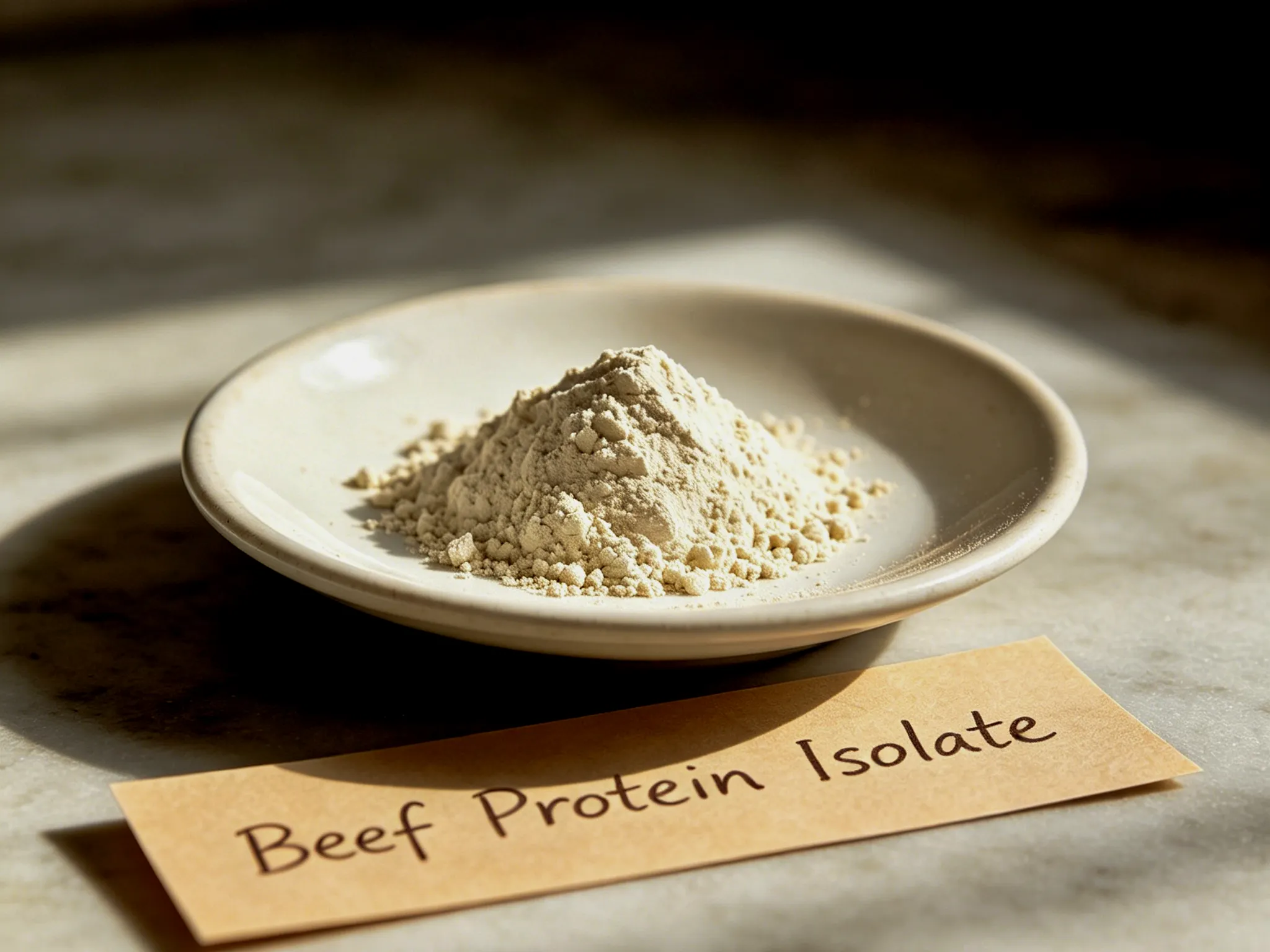
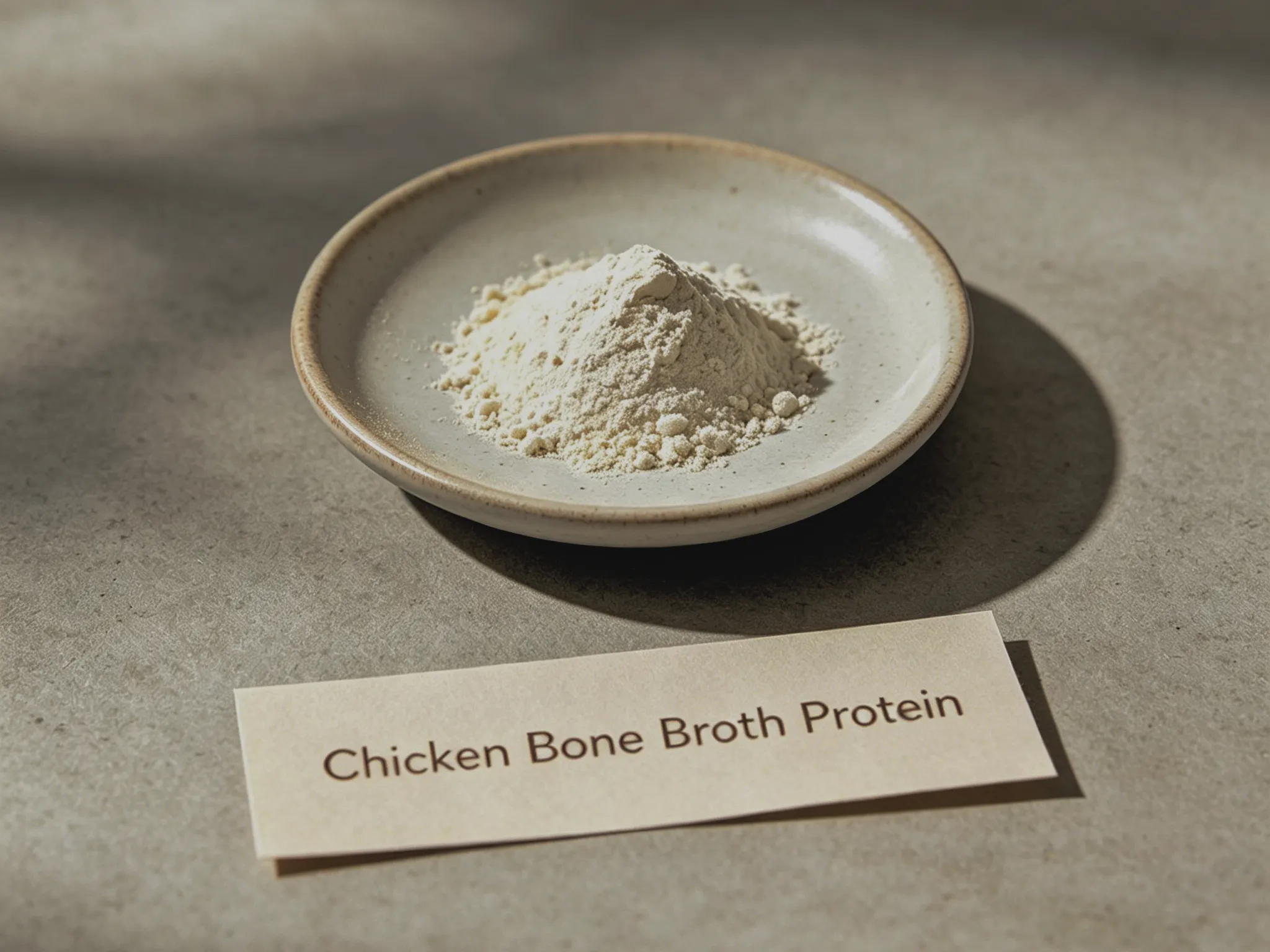
Compare Other Protein Ingredients
Compare protein format, source positioning and technical specifications before selecting the protein system for your formulation.
Ready to Source Beef Bone Broth Protein?
Tell us your target formulation, destination market and expected volume. Request current technical documents, R&D material availability and a commercial quotation.