Collagen peptides have shown promising results for some hair and nail measurements, but they are not an established treatment for hair loss. Small human studies have reported improvements in hair strand thickness, shedding, nail growth, and breakage. The strength of that evidence varies by outcome and by the specific ingredient tested.
For brittle nails, an often-cited study reported fewer broken nails after six months, but it lacked a placebo group. For hair, controlled studies have measured strand diameter and shedding; those findings do not automatically mean more hairs growing on the scalp.
If you are considering a supplement, start with your goal. Improving nail breakage, making individual strands thicker, and treating persistent hair loss require different evidence.
What Are Collagen Peptides?
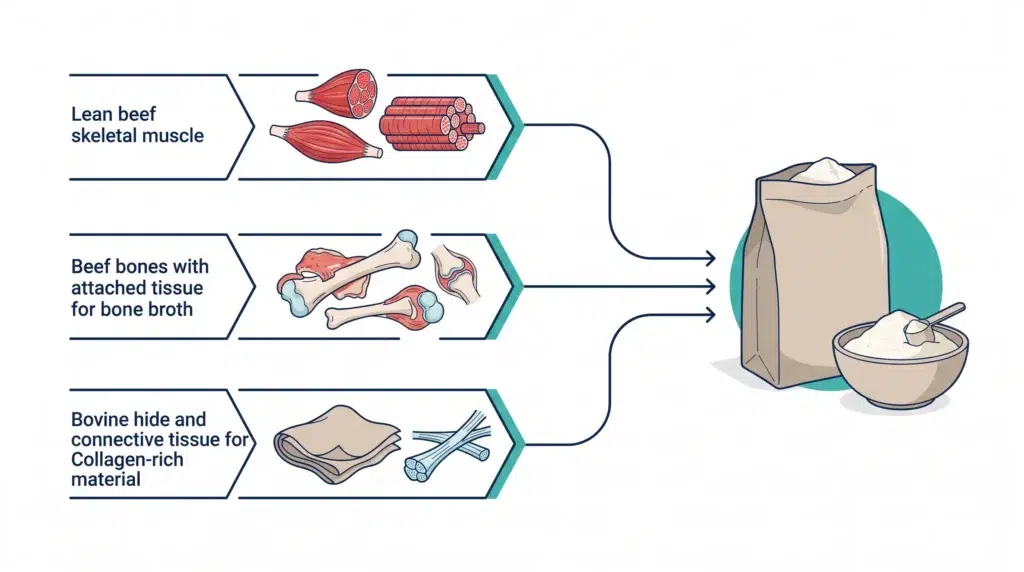
Collagen peptides are protein fragments made by breaking down collagen through hydrolysis. Labels may also call them “hydrolyzed collagen.” Common sources include bovine tissues and fish skin.
Hair shafts and nail plates consist mainly of keratin, a different protein. Collagen contributes to connective tissues, including structures around hair follicles, but swallowed collagen does not travel intact into a hair strand or nail.
Researchers have detected collagen-derived peptides in human blood after ingestion. This supports absorption of some peptides, but absorption alone cannot establish a cosmetic benefit. Hair and nail outcomes must be measured directly.
Collagen Research at a Glance
The following studies illustrate why it is important to distinguish between different outcomes.
| Study | Participants and Design | Daily Amount and Duration | Reported Finding | Main Limitation |
|---|---|---|---|---|
| Hexsel, 2017 | 25 participants; open-label, no placebo | 2.5 g; 24 weeks | Faster nail growth and fewer broken nails | Cannot separate supplementation from other influences |
| Oesser, 2020 volume | 44 women; placebo-controlled | 2.5 g; 16 weeks | Increased hair strand thickness | Small trial of a specific peptide ingredient |
| Vleminckx, 2024 | 85 women; randomized, double-blind, placebo-controlled | 5 g; 84 days | Improvements in nail color measures | Nail appearance does not establish strength or growth |
| Hwang, 2026 | 114 women; randomized, placebo-controlled | 1 g; 24 weeks | Increased hair diameter at week 24 | Specific ingredient, selected population, and industry involvement |
These studies do not establish a universal dose, prove that every collagen supplement works, or demonstrate that hair and nail benefits are interchangeable.
Do Collagen Peptides Help Hair Growth?
Human research provides preliminary evidence for certain hair measurements. To understand what that means, separate strand thickness, shedding, and regrowth.

Hair Strand Thickness
A placebo-controlled study involving 44 women aged 39–75 tested 2.5 grams of specific bioactive collagen peptides daily for 16 weeks. The researchers reported an average increase in hair thickness of 1.93 ± 0.42 micrometers in the collagen group, compared with a change of −0.99 ± 0.40 micrometers in the placebo group.
Those figures describe changes within each group. They should not be presented as a measured increase in total scalp coverage. A micrometer is one-thousandth of a millimeter, and an instrument-detected difference does not, by itself, show how noticeable the change would be to a consumer.
A 2026 randomized trial tested 1 gram daily of a particular low-molecular-weight fish collagen ingredient for 24 weeks. Participants were women aged 20–50 with thigh cellulite and self-reported hair thinning. The collagen group showed a significant increase in hair diameter at week 24.
The study assessed several skin and hair outcomes, and two authors disclosed employment by NEWTREE. Its findings support further investigation of that ingredient, rather than a claim that all collagen powders regrow hair.
Hair Shedding
A 2025 randomized study in menopausal women compared four groups: placebo, calcium plus vitamin D, collagen alone, and the combination. The collagen groups received 5 grams daily over six months.
The methods describe a combing test that counted shed hairs. The researchers reported reduced shedding in all three active intervention groups compared with placebo. A combing-test count measures hairs shed during that procedure; it does not directly measure new hair growth or total scalp density.
Because calcium plus vitamin D also produced a reported benefit, the study does not establish collagen as uniquely effective. Its population also limits how confidently the findings can be applied to other groups.
Hair Regrowth and Combination Products
Some studies evaluate supplements containing collagen alongside amino acids, minerals, and hair loss medication. A 2023 trial, for example, tested a supplement containing marine collagen, amino acids, iron, and selenium as an addition to clinician-selected treatment.
That design cannot isolate collagen’s contribution. An improvement with the complete regimen should not be advertised as proof that collagen alone treats hair loss.
The practical interpretation is that some hair measurements have improved in small trials, while a reliable general treatment effect for hair regrowth remains unestablished.
Can Collagen Peptides Help Brittle Nails?
The best-known brittle-nail study followed 25 participants taking 2.5 grams of specific bioactive collagen peptides daily for 24 weeks. Researchers reported:
- A 12% increase in nail growth rate.
- A 42% decrease in the frequency of broken nails.
These percentages refer to different measurements. They do not mean that nails became 42% stronger.
The study was open-label and had no placebo group, so it could not establish how much of the improvement was caused by the supplement. Changes in nail care, exposure to damage, and other influences could not be excluded.
A separate 2024 randomized, double-blind trial tested 5 grams daily in 85 women for 84 days. It found improvements in certain nail color measurements. That adds evidence about appearance, but it does not answer the same question as a trial measuring breakage or growth.
For someone with brittle nails, collagen is an option with preliminary evidence rather than a dependable solution. Daily nail care and assessment of persistent changes remain relevant.
Is Collagen Worth Trying for Your Goal?
Use your main concern to decide what information matters most.
| Your Goal | What the Evidence Supports | A Reasonable Next Step |
|---|---|---|
| Reduce nail breakage | Preliminary positive findings, including an uncontrolled study | Review nail care and consider whether an uncertain benefit justifies the cost |
| Make individual hair strands thicker | Small controlled studies of specific ingredients | Check whether the product matches the ingredient and amount studied |
| Reduce persistent shedding | Limited evidence in selected populations | Identify the cause rather than relying on supplementation alone |
| Regrow visibly thinning areas | Collagen is not an established general treatment | Seek an assessment and discuss treatments appropriate to the diagnosis |
| Choose between collagen products | Research does not establish one universally superior source or format | Compare ingredient identity, daily amount, testing, and cost |
A product’s claim should match its evidence. “Improved hair diameter” and “treated hair loss” describe substantially different outcomes.
How Long Does Collagen Take to Work for Hair and Nails?
Relevant trials have commonly followed participants for approximately three to six months, although some appearance measurements were assessed earlier. [1–5]
The important question is what changed:
- The small hair-thickness trial assessed results after 16 weeks.
- The 2026 hair-diameter trial reported improvement at 24 weeks.
- The frequently cited brittle-nail trial lasted 24 weeks.
- The nail-color trial assessed participants at 28 and 84 days.
A study’s observation period is not a promise that you will notice the same change by that date.
If you choose to try a supplement, define the outcome you care about before starting. For nails, this might be how often they split or break. For hair, consistent photographs may help document appearance, although lighting, styling, and hair length can affect comparisons.
Personal tracking can help you judge whether continuing feels worthwhile. It cannot establish causation, especially if you change several treatments at once.
How Much Collagen Should You Take?
There is no established universal dose for hair growth or brittle nails. The studies summarized above used different preparations at daily amounts ranging from 1 to 5 grams.
The amount should be interpreted alongside the ingredient. A trial of one specialized peptide preparation does not establish an equivalent effect from the same weight of every hydrolyzed collagen product.
Follow the product’s directions and review suitability with a healthcare professional when relevant. Do not increase the serving simply to copy a study using a different formulation.
How to Read a Collagen Label
Before comparing products, check these fields:
| Label Detail | What to Check | Why It Matters |
|---|---|---|
| Serving size | Capsules, scoops, or gummies per daily serving | An amount per capsule may differ from the daily amount |
| Collagen quantity | Actual collagen per serving | Total blend weight may include other ingredients |
| Ingredient identity | Named peptide ingredient, if provided | Helps assess whether a cited study is relevant |
| Source | Bovine, fish, or another stated source | Relevant to allergies and dietary restrictions |
| Added nutrients | Amounts of biotin, iron, zinc, selenium, and others | Helps identify overlap with other supplements |
| Quality verification | Which independent tests were performed | Different tests address identity, quantity, or contaminants |
| Days supplied | Number of daily servings | Allows a meaningful cost comparison |
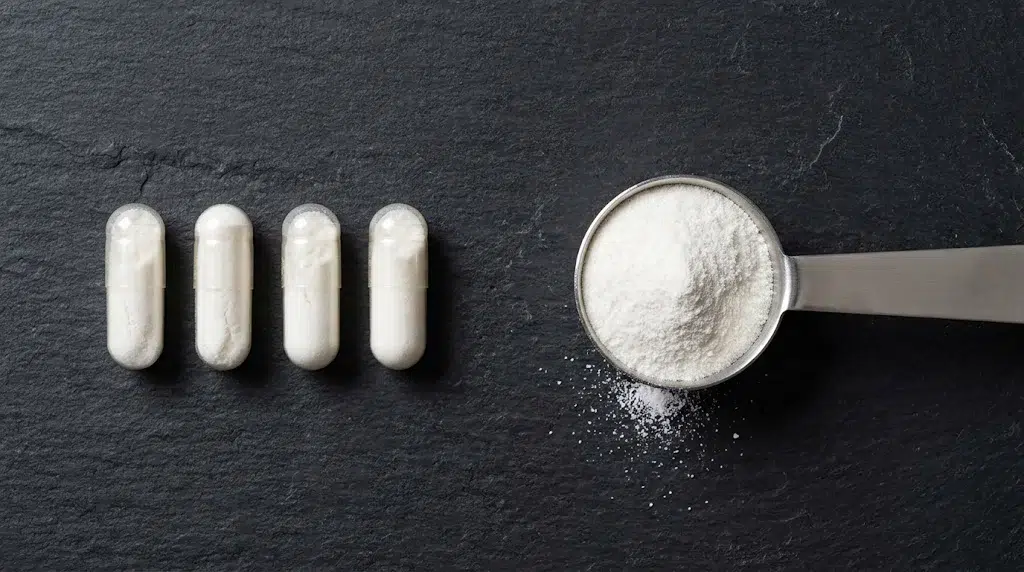
For a hypothetical example, four capsules containing 500 milligrams of collagen each would provide 2 grams per daily serving. That arithmetic helps interpret the label; it does not establish that the product is effective.
If a $36 container provides 30 daily servings, its cost is $1.20 per day, or approximately $108 over 90 days. Compare that expense with the uncertainty of the expected benefit.
Which Collagen Is Best for Hair and Nails?
The studies discussed here do not establish that marine collagen, bovine collagen, or one delivery format is universally best.
Choose using evidence that is relevant to the specific product.
Look for a Clear Ingredient Amount
A label should identify how much collagen the daily serving provides. A proprietary blend that lists only a combined weight can make comparison difficult.
If a brand cites a clinical study, check whether it used the same ingredient, daily amount, population, and outcome.
Check the Entire Formula
A collagen product may also contain biotin, minerals, sweeteners, flavorings, or botanical ingredients. Review the complete label, especially if you already take other supplements.
Additional ingredients do not automatically improve results. Excessive intake of certain nutrients, including selenium, has been linked to hair loss.
Verify Quality Claims
The American Academy of Dermatology recommends attention to independent verification when considering beauty supplements. Look for information explaining what was tested rather than relying on an unexplained “tested” badge.
Quality testing can help address ingredient identity, quantity, and contamination. It does not prove a hair-growth benefit.
The FDA regulates dietary supplements, but it does not approve them for safety and effectiveness before marketing.
Collagen vs. Biotin for Hair and Nails
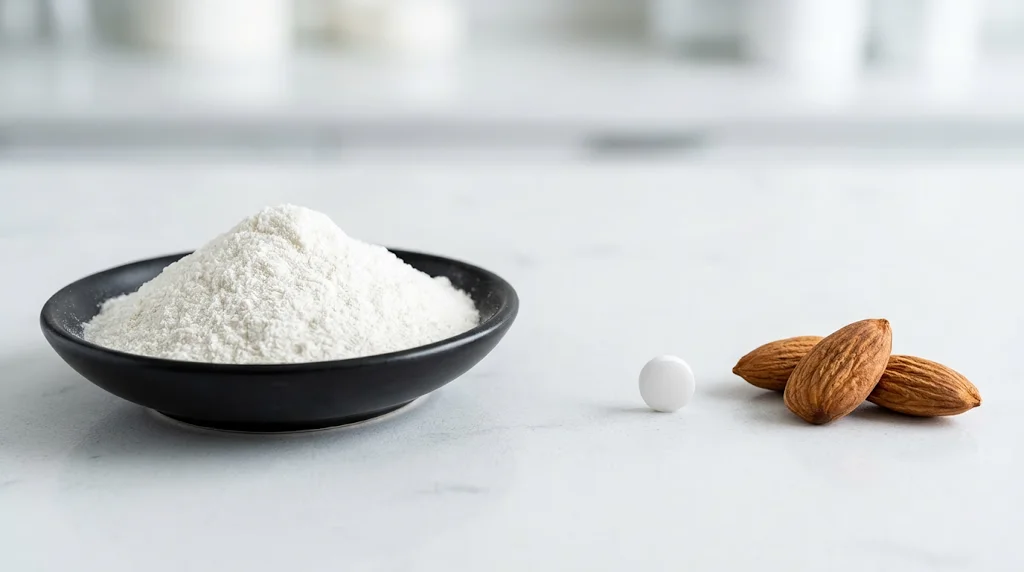
Collagen and biotin have different roles, and neither should be chosen solely because it appears on a “hair, skin, and nails” label.
| Question | Collagen Peptides | Biotin |
|---|---|---|
| What is it? | A protein-derived ingredient | A B vitamin |
| What is the relevant evidence? | Small trials of selected hair and nail measurements | Limited evidence for cosmetic supplementation; deficiency can affect hair and nails |
| What should buyers consider? | Specific peptide preparation, amount, source, and quality | Whether supplementation addresses a need and how much is already being taken |
| What requires attention? | Allergies, tolerability, and added ingredients | Interference with certain laboratory tests |
Biotin deficiency is rare. The NIH Office of Dietary Supplements notes that claims for improving hair, skin, and nails have limited supporting evidence. Correcting a deficiency is different from taking extra biotin when intake is already adequate.
Tell your healthcare professional about biotin-containing products before blood testing. This includes collagen blends with added biotin. Follow their instructions about whether and when a supplement should be paused.
Side Effects and When to Seek Advice
Collagen supplements are often tolerated, but some people experience gastrointestinal side effects. Allergic reactions or intolerance may involve the collagen source or another ingredient in the formula. Check fish-derived products carefully if you have a fish allergy.
Review a new supplement with a healthcare professional if you are pregnant, breastfeeding, taking medication, or managing a condition that affects your dietary needs.
For persistent or worsening hair loss, seek an assessment instead of waiting months to see whether a supplement helps. The American Academy of Dermatology emphasizes identifying the cause, including checking nutritional needs when appropriate.
For brittle nails, basic care can reduce avoidable damage. Moisturize after handwashing and wear gloves for cleaning or washing dishes. Persistent changes in nail color, shape, or thickness also deserve medical attention.
FAQ
Can Collagen Make Hair Thicker Without Regrowing It?
Potentially. Hair diameter and hair count are separate measurements. Some collagen trials reported thicker individual strands, but those findings do not demonstrate an increase in the number of hairs on the scalp.
Are Collagen Gummies as Effective as Powder?
Format alone does not establish effectiveness. Compare the actual daily collagen amount, ingredient identity, complete formula, and relevant research. A gummy’s total weight is not necessarily its collagen content.
Should You Take Collagen With Vitamin C?
Vitamin C is needed for normal collagen synthesis. That does not establish that extra vitamin C improves hair or nail results from collagen supplementation when vitamin C intake is already adequate.
Can You Take Collagen and Biotin Together?
Some formulas contain both, but combining them does not automatically produce a greater benefit. Check the total amount of biotin across your supplements and disclose it before laboratory testing.
Does a Higher Collagen Dose Work Better?
The research summarized here does not establish a reliable dose-response relationship for hair or nails. A larger serving should not be assumed to produce faster or more noticeable results.
What Should You Check Before Buying?
Confirm the daily collagen amount, source, complete ingredient list, independent quality verification, and cost per day. If a product promises a particular result, check that its evidence measured that result using the same formulation.
References
- Hexsel D, et al. Oral supplementation with specific bioactive collagen peptides improves nail growth and reduces symptoms of brittle nails. Journal of Cosmetic Dermatology. 2017;16(4):520–526. doi:10.1111/jocd.12393
- Oesser S. The oral intake of specific Bioactive Collagen Peptides has a positive effect on hair thickness. Nutrafoods. 2020;1:134–138. Publisher webpage dated April 14, 2021. doi:10.17470/NF-020-0019
- Hwang S, et al. Low-Molecular-Weight Collagen Peptide Supplementation Improves Cellulite Severity, Skin Elasticity, and Hair Shaft Diameter: A Clinical Study with Pharmacokinetic Evaluation. Journal of Medicinal Food. 2026;29(4):187–195. doi:10.1177/1096620X261428336
- Duangjai A, et al. Calcium and Vitamin D Supplementation with and Without Collagen on Bone Density and Skin Elasticity in Menopausal Women—A Randomized Controlled Study. Clinics and Practice. 2025;15(9):168. doi:10.3390/clinpract15090168
- Vleminckx S, et al. Influence of collagen peptide supplementation on visible signs of skin and nail health and aging in an East Asian population: A double-blind, randomized, placebo-controlled trial. Journal of Cosmetic Dermatology. 2024;23(11):3645–3653. doi:10.1111/jocd.16458
- Cleveland Clinic. Collagen Won’t Hurt Hair Growth, But It Probably Won’t Help Either. Read article
- National Library of Medicine. Keratins: MeSH definition. Read definition
- Iwai K, et al. Identification of food-derived collagen peptides in human blood after oral ingestion of gelatin hydrolysates. Journal of Agricultural and Food Chemistry. 2005;53(16):6531–6536. doi:10.1021/jf050206p
- Milani M, Colombo F. Trial of an oral supplement containing amino acids, iron, selenium, and marine hydrolyzed collagen in people with hair loss. Skin Research and Technology. 2023;29(6):e13381. doi:10.1111/srt.13381
- American Academy of Dermatology. Hair loss: Tips for managing. Read guidance
- American Academy of Dermatology. Supplement secrets unveiled: Debunking common myths about beauty boosters. Read guidance
- U.S. Food and Drug Administration. Information for Consumers on Using Dietary Supplements. Read guidance
- NIH Office of Dietary Supplements. Biotin: Health Professional Fact Sheet. Read fact sheet
- American Academy of Dermatology. 11 dermatologists’ tips for healthy nails. Read guidance
- NIH Office of Dietary Supplements. Vitamin C: Health Professional Fact Sheet. Read fact sheet