Can collagen peptides help athletes recover faster, strengthen tendons, or improve performance? It depends on what you are trying to build. Human clinical studies show that specific collagen protocols—when paired with exercise—can support tendon thickness and stiffness and reduce activity-related joint soreness in certain active groups. However, evidence for faster post-workout muscle recovery is mixed, and collagen is no match for whey protein when it comes to building skeletal muscle.
This guide breaks down what sports science (through 2026) actually proves, how connective tissue nutrition differs from muscle growth, and how sports nutrition brands can formulate collagen products that deliver real value.
What Can Collagen Peptides Actually Do for Athletes?
The strongest scientific case for collagen in sports has nothing to do with building bigger biceps. Instead, it centers on the extracellular matrix (ECM)—the structural network of tendons, ligaments, fascia, and cartilage that transmits force every time an athlete sprints, jumps, or lifts.
Because of this targeted role, the Australian Institute of Sport (AIS) classifies collagen in its Group B supplement category. Group B is reserved for ingredients with promising, emerging science that make sense for specific protocols—like injury rehab or heavy tendon loading—rather than as an everyday cure-all for every athlete.
Here is what current human studies show across six major sports goals:
| Sports Goal | Studied Dose & Protocol | What the Science Shows | Key Limitation |
| Tendon Adaptation (Size & Stiffness) | 15–30 g/day (with ≥50 mg Vitamin C, taken 30–60 min pre-workout) | Strong Evidence (Grade A): Multiple trials show greater increases in tendon cross-sectional area (CSA) and stiffness compared to training alone. | Thicker, stiffer tendons haven’t been proven to directly improve sprint/jump times (Grade C) or prevent injuries; over 95% of study subjects were men. |
| Activity-Related Joint Discomfort | 5–10 g/day taken daily for 12–24 weeks | Moderate Evidence: Several RCTs report reduced exercise-induced knee discomfort in young, active adults. | Results vary by age and raw material; a major trial in older active adults showed no benefit over placebo. |
| Post-Workout Recovery (DOMS & Force) | 15–20 g/day around heavy jumping or lifting | Mixed Evidence: Some trials show faster jump-force recovery at 48 hours and slightly less muscle soreness (DOMS). | A 2026 umbrella review found no consistent overall effect on 24–48 h recovery, soreness, or muscle damage markers like Creatine Kinase (CK) . |
| Muscle Growth (Hypertrophy) | 15 g/day alone, or 5 g blended with 25 g Whey | Weak Alone / Strong in Blends: Alone, collagen fails to trigger acute muscle synthesis. Blended 5:1 with whey, it prevents blood glycine drops and supports resting muscle + connective tissue synthesis. | Lacks tryptophan (PDCAAS = 0.0) and is very low in leucine (~2.7%). Never use as a 1:1 replacement for complete protein. |
| Maximal Strength | 15–30 g/day during 3–15 week lifting programs | Strong Evidence for No Extra Gain (Grade A): Lifting weights builds strength, but adding collagen does not increase 1RM strength beyond training alone . | Earlier reviews showing minor strength gains rated the evidence certainty as very low. |
| Injury Prevention & Ligament Rehab | 10–15 g/day alongside physical therapy | Plausible Rationale: Supplies key building blocks (glycine, proline, hydroxyproline) during tissue remodeling. | No clinical trials prove that taking collagen lowers seasonal ACL tear rates or speeds up return-to-play timelines. |
How Collagen Works in Sports (And Why It’s Not Whey)
Collagen makes up roughly 70% to 85% of the dry weight of tendons and ligaments. Tendons connect muscle to bone to transfer force, ligaments connect bone to bone to stabilize joints, and thin collagen sheaths wrap around muscle fibers to help transfer power laterally.
The “Mechanical Pump” and the 60-Minute Window
Unlike muscles, which have a rich blood supply, tendons, ligaments, and cartilage have very little resting blood flow. During exercise, repeated stretching and loading act like a mechanical sponge—squeezing fluid and circulating nutrients into that dense connective tissue.
Hydrolyzed collagen peptides are made by enzymatically cutting large collagen proteins into small, easily absorbed peptides (typically 1,000 to 5,000 Daltons). After you drink them, blood levels of glycine, proline, hydroxyproline, and bioactive dipeptides (like Pro-Hyp) peak in about 30 to 60 minutes.
Taking collagen 30 to 60 minutes before training times that amino acid peak right when exercise is pumping fluid into your tendons. Pairing it with Vitamin C (at least 50 mg) is equally important, because Vitamin C activates the enzymes (prolyl and lysyl hydroxylase) that cross-link new collagen fibers into strong tissue .
Three Rules to Keep Claims Honest
While the biology makes sense, athletes and supplement brands should keep three boundaries in mind:
- Swallowing Collagen Doesn’t Send It Straight to Your Knee: Digested peptides enter your general bloodstream. Your body uses those amino acids wherever they are needed most—not exclusively in a sore Achilles tendon.
- No Mechanical Load, No Tendon Growth: Drinking collagen on the couch won’t build stronger tendons. Heavy lifting or plyometric loading is the signal that tells tendon cells to start rebuilding.
- Connective Tissue Is Not Skeletal Muscle: Muscle growth is triggered by L-leucine, which flips the cellular switch for muscle protein synthesis. Collagen contains very little leucine (~2.7% vs. 10–12% in whey) and zero tryptophan, giving it a protein quality score (PDCAAS) of 0.0. Think of collagen as structural support for your “cables and joints,” not fuel for muscle size.
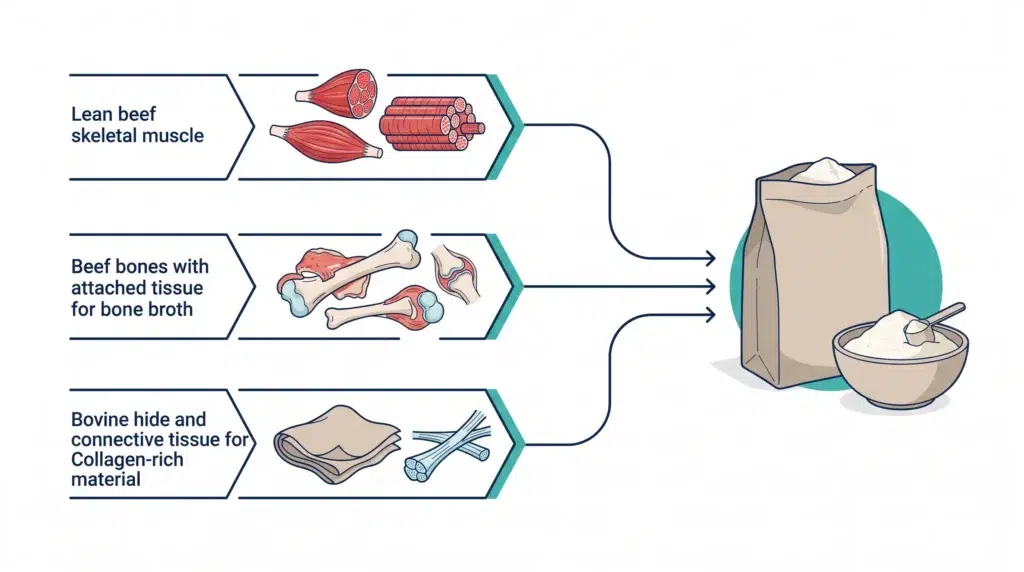
For a closer look at how raw collagen is broken down into peptides, see What Are Collagen Peptides?.
Can Collagen Peptides Strengthen Tendons and Ligaments?
Tendon adaptation is the brightest spot in sports collagen research. When athletes do heavy resistance or jump training, tendons adapt in two ways: they grow thicker—measured as cross-sectional area (CSA)—and they become stiffer, measured as mechanical stiffness and Young’s modulus.
What the Latest Research Shows (2024–2026)
In a 2026 systematic review published in the Journal of Functional Morphology and Kinesiology, Buchalski and colleagues analyzed eight randomized controlled trials (257 participants) that combined collagen supplementation with resistance or plyometric training over 3 to 15 weeks. Using the formal GRADE system, they found:
- Thicker Tendons (Grade A — Strong Evidence): Three out of four trials measuring tendon size found significantly greater increases in Achilles or patellar tendon CSA in the collagen group compared to placebo.
- Dose Matters for Stiffness (Grade A — Strong Evidence): Out of four trials measuring tendon stiffness, the two studies using higher doses (15 g to 30 g/day) saw significant improvements over placebo. Lower-dose studies (~5 g/day) failed to beat placebo between groups.
- No Extra Muscle Strength (Grade A — Strong Evidence): Everyone got stronger from lifting weights, but collagen did not add extra maximal strength beyond training alone.
- Mixed Performance Results (Grade C — Conflicting Evidence): Changes in muscle size and jump/sprint performance remained inconsistent across studies.
Two Catch-22s in the Tendon Data
Before turning these results into bold marketing claims, two caveats stand out:
- Over 95% of Study Participants Were Men: Across all eight trials in the 2026 review, 246 subjects were male and only 11 were female. Because estrogen directly affects tendon laxity and collagen cross-linking, we cannot assume female athletes will respond identically without more female-specific trials.
- Why Systematic Reviews Sometimes Disagree: While a 2024 meta-analysis in Sports Medicine by Bischof et al. found positive effects on tendon remodeling, the authors rated overall evidence certainty as very low due to small sample sizes. Similarly, a massive 2026 umbrella review by Ravindran et al. confirmed benefits for tendon thickness (CSA) but found no consistent pooled effect on tendon stiffness across mixed protocols .
The bottom line on tendons: Taking 15–30 g of collagen peptides with Vitamin C before heavy training reliably supports tendon remodeling, even if it doesn’t automatically make an athlete jump higher or become injury-proof.
Why Blood Markers Don’t Equal Injury Prevention
Sports articles often mix up four very different levels of proof:
- Level 1 — Blood Markers: A temporary spike in blood collagen markers (like PINP).
- Level 2 — Tissue Structure: Ultrasound changes in tendon thickness (CSA) or stiffness.
- Level 3 — Athletic Performance: Jumping higher (CMJ) or sprinting faster.
- Level 4 — Real-World Injury Rates: Fewer torn ACLs or ruptured Achilles tendons over a season.
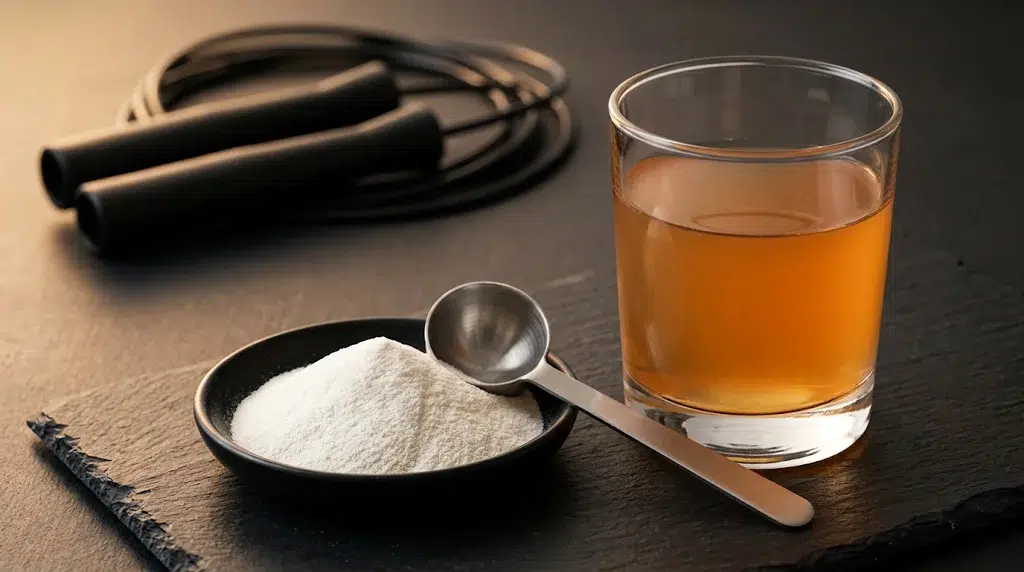
For example, the famous 2017 study by Shaw and colleagues showed that taking 15 g of Vitamin C–enriched gelatin an hour before six minutes of jump-roping doubled blood PINP levels . While that study brilliantly established the pre-workout timing protocol, it only tested eight men using kitchen gelatin and measured a Level 1 blood marker. It did not prove that collagen prevents real-world ligament tears.
Does Collagen Help With Exercise-Related Joint Pain?
Running, jumping, and heavy lifting put heavy wear and tear on joints. Many athletes experience nagging knee soreness during workouts even when X-rays show zero arthritis.
Promising Results in Young Athletes
In a 2021 randomized controlled trial, Zdzieblik and colleagues tested 5 g/day of specific bioactive collagen peptides against a placebo in 180 active young adults (aged 18–30) with exercise-related knee pain [6]. After 12 weeks, workout knee pain dropped by 21.9 mm (on a 100-mm scale) in the collagen group compared to 15.6 mm in the placebo group—a statistically significant win.
An earlier 24-week study by Clark and colleagues gave 10 g/day of collagen hydrolysate or placebo to 147 college athletes with joint soreness . Among the 97 athletes who finished the trial, several knee-pain scores improved more with collagen, though the high dropout rate weakens the conclusion.
Why Results Vary by Age
Not every study is a hit. A 2020 trial by Bongers and colleagues tested 10 g/day of collagen peptides vs. placebo over 12 weeks in 167 active middle-aged and older adults (aged 45–65) with knee pain [8]. Both groups felt better over time, with no meaningful difference between collagen and placebo.
In short, collagen peptides can help ease load-related joint soreness in younger athletes, but outcomes depend heavily on age, the source of the pain, and the specific ingredient used.
Does Collagen Speed Up Post-Workout Recovery?
Post-workout recovery means clearing Delayed Onset Muscle Soreness (DOMS), repairing tissue micro-damage, and getting your explosive bounce back for the next session.
In a 2019 trial by Clifford and colleagues, 24 active men took 20 g/day of collagen peptides or a placebo around 150 grueling drop jumps. The results showed an interesting split:
- Faster Bounce-Back in Jump Power: Countermovement Jump (CMJ) height recovered significantly faster at 48 hours in the collagen group.
- Slightly Less Soreness: DOMS scores were modestly lower at select timepoints.
- No Change in Muscle Damage Markers: Blood levels of Creatine Kinase (CK) and inflammation (IL-6) didn’t budge compared to placebo.
Why would jump power recover faster if muscle fiber damage (CK) didn’t change? Researchers point to the intramuscular connective tissue sheaths (endomysium and perimysium) that wrap around muscle fibers. Eccentric jumping strains these collagen sheaths; helping them stabilize may restore force transfer (Rate of Force Development, RFD) faster. Still, when the 2026 Ravindran umbrella review pooled data across multiple recovery meta-analyses, the overall effect on 24–48 hour force recovery and soreness was not statistically significant.
Muscle Growth & The Whey vs. Collagen Debate
When your goal is building skeletal muscle, collagen peptides cannot replace whey protein.
A 2020 trial by Oikawa and colleagues compared whey protein isolate head-to-head against collagen peptides [10]. The result was clear: whey protein strongly stimulated muscle protein synthesis (MPS) both at rest and after lifting weights, while collagen peptides failed to noticeably boost MPS.
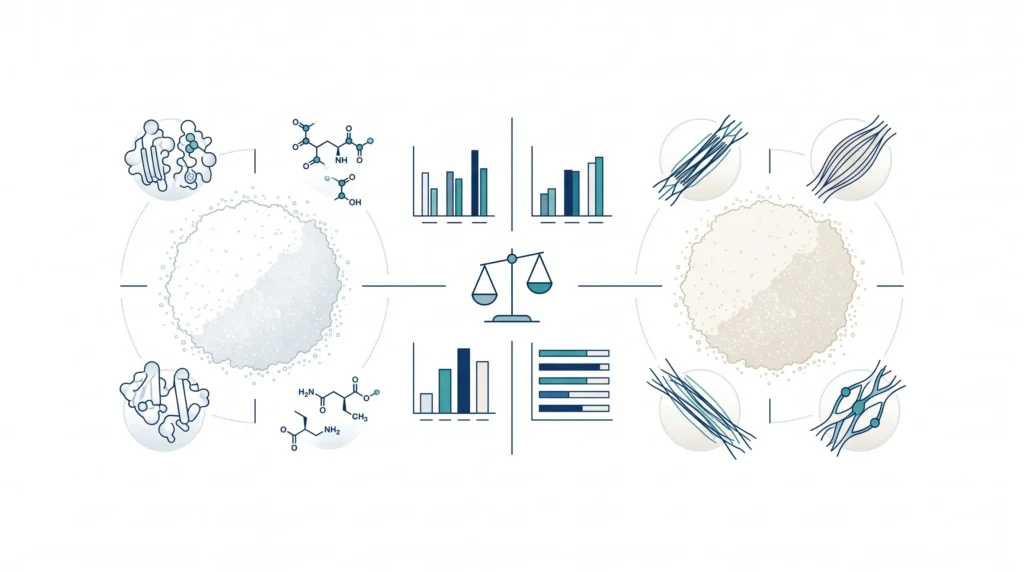
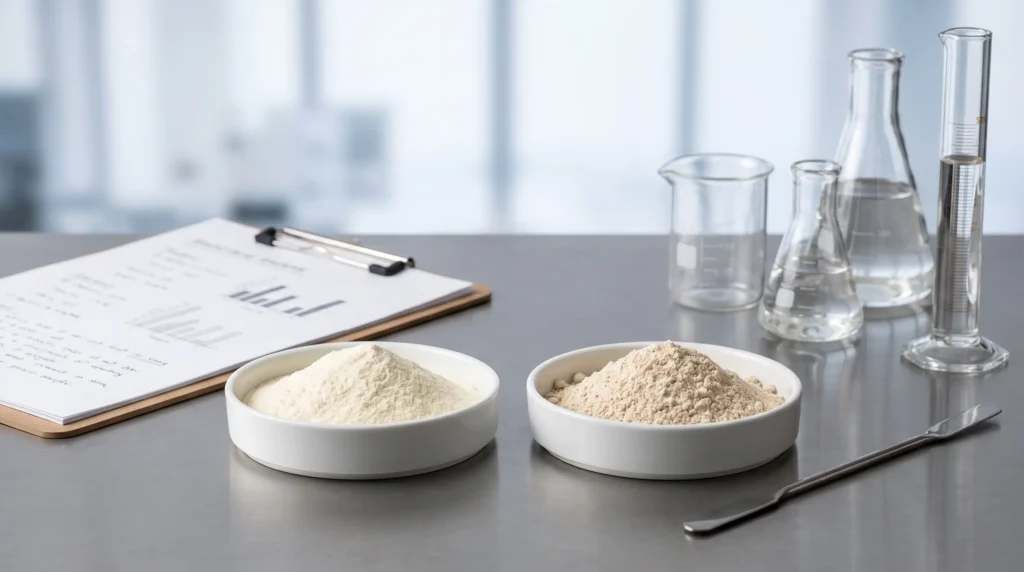
Collagen Peptides vs. Whey Protein at a Glance
| Feature | Hydrolyzed Collagen Peptides | Whey Protein Isolate (WPI) |
| Key Amino Acids | Loaded with Glycine (~20–22%), Proline (~12–14%), and Hydroxyproline (~10–12%). | Loaded with BCAAs, especially L-Leucine (~10–12%). |
| Protein Quality (PDCAAS) | 0.0 (Incomplete; lacks tryptophan and is low in essential amino acids). | 1.00 (Complete protein with all nine essential amino acids). |
| Main Target in the Body | Connective Tissue (ECM): Tendons, ligaments, cartilage, and muscle sheaths. | Muscle Fibers: Contractile actin and myosin proteins. |
| Post-Workout MPS Boost | Negligible when taken alone. | High; rapidly flips the mTOR muscle-building switch. |
| Best Sports Use | Pre-workout tendon loading (15–30 g) or daily joint care (5–10 g). | Post-workout muscle recovery and daily protein targets (20–40 g). |
Better Together: The 5:1 Whey + Collagen Hybrid Blend
Instead of pitting whey against collagen, recent research from Maastricht University (Luc van Loon’s team) shows why combining them makes sense.
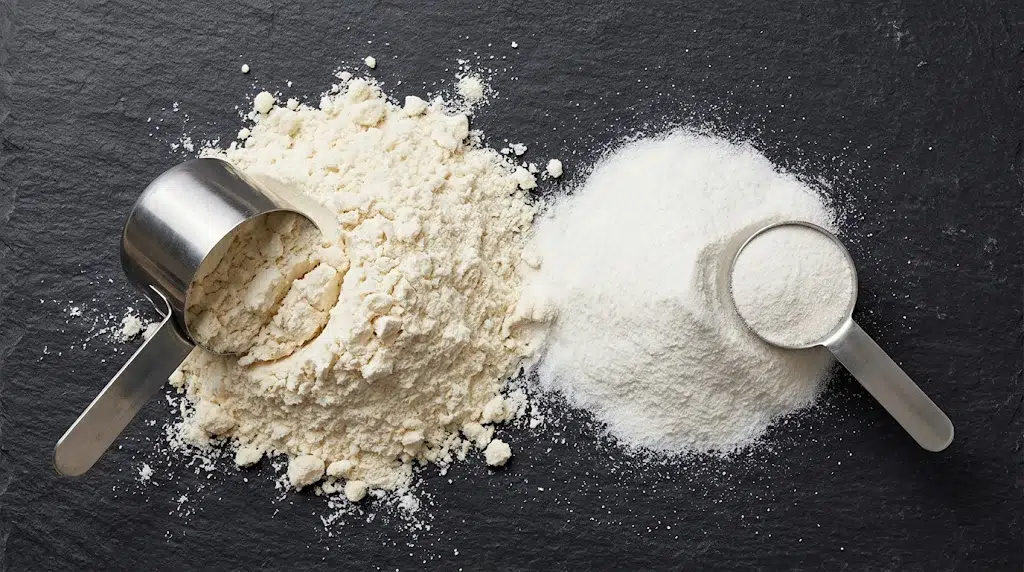
In a 2024 trial, Aussieker and colleagues found that drinking 30 g of pure whey protein after lifting weights actually caused a post-workout drop in blood glycine levels—potentially starving connective tissue of a key building block during recovery. When lifters drank a 5:1 hybrid blend (25 g whey + 5 g collagen peptides) instead, they got a strong leucine spike and kept their blood glycine levels from dropping.
In a follow-up 2025 muscle biopsy study published in Medicine & Science in Sports & Exercise, the same team tested that 25 g whey + 5 g collagen blend directly in human muscle tissue. The blend significantly boosted both muscle fiber synthesis (MPS) and muscle connective tissue synthesis (MCPS) at rest (P < 0.05), and strongly drove MPS after exercise (P < 0.01) (while lifting weights itself maxed out acute post-exercise MCPS). For sports brands, an 80–85% whey + 15–20% collagen blend is a smart, science-backed “Muscle + Matrix” formula.
Formulation & Sourcing Guide for Sports Nutrition Brands
For R&D teams and supplement brands, turning these studies into a winning product comes down to three practical decisions: choosing the right grade for your dose, matching physical specs to your format, and passing anti-doping tests.
1. When to Use 5 g Branded Peptides vs. 15–30 g Bulk Collagen
- Low-Dose Joint Claims (5 g/day): Studies showing joint relief at 5 g/day (like Zdzieblik 2021 [6]) tested specific proprietary peptides. Under FDA and FTC rules, you cannot copy a competitor’s 5 g clinical claim onto a generic powder without bridging evidence.
- High-Dose Tendon Protocols (15–30 g/day) & 5:1 Whey Blends: As the 2026 Buchalski review, Shaw (2017) [5], and Aussieker (2024/2025) show, tendon stiffness protocols (15–30 g) and whey blends work by supplying gram-level amounts of glycine, proline, and hydroxyproline alongside Vitamin C. For these high-dose applications, using a high-purity, standardized bulk hydrolyzed collagen peptide (1,000–3,000 Da, >90% protein) delivers the exact amino acid pool needed at a fraction of the raw material cost.
2. Matching Specs to Delivery Formats
- Pre-Workout Tendon Shots & Gels (15–30 g Collagen + Vitamin C): Fitting 15–20 g of collagen into a 60 mL liquid shot requires ultra-low-molecular-weight peptides (1,000–2,000 Da) with low viscosity that won’t gel in the fridge, stays clear at tart fruit pH (3.2–4.0), and includes 100 mg of Vitamin C (a 100% overage so at least 50 mg survives shelf life).
- Hybrid Recovery Powders (25 g Whey + 5 g Collagen): If collagen powder is much finer or heavier than whey, it will sink to the bottom of the tub during shipping. Specify instantized/agglomerated bovine collagen with a bulk density (0.35–0.45 g/cm³) and mesh size matched to instantized whey (WPI).
- Clear Hydration & Mobility Sticks (5–10 g Collagen): Athletes shaking powder into cold water expect instant cold-water solubility, low foam, and neutral taste and odor so marine or bovine notes don’t ruin light citrus or berry flavors.
3. Anti-Doping (WADA) and Ractopamine Screening
Competitive athletes can lose their careers over a contaminated supplement. If your brand targets Informed-Sport, Informed-Choice, or NSF Certified for Sport, your collagen supplier must verify:
- Zero WADA Banned Substances: Dedicated food-grade lines with no cross-contamination from hormones or stimulants.
- Ractopamine & Clenbuterol-Free Sourcing: In some regions, livestock are fed beta-agonists like ractopamine to promote lean meat. Trace residues in cattle hides can trigger a failed athlete drug test. Sports-grade bovine collagen must come from ractopamine-free supply chains verified by LC-MS/MS testing.
- Strict Heavy Metal Limits: At 15–30 g/day servings, even low levels of lead or arsenic add up fast. Ensure raw material COAs meet strict low-ppb limits to stay compliant with California Prop 65 at large serving sizes.
FAQ
Can collagen peptides replace whey protein after a workout?
No. Collagen is low in leucine (~2.7%) and lacks tryptophan (PDCAAS = 0.0), so it cannot effectively trigger muscle protein synthesis on its own [10]. However, blending 5 g of collagen with 25 g of whey protein is a proven way to prevent post-workout glycine drops while supporting both muscle and connective tissue repair.
When should athletes take collagen—before or after workouts?
For tendon and ligament support, take 15–30 g of collagen peptides (with at least 50 mg of Vitamin C) about 30 to 60 minutes before training so blood amino acids peak right as exercise pumps fluid into your tendons [2,5]. For daily joint soreness (5–10 g/day), taking it consistently every day matters more than exact timing.
Why combine Vitamin C with collagen for sports?
Vitamin C is an essential helper for the enzymes (prolyl and lysyl hydroxylase) that cross-link and stabilize new collagen fibers. Without enough Vitamin C, tendon cells cannot properly weave ingested amino acids into strong tissue.
Does taking collagen prevent ACL tears?
No human study has proven that taking collagen lowers the rate of ACL tears or sports injuries. While training trials show Grade A evidence that 15–30 g/day increases tendon thickness and stiffness, a thicker tendon on an ultrasound does not guarantee protection against a sudden sports injury.
Does collagen count toward daily protein macros for athletes?
Most sports dietitians advise not counting standalone collagen toward your core daily muscle-building protein target (1.6–2.2 g/kg/day) because it is an incomplete protein, unless it is balanced inside a leucine-rich whey blend.
Conclusion
Collagen peptides aren’t a replacement for whey protein—they are targeted nutrition for the tendons, ligaments, and connective matrix that keep athletes moving. The strongest human evidence supports 15–30 g/day (with Vitamin C) before heavy training for tendon adaptation, 5–10 g/day for exercise-related joint soreness in young adults, and 5:1 whey-collagen blends for complete recovery.
Developing a Sports Nutrition or Tendon-Support Product?
ATNUTRA helps sports nutrition brands and contract manufacturers source high-purity bulk collagen peptides for protein blends, liquid tendon shots, gels, and RTDs. Share your target format, molecular weight or bulk density needs, and compliance requirements with our team to get matched specs, COAs, and pilot samples.
References
- Australian Institute of Sport (AIS). AIS Sports Supplement Framework: Collagen Support (Group B). Australian Sports Commission. https://www.ais.gov.au/nutrition/supplements/group_b
- Buchalski A, Jeanfavre M, Altorelli C, Leff G. (2026). Collagen Supplementation on Tendon-Related Structural and Performance Outcomes: A Systematic Review. Journal of Functional Morphology and Kinesiology, 11(1), 130. https://doi.org/10.3390/jfmk11010130
- Bischof K, Moitzi AM, Stajic S, König D. (2024). Impact of Collagen Peptide Supplementation in Combination with Long-Term Physical Training on Strength, Musculotendinous Remodeling, Functional Recovery, and Body Composition in Healthy Adults: A Systematic Review with Meta-analysis. Sports Medicine, 54(11), 2865–2888. https://doi.org/10.1007/s40279-024-02079-0
- Ravindran R, et al. (2026). Collagen Supplementation for Skin and Musculoskeletal Health: An Umbrella Review of Meta-Analyses on Elasticity, Hydration, and Structural Outcomes. Aesthetic Surgery Journal Open Forum, 8, ojag018. https://doi.org/10.1093/asjof/ojag018
- Shaw G, Lee-Barthel A, Ross ML, Wang B, Baar K. (2017). Vitamin C–enriched gelatin supplementation before intermittent activity augments collagen synthesis. The American Journal of Clinical Nutrition, 105(1), 136–143. https://doi.org/10.3945/ajcn.116.138594
- Zdzieblik D, Brame J, Oesser S, Gollhofer A, König D. (2021). The Influence of Specific Bioactive Collagen Peptides on Knee Joint Discomfort in Young Physically Active Adults: A Randomized Controlled Trial. Nutrients, 13(2), 523. https://doi.org/10.3390/nu13020523
- Clark KL, Sebastianelli W, Flechsenhar KR, et al. (2008). 24-Week study on the use of collagen hydrolysate as a dietary supplement in athletes with activity-related joint pain. Current Medical Research and Opinion, 24(5), 1485–1496. https://doi.org/10.1185/030079908X291967
- Bongers CCWG, Ten Haaf DSM, Catoire M, et al. (2020). Effectiveness of collagen supplementation on pain scores in healthy individuals with self-reported knee pain: a randomized controlled trial. Applied Physiology, Nutrition, and Metabolism, 45(7), 793–800. https://doi.org/10.1139/apnm-2019-0654
- Clifford T, Ventress M, Allerton DM, et al. (2019). The effects of collagen peptides on muscle damage, inflammation and bone turnover following exercise: a randomized, controlled trial. Amino Acids, 51(4), 691–704. https://doi.org/10.1007/s00726-019-02706-5
- Oikawa SY, Kamal MJ, Webb EK, McGlory C, Baker SK, Phillips SM. (2020). Whey protein but not collagen protein stimulates acute and longer-term muscle protein synthesis with and without resistance exercise in healthy older women: a randomized controlled trial. The American Journal of Clinical Nutrition, 111(3), 708–718. https://doi.org/10.1093/ajcn/nqz332
- Aussieker T, Kaiser J, Hermans WJH, et al. (2024). Coingestion of Collagen With Whey Protein Prevents the Postexercise Decline in Plasma Glycine Availability in Recreationally Active Men. International Journal of Sport Nutrition and Exercise Metabolism, 34(4), 205–214. https://doi.org/10.1123/ijsnem.2023-0264
- Aussieker T, Kaiser J, Hermans WJH, et al. (2025). Ingestion of a Whey Plus Collagen Protein Blend Increases Myofibrillar and Muscle Connective Protein Synthesis Rates. Medicine & Science in Sports & Exercise, 57(3), 544–554. https://doi.org/10.1249/MSS.0000000000003596