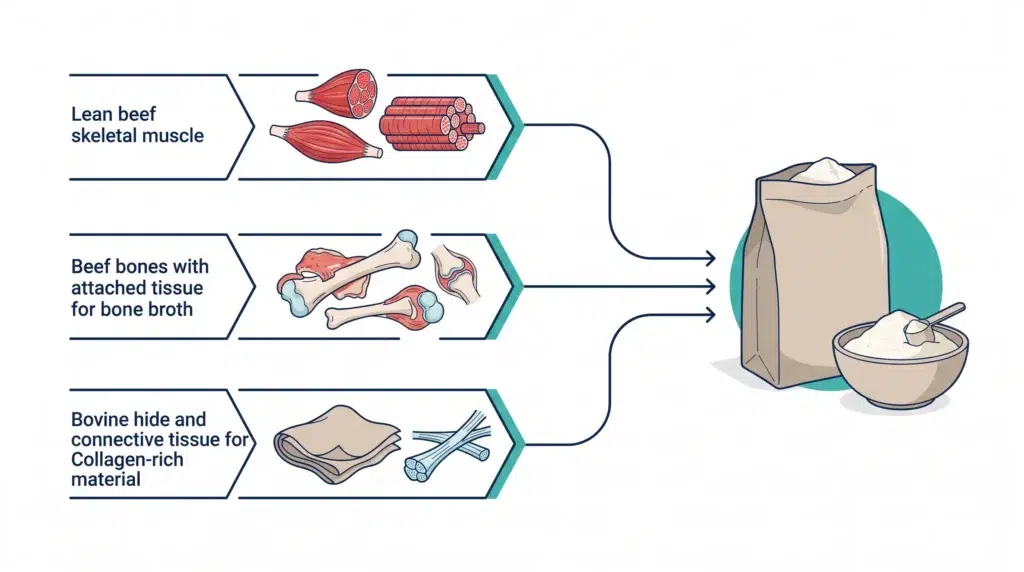

Quick Answer: Some human clinical studies suggest that specific oral collagen preparations may help relieve joint discomfort and improve mobility scores, though overall results remain mixed. No oral collagen supplement has been reliably shown to regrow damaged cartilage in humans, and a single positive trial does not prove that every commercial collagen powder works. Because hydrolyzed collagen peptides and undenatured Type II collagen operate through distinct biological mechanisms and dosage ranges, supplement brands and buyers must evaluate clinical evidence at the specific ingredient level rather than relying on generic collagen labels.
This guide examines what recent human trials (through 2026) actually demonstrate, clarifies the biochemical differences between collagen forms, and provides a practical qualification framework for supplement brands formulating joint-support products.
Do Collagen Peptides Help Joints? The Short Answer
Here is what current peer-reviewed human evidence can—and cannot—support regarding oral collagen supplementation for joint health:
| Question | Short Answer |
| Can collagen help with joint discomfort? | Some tested preparations showed modest symptom reductions; others did not outperform placebo. |
| Can it improve joint function? | Several trials reported improved functional scores (such as WOMAC), though outcomes vary by preparation. |
| Can it rebuild damaged cartilage? | Human clinical trials have not reliably demonstrated structural cartilage regeneration. |
| Is Type II always better than Type I? | No direct clinical evidence establishes one collagen type as universally superior for oral supplementation. |
| Does a positive study validate any supplier’s grade? | Only if the commercial ingredient matches the tested preparation’s identity, specs, and dosage. |
A critical distinction in clinical research is how investigators measure success. Reporting less pain on a patient questionnaire (such as the VAS or WOMAC index) is not equivalent to demonstrating thicker, healthier cartilage on an MRI or X-ray scan. Furthermore, a baseline-to-endpoint improvement within a collagen group is insufficient on its own; meaningful efficacy requires a statistically significant advantage over a suitable placebo control group.
Biologically, collagen is the primary structural protein in articular cartilage, tendons, ligaments, and bone. While Type II collagen predominates in hyaline cartilage and Type I is abundant in tendons, ligaments, and bone matrix, ingesting collagen does not transport intact protein chains directly into a knee joint. Instead, efficacy depends on how a specific preparation is digested, absorbed, and utilized in the body—meaning human clinical trials, not a collagen type number on a label, must establish any potential benefit.
For foundational background on the raw material itself, see what collagen peptides are.
What Do Human Studies Actually Show?

Across published clinical literature, the most defensible scientific conclusion is that certain collagen preparations offer potential relief for specific joint symptoms, rather than guaranteed efficacy across all commercial products.
A comprehensive 2024 trial sequential meta-analysis by Liang and colleagues evaluated 35 randomized controlled trials (RCTs) involving 3,165 patients with osteoarthritis. The primary analysis identified small-to-moderate average improvements in pain and physical function across the broad category of collagen derivatives, rating evidence certainty as moderate for pain and high for function. However, because this pooled analysis grouped diverse collagen forms together, its findings cannot be automatically assigned to an untested hydrolyzed peptide grade [1].
Subsequent reviews highlight considerable heterogeneity across studies. A 2025 systematic review and meta-analysis of 11 RCTs (870 participants) reported overall improvements in knee osteoarthritis pain and function, yet noted substantial variation across individual trial outcomes [2]. Similarly, a narrower 2023 meta-analysis of four hydrolyzed collagen trials reported favorable analgesic effects but judged every included trial to carry a high risk of bias [3].
Most recently, a 2026 umbrella review synthesized findings from prior meta-analyses covering musculoskeletal and skin outcomes. While it observed benefits across several joint metrics, improvements were not consistent across all pain and function subscales. Moreover, the authors rated the methodological quality of many underlying reviews as low or critically low, and noted overlapping primary trials across pooled analyses [4].
The takeaway for product developers: A favorable pooled average across heterogeneous products provides encouraging category background, but it is not a clinical certificate of effectiveness for an individual commercial raw material.
Evidence by Ingredient Form
| Ingredient Studied | What Researchers Found | Why Caution Is Needed |
| Hydrolyzed collagen peptides | Several RCTs and a focused meta-analysis reported reduced knee discomfort [3]. | Methodological quality varies, and peptide profiles differ across manufacturers. |
| Fish-derived hydrolyzed peptides | One 2025 RCT reported improved WOMAC scores after 3 g/day for 180 days [5]. | Not all pain subscales improved, and statistical methods faced published critique [6]. |
| Undenatured Type II collagen | A 2016 trial found significant symptom benefits for a specific 40 mg preparation [7]. | A 2026 RCT of 216 adults found no superiority over placebo over 24 weeks [8]. |
| Hydrolyzed + undenatured blend | A 2025 RCT of 68 adults did not outperform placebo over 12 weeks [9]. | A single low-dose combination trial cannot represent all multi-collagen formulas. |
| Specific peptides in active adults | A 2017 study reported reduced activity-related knee pain at 5 g/day [10]. | Young, physically active participants do not represent clinical osteoarthritis patients. |
Note: These trials evaluated distinct raw materials across different study populations. Because several primary RCTs are also counted within the systematic reviews cited above, participant totals should not be summed.
Why a Positive Fish Collagen Trial Is Not the Final Answer
Looking closely at individual trials illustrates why headline abstracts can be misleading. The 2025 fish-collagen RCT reported statistically significant improvements in certain WOMAC symptom and function scores after 180 days of supplementation at 3 g/day. However, between-group differences were not statistically significant across every pain measure or for radiographic joint-space width—confirming that symptom relief does not equate to structural cartilage repair [5].
Shortly after publication, an independent scientific commentary raised methodological concerns regarding baseline demographic imbalances between study groups, missing follow-up data, and discrepancies across outcome measures [6]. While a commentary is a peer-reviewed critique rather than a formal retraction, it underscores the need for independent replication before relying on a single study.
Negative trials are equally informative. In a 2026 randomized clinical trial of 216 adults with knee osteoarthritis, researchers reported that an undenatured Type II collagen preparation did not outperform placebo on the primary WOMAC outcome after 24 weeks, contrasting with positive findings from an earlier 2016 trial of a branded preparation [7,8]. Clinical outcomes in this category remain preparation-specific and occasionally inconsistent.
Hydrolyzed vs. Undenatured Type II: What Are You Buying?

A collagen “type” (Type I, II, or III) only identifies the animal tissue origin of the native protein. It does not define how the ingredient was processed, how it behaves in digestion, or what clinical dosage applies.
Why Mechanism and Dosage Differ by 100-Fold
Formulators often ask why hydrolyzed collagen peptides are dosed in grams (typically 2.5 g to 10 g/day) whereas undenatured Type II collagen is dosed in milligrams (typically 40 mg/day). The answer lies in two entirely different biochemical pathways:
- Hydrolyzed Collagen Peptides (Nutritional & Bioactive Peptide Pathway): Through enzymatic hydrolysis, large native collagen proteins (~300,000 Daltons) are cleaved into low-molecular-weight peptides—typically averaging 1,000 to 5,000 Daltons (Da). These preparations supply concentrated amounts of structural amino acids—specifically glycine, proline, and hydroxyproline—alongside resistant di- and tripeptides (such as Pro-Hyp and Hyp-Gly) that enter systemic circulation to support extracellular matrix (ECM) nutrition.
- Undenatured Type II Collagen (Oral Tolerance Pathway): Manufactured using low-temperature processing without enzymatic cleavage, this material retains its native triple-helix structure and active antigenic regions (epitopes). Rather than serving as a bulk protein source, milligram doses interact with gut-associated lymphoid tissue (Peyer’s patches) to modulate immune responses against endogenous joint collagen—a mechanism known as oral tolerance.
Collagen Pathway Comparison
| Ingredient Path | Biochemical Identity | Typical Dose Range | What B2B Buyers Must Verify |
| Hydrolyzed collagen peptides (Type I / III) | Enzymatically cleaved peptides from fish skin or bovine hide (typically 1,000–5,000 Da). | 2.5 g – 10 g/day | Animal source, molecular weight distribution (Da), hydroxyproline content, organoleptic profile, and relevant human studies. |
| Hydrolyzed Type II collagen | Type II-rich cartilage matrix (usually chicken sternum) that has been hydrolyzed into peptides. | 500 mg – 2.5 g/day | Proof of hydrolyzed identity and glycosaminoglycan (GAG) content; never apply 40 mg undenatured trials to hydrolyzed grades. |
| Undenatured Type II collagen | Native Type II collagen retaining intact triple-helix structural epitopes. | ~40 mg/day | Verified native structural assay (ELISA), exact commercial preparation identity, and product-specific clinical substantiation. |
| Eggshell membrane | Unhydrolyzed or partially hydrolyzed avian matrix containing collagen (Types I, V, X), elastin, and GAGs. | 300 mg – 500 mg/day | Characteristic matrix composition markers, egg allergen labeling compliance, and dedicated clinical evidence. |
Because of these structural differences, hydrolyzed Type II collagen is not interchangeable with UC-II® (a specific branded undenatured Type II ingredient). A clinical study conducted on 40 mg of an undenatured preparation cannot substantiate 40 mg of a hydrolyzed Type II powder.
Similarly, while a lower average molecular weight (e.g., <2,000 Da vs. 5,000 Da) influences water solubility, viscosity, and peptide absorption kinetics, a smaller Dalton number alone does not prove superior joint efficacy without head-to-head human clinical data. For a deeper look at enzymatic processing, see how collagen peptides are made.
A Practical Evidence-to-Ingredient Check for Brands
Most industry articles stop after listing clinical trials. For supplement brands, contract manufacturers, and R&D teams, the harder commercial question comes next: Does this published research legally and scientifically support the specific ingredient we plan to purchase?
Before translating a clinical paper into marketing copy, apply this four-step qualification framework:
- Check 1 — Match the Material Pathway: Was the clinical trial conducted on enzymatically hydrolyzed peptides, native undenatured Type II collagen, or a multi-ingredient blend? Confirm the animal species, tissue source, and processing method. Two raw materials sharing a “Type II” label may possess completely different biochemical profiles.
- Check 2 — Match the Study Population and Outcome: Was the research performed in older adults with radiographically diagnosed knee osteoarthritis, or in healthy athletes experiencing temporary exercise-induced soreness? Evidence showing reduced post-exercise knee discomfort in young adults cannot be represented as clinical treatment for osteoarthritic joint degeneration.
- Check 3 — Match the Commercial Specifications: Did the study test the exact commercial grade you are sourcing? If not, evaluate whether credible analytical bridging data exists—comparing peptide molecular weight distribution, amino acid fingerprint, manufacturing parameters, and daily serving size. Shared animal origin or headline Dalton numbers alone do not establish clinical equivalence.
- Check 4 — Match the Regulatory Claim: Does your proposed label statement accurately reflect the measured outcome without implying structural cartilage regeneration or disease treatment? A published trial can serve as valuable R&D rationale without providing standalone substantiation for an aggressive product-specific efficacy claim.
Worked Example: Evaluating Fish Peptides for a Joint Powder
Suppose a brand team discovers the positive 2025 clinical trial utilizing a proprietary peptide preparation derived from Pangasius (freshwater catfish) skin at 3 g/day [5], and wants to launch a marine joint powder using a standard wild-caught cod-skin collagen peptide grade.
While the trial provides relevant category background—because both ingredients are fish-derived, enzymatically hydrolyzed Type I collagen peptides—it does not constitute direct clinical validation of the cod-skin grade. The fish species, habitat, enzymatic cleavage parameters, and resulting peptide sequences differ, and bioequivalence has not been established in human subjects.
Rather than copying the trial’s specific WOMAC reduction numbers onto the product label, the brand should review the cod supplier’s technical data sheet (TDS), verify its amino acid profile and molecular weight consistency, and position the ingredient responsibly as a high-purity marine protein matrix—or pair it with clinically established co-factors to anchor specific structure/function claims.
Which Collagen Ingredient Fits Your Formula?

An ingredient that looks compelling in a medical journal may fail during pilot manufacturing if its physical properties do not match your target dosage form. R&D teams should match collagen pathways to both physical delivery requirements and regulatory positioning strategies.
1. Selecting by Dosage Form and Physical Specs
- Flavored Stick Packs, Bulk Canisters & Functional Powders: Because powders easily accommodate 3 g to 10 g servings, bovine hide or marine hydrolyzed collagen peptides are the primary choices. Formulators should evaluate particle size distribution (mesh size), cold-water dispersibility (instantized vs. standard agglomeration), and organoleptic neutrality (absence of fishy or barnyard off-notes).
- Ready-to-Drink (RTD) Beverages & Liquid Shots: High-concentration liquid matrices require low-molecular-weight hydrolyzed peptides (typically 1,000–3,000 Da) with high clarity, low viscosity, stability across acidic pH ranges, and resistance to precipitation during thermal pasteurization.
- Two-Piece Hard Capsules & Tablets: Because standard #00 capsules hold only ~500 mg to 750 mg of powder depending on bulk/tapped density, delivering 5–10 g of hydrolyzed collagen in capsules requires an impractical daily pill count. For compact solid dosage forms, brands typically evaluate lower-dose matrices—such as eggshell membrane (300–500 mg) or hydrolyzed Type II cartilage matrix—and closely monitor powder flowability and compressibility.
2. Building Compliant Formulas with Synergistic Co-Ingredients
When using non-proprietary collagen grades that lack standalone clinical trials, smart brands build robust, compliant joint formulas by combining a high-purity collagen peptide base with recognized synergistic ingredients:
- Vitamin C (Ascorbic Acid): An essential enzymatic cofactor for prolyl and lysyl hydroxylase during endogenous collagen synthesis. Including a compliant dose of Vitamin C allows brands to anchor clear, defensible structure/function claims regarding normal collagen formation for cartilage and bone function.
- Extracellular Matrix Companions: Pairing hydrolyzed Type I or Type II collagen with Hyaluronic Acid (HA), MSM (Methylsulfonylmethane), Glucosamine Sulfate, or Chondroitin Sulfate creates a comprehensive structural nutrition profile.
- Standardized Botanical Extracts: Incorporating clinically studied botanicals—such as Boswellia serrata (AKBA) or bioavailable Curcuminoids—can provide targeted comfort and mobility substantiation within multi-ingredient powders or capsules.
How ATNUTRA’s Ingredient Portfolio Fits

ATNUTRA supplies standardized, B2B bulk collagen and specialty protein ingredients engineered for dietary supplement contract manufacturers and brand owners. Our core mobility and structural nutrition portfolio includes four primary categories [11]:
- Marine Collagen Peptides: Enzymatically hydrolyzed Type I collagen peptides sourced from traceable cod skin, featuring clean organoleptic performance and rapid water dispersibility for premium stick packs and RTDs.
- Bovine Collagen Peptides: Hydrolyzed Type I & III collagen peptides sourced from bovine hide, available across tailored molecular weight ranges (e.g., 1,000–3,000 Da) and customized bulk densities for canisters and functional foods.
- Hydrolyzed Type II Collagen: A chicken-sternum-derived hydrolyzed cartilage matrix naturally containing Type II collagen peptides alongside chondroitin sulfate and hyaluronic acid fractions for targeted joint capsules and blends.
- Eggshell Membrane Powder: An avian matrix ingredient supplying naturally occurring collagen (Types I, V, and X), elastin, desmosine, and glycosaminoglycans suited for low-dose capsule formulations.
When qualifying any ATNUTRA grade for your formulation, our technical team provides comprehensive documentation—including the Technical Data Sheet (TDS), batch-specific Certificate of Analysis (COA) verifying protein content, molecular weight profile, heavy metals, and microbiology, plus full source, BSE/TSE-free, and allergen declarations. While a COA verifies strict adherence to physical and chemical specifications, our team works transparently with buyers to distinguish analytical quality from finished-product clinical claims.
Navigating Health Claims, Serving Sizes, and Safety
Regulatory Substantiation (FDA & FTC)
In the United States and major international markets, dietary supplement labeling and advertising claims must be truthful, not misleading, and backed by competent and reliable scientific evidence. Under U.S. FDA structure/function labeling rules and FTC Health Products Compliance Guidance, clinical studies conducted on a competitor’s proprietary raw material cannot be used to substantiate efficacy claims for a different ingredient unless scientifically valid bridging evidence exists [12,13]. Brands must align claim wording with the exact composition, target demographic, and serving size of their finished product.
Studied Serving Sizes vs. Universal Recommendations
Clinical literature reflects the diverse mechanisms of different preparations—such as 3 g/day of a specific fish hydrolysate [5], 5 g/day of specific bioactive peptides for exercise-related knee discomfort [10], and 40 mg/day of a native undenatured Type II preparation [7,8]. These represent protocol-specific amounts rather than interchangeable daily values. Tendon and ligament trials also require careful interpretation: several positive tendon studies combined collagen peptide supplementation (often 5 g to 15 g/day paired with Vitamin C) with structured physical therapy or resistance loading, meaning collagen supplementation alone should not be marketed as a standalone cure for tendon injuries.
Safety and Allergen Considerations
Oral collagen peptides generally exhibit a favorable safety and tolerability profile in clinical trials, with mild gastrointestinal symptoms being the most commonly noted events. However, finished product labels must clearly declare major food allergens—specifically fish (for marine grades) and egg (for eggshell membrane)—and individuals with persistent joint pain or diagnosed arthritis should be advised to consult qualified healthcare professionals rather than relying on supplements as a substitute for medical care.
Frequently Asked Questions
Do collagen peptides help knee pain?
Some human randomized controlled trials report modest reductions in knee pain and stiffness scores with specific oral collagen preparations, while other well-controlled trials show no statistically significant difference compared to placebo. Clinical outcomes depend heavily on the exact ingredient preparation, daily dosage, study duration, and patient population.
Is Type II collagen better than Type I for joints?
Not conclusively. Although native Type II collagen is the primary structural protein in articular cartilage, taking an oral Type II supplement does not automatically produce superior clinical results over hydrolyzed Type I peptides. Buyers should compare the mechanism of action (native oral tolerance at 40 mg vs. hydrolyzed peptide nutrition at gram doses) and evaluate product-specific human trial data.
Can collagen supplements rebuild damaged cartilage?
Current human clinical evidence does not reliably show that oral collagen supplements regenerate or regrow damaged joint cartilage. While several trials demonstrate improvements in patient-reported pain and functional mobility scores, symptomatic relief is not proof of structural cartilage repair on radiographic imaging.
Does low molecular weight mean better joint support?
Not necessarily. Average molecular weight (measured in Daltons, such as 1,000–3,000 Da) describes the degree of enzymatic hydrolysis and directly impacts solubility, viscosity, and peptide absorption kinetics. However, a lower Dalton value alone does not guarantee stronger clinical joint outcomes without comparative human trial evidence.
How long does collagen take to work for joints?
In published human clinical trials evaluating joint comfort and mobility, researchers typically measured primary outcomes after 12 weeks to 24 weeks (3 to 6 months) of consistent daily supplementation. These timeframes reflect clinical study protocols rather than a guaranteed timeline for individual symptom relief.
Conclusion: Look Beyond the Collagen Label
Clinical research on collagen peptides for joints offers encouraging results for specific symptom outcomes alongside neutral findings that warrant scientific caution. The most defensible takeaway is that certain preparations can support joint comfort and mobility—without promising universal efficacy or structural cartilage regeneration.
For supplement brands and formulators, the decisive question is not simply “Which type of collagen should we buy?” It is “Which exact ingredient specification fits our dosage form, and how can we formulate and position it responsibly?” Asking that question leads to rigorous supplier qualification, smarter co-formulation, and compliant, long-term brand trust.
Developing a Joint-Support Supplement?
ATNUTRA partners with global supplement brands, contract manufacturers, and R&D teams evaluating bulk collagen peptides and specialty structural proteins. Share your target market, dosage form (powder, capsule, or RTD), preferred animal source, target molecular weight or bulk density, and documentation requirements. Our technical sales team will provide tailored specifications, COAs, and formulation samples for your pilot runs.
👉 Explore ATNUTRA Collagen Peptide Ingredients & Request Formulation Samples
References and Technical Sources
- Liang CW, et al. (2024). Efficacy and safety of collagen derivatives for osteoarthritis: A trial sequential meta-analysis. Osteoarthritis and Cartilage. https://doi.org/10.1016/j.joca.2023.12.010
- Simental-Mendía M, et al. (2025). Effect of collagen supplementation on knee osteoarthritis: an updated systematic review and meta-analysis of randomised controlled trials. Clinical and Experimental Rheumatology. https://doi.org/10.55563/clinexprheumatol/kflfr5
- Lin CR, et al. (2023). Analgesic efficacy of collagen peptide in knee osteoarthritis: a meta-analysis of randomized controlled trials. Journal of Orthopaedic Surgery and Research. https://doi.org/10.1186/s13018-023-04182-w
- Ravindran R, et al. (2026). Collagen Supplementation for Skin and Musculoskeletal Health: An Umbrella Review of Meta-Analyses on Elasticity, Hydration, and Structural Outcomes. Aesthetic Surgery Journal Open Forum. https://doi.org/10.1093/asjof/ojag018
- Park SY, et al. (2025). Efficacy and safety of low-molecular-weight collagen peptides in knee osteoarthritis: a randomized, double-blind, placebo-controlled trial. Frontiers in Nutrition. https://doi.org/10.3389/fnut.2025.1644899
- Qiu J, Xiao F, Yang J. (2025). Commentary: Efficacy and safety of low-molecular-weight collagen peptides in knee osteoarthritis: a randomized, double-blind, placebo-controlled trial. Frontiers in Nutrition. https://doi.org/10.3389/fnut.2025.1712455
- Lugo JP, et al. (2016). Efficacy and tolerability of an undenatured type II collagen supplement in modulating knee osteoarthritis symptoms. Nutrition Journal. https://doi.org/10.1186/s12937-016-0130-8
- Narkbunnam R, et al. (2026). A Comparison of Clinical Outcomes Among Undenatured Collagen Type II, Glucosamine Sulfate, and Diacerein on Osteoarthritic Knee Treatment: A Randomized Clinical Trial. JBJS Open Access. https://doi.org/10.2106/JBJS.OA.26.00225
- Yuenyongviwat V, et al. (2025). Efficacy of combined undenatured type II collagen and hydrolysed collagen supplementation in knee osteoarthritis: a randomised controlled trial. Scientific Reports. https://doi.org/10.1038/s41598-025-17505-0
- Zdzieblik D, et al. (2017). Improvement of activity-related knee joint discomfort following supplementation of specific collagen peptides. Applied Physiology, Nutrition, and Metabolism. https://doi.org/10.1139/apnm-2016-0390
- ATNUTRA. Collagen Peptide Ingredients for Supplement Formulations. https://atnutra.com/products/collagen-peptide-ingredients/