Introduction
Yes, hydrolyzed keratin peptides can be successfully formulated into a convenient keratin powder to drink, and the technical pathway to achieve this has been well established through enzymatic hydrolysis and membrane fractionation. The key is to break down native keratin—an insoluble structural protein—into low-molecular-weight peptides that dissolve readily in water, remain stable across the pH range of most beverages, and deliver measurable nutritional benefits. For formulators and product developers, creating a high-quality keratin powder to drink is not just about solubility; it is about optimising peptide bioavailability, sensory neutrality, and formulation compatibility to meet the demands of the dietary supplement market. 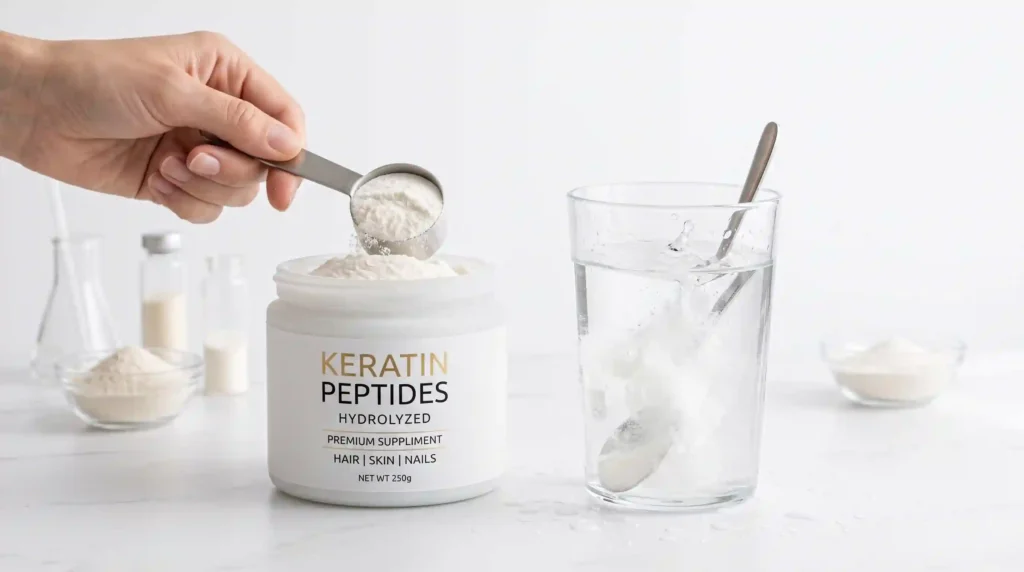
This article provides a comprehensive technical guide to formulating a keratin powder for drinking, covering the hydrolysis process, the role of molecular weight in absorption, clinical evidence for oral supplementation, key formulation parameters, quality specifications for B2B procurement, and practical answers to common questions. Whether you are developing a stick-pack, a ready-to-mix sachet, or a bulk powder for private labelling, understanding the science behind a premium keratin powder to drink will help you create a product that performs consistently and delivers real value to end-users.
Why Native Keratin Cannot Be Used as a Keratin Powder to Drink
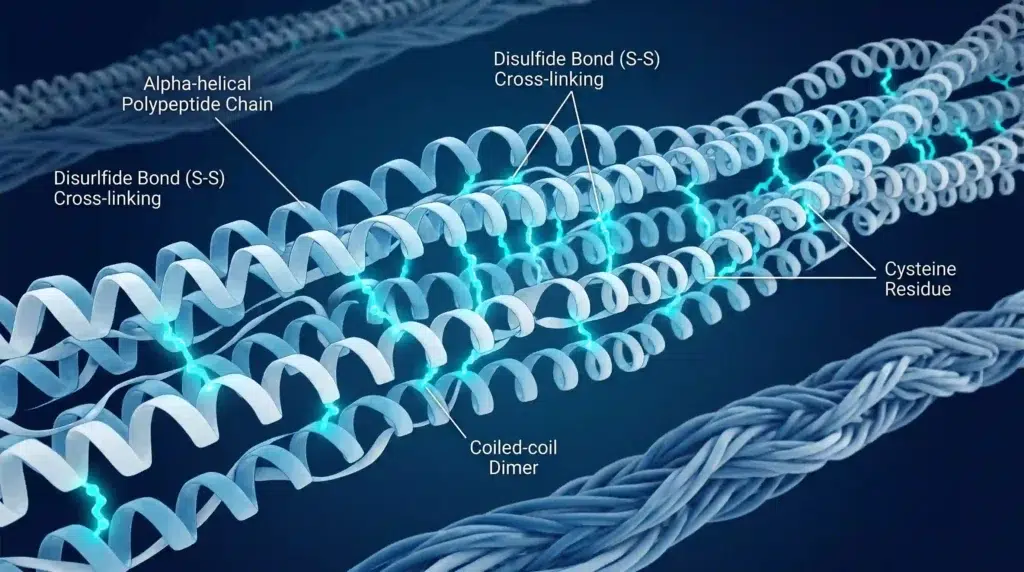
Keratin is a fibrous structural protein found in feathers, hair, nails, and wool. Its molecular structure is defined by a high proportion of cysteine residues—typically 5–8% of total amino acids—which form extensive disulphide bridges that cross-link polypeptide chains into a rigid, insoluble matrix. These cross-links, together with hydrophobic interactions and hydrogen bonds, give keratin its mechanical strength and resistance to enzymatic breakdown. In its native state, keratin is practically indigestible and does not disperse in water. If you tried to make a keratin powder from native keratin to drink, you would end up with a gritty suspension that settles rapidly, offering little nutritional value and an unpleasant mouthfeel.
For these reasons, any commercial keratin powder to drink must be produced via hydrolysis, which transforms the insoluble fibre into bioavailable peptides. Without hydrolysis, the product would fail both in terms of consumer acceptance and physiological efficacy.
The Hydrolysis Solution: From Insoluble Fibre to a Functional Keratin Powder to Drink
Hydrolysis addresses both the solubility and bioavailability barriers by breaking the keratin macromolecule into smaller fragments. Two primary methods exist: acid hydrolysis and enzymatic hydrolysis.
Acid hydrolysis uses strong mineral acids under elevated temperatures to cleave peptide bonds non-selectively. This method is efficient at generating free amino acids and very small peptides—typically below 800 Da. However, acid hydrolysis can degrade sensitive amino acids such as cysteine, tryptophan, and methionine, and it requires extensive neutralisation and purification to remove residual acid and salts. While it can produce a keratin powder to drink, the harsh conditions often compromise the amino acid profile and introduce off-flavours.
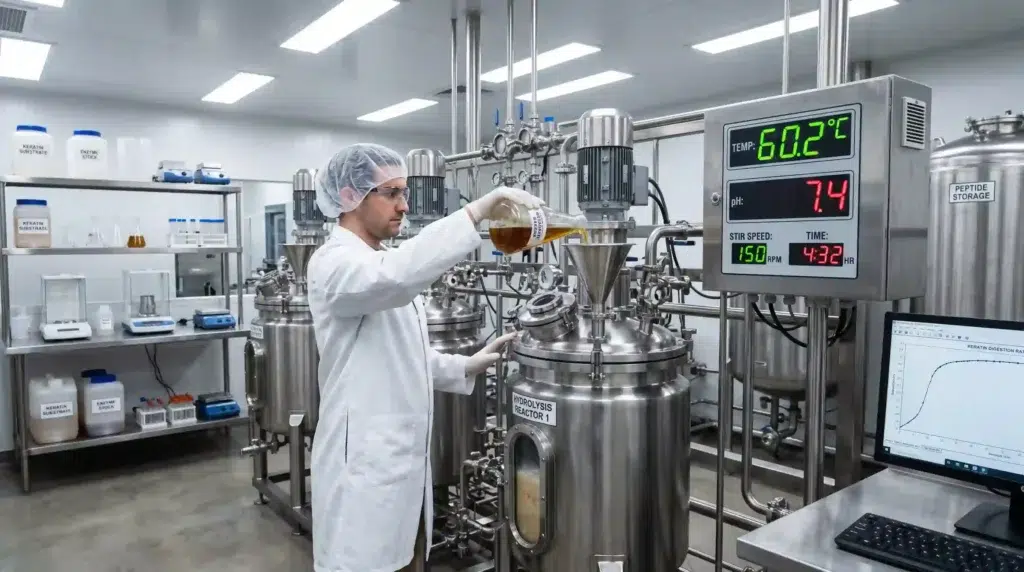
Enzymatic hydrolysis employs food-grade proteases under controlled temperature and pH to cleave specific peptide bonds. This approach preserves amino acid integrity, produces a more consistent peptide profile, and avoids harsh chemical treatments. Enzymatic hydrolysis is the preferred method for producing a high-quality keratin powder to drink intended for human consumption. At Atnutra, the hydrolysis process is precisely controlled to reduce molecular weight to below 2000 Daltons, ensuring that the resulting keratin powder to drink achieves rapid dissolution and excellent intestinal absorption.
Molecular Weight and Bioavailability in a Keratin Powder to Drink
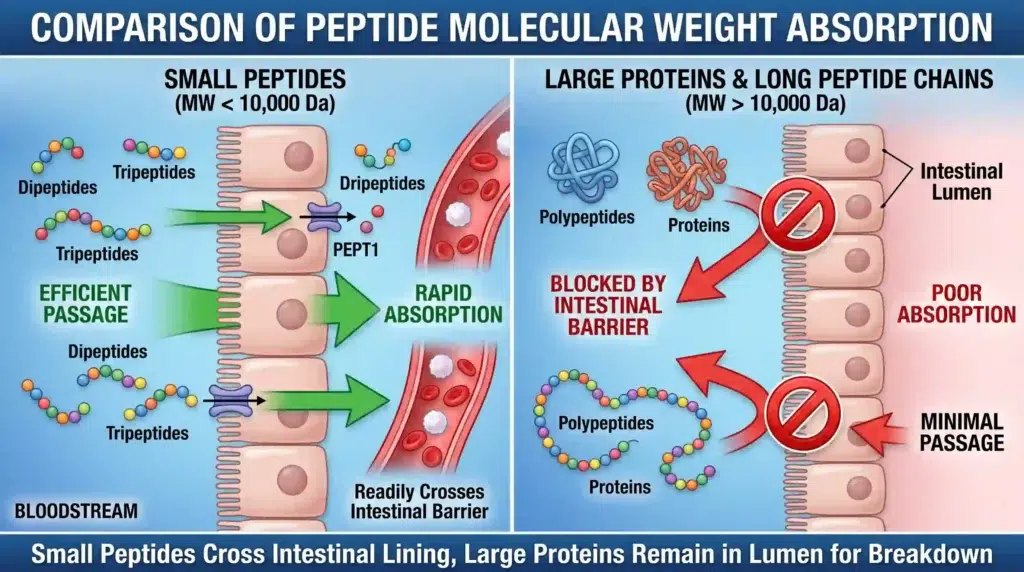
The effectiveness of a keratin powder to drink depends heavily on its molecular weight distribution. The most effective hydrolysates feature low-molecular-weight peptides, typically in the 500–3000 Da range, which enhance intestinal uptake and amino acid utilisation. Smaller peptides cross the intestinal barrier more efficiently than larger protein chains. This translates to a meaningful bioavailability advantage—a critical consideration when formulating a keratin powder to drink as a daily nutritional supplement. Molecular weight below 2000 Daltons is generally considered optimal for a drinkable keratin product, providing excellent solubility while maintaining rapid absorption. Atnutra’s keratin powder to drink achieves an average molecular weight below 1000 Da, with over 90% of the material consisting of free amino acids and dipeptides.
Amino Acid Profile of a Keratin Powder to Drink
Hydrolyzed keratin peptides retain the characteristic amino acid profile of the source keratin, which is notably rich in sulphur-containing amino acids. This unique profile makes a keratin powder to drink valuable for individuals seeking to increase their intake of cysteine, methionine, and other conditionally essential amino acids. The table below summarises the key amino acids and their nutritional significance for a keratin powder to drink formulation.
| Amino Acid | Content Characteristic | Nutritional Significance |
|---|---|---|
| Cysteine/Cystine | >5% of total amino acids | Precursor for glutathione; supports antioxidant defence and protein synthesis |
| Glycine | High | Involved in collagen synthesis and neurotransmitter regulation |
| Proline | High | Important for connective tissue integrity and wound healing |
| Arginine | Significant | Supports nitric oxide production and immune function |
| Lysine | Significant | Essential amino acid; critical for protein synthesis and calcium absorption |
| Methionine | Significant | Sulphur donor; precursor to cysteine and taurine |
This amino acid composition makes a keratin powder to drink suitable for general protein supplementation, sports nutrition, and formulations aimed at supporting connective tissue and overall metabolic health.
Nutritional Rationale for Supplementing with a Keratin Powder to Drink
Dietary supplements containing a keratin powder to drink are typically positioned to provide a concentrated source of specific amino acids that may be limiting in modern diets. The high cysteine content is particularly relevant, as cysteine is a precursor for glutathione—one of the body’s primary endogenous antioxidants. Additionally, the presence of glycine, proline, and arginine supports various physiological processes including collagen turnover, immune function, and vascular health. For consumers who prefer a convenient powder format, a keratin powder to drink offers an easy way to boost their daily protein intake with a targeted amino acid profile.
Clinical studies on oral keratin hydrolysate have primarily focused on hair, skin, and nail outcomes, but the fundamental nutritional value of the peptides extends to broader applications. The rapid absorption kinetics—with circulating amino acids peaking approximately 20 minutes after ingestion—make a keratin powder to drink suitable for use in recovery drinks, meal replacement powders, and general wellness supplements. Furthermore, the peptide form offers advantages over free amino acid mixtures. Peptides are absorbed via distinct transport mechanisms that can be more efficient for certain amino acids, and they may exert bioactive effects beyond simple nutrition. The metabolomic profile of keratin-derived peptides has been shown to influence fibroblast activity and extracellular matrix turnover, which has implications for connective tissue health throughout the body.
Clinical Evidence Supporting Oral Keratin Hydrolysate Supplementation
While the clinical literature is richest in the area of skin and hair health, the underlying mechanisms—improved amino acid delivery, antioxidant support, and fibroblast stimulation—are relevant to a wide range of supplement applications. A randomized, double-blind, placebo-controlled study evaluated a feather keratin hydrolysate in healthy women at daily doses of 500 mg or 1000 mg over 90 days. Parameters including skin roughness, wrinkle features, deep moisturisation, elasticity, thickness, and density all showed significant improvements in the treatment groups compared to placebo. The study noted that the free amino acid mixture functioned as more than just building blocks—it appeared to exert bioactive signalling effects.
Another clinical study on extensively hydrolysed food-grade keratin reported an average 10% reduction in wrinkles, along with improvements in firmness and elasticity. This was the first study to demonstrate positive effects of pure hydrolysed keratin without other active ingredients. For supplement formulators, these findings support the use of a hydrolyzed keratin powder to drink at daily doses of 500–1000 mg to deliver measurable benefits. The same amino acid profile that benefits skin also supports overall protein status, and the enhanced bioavailability ensures that a high proportion of the ingested material reaches systemic circulation.
Formulating a Keratin Powder to Drink: Key Parameters
The transition from bulk hydrolyzed keratin powder to a finished keratin powder to drink requires attention to several critical formulation parameters.
Solubility and Clarity
A premium keratin powder to drink must achieve complete dissolution in cold or ambient water without requiring heating or vigorous shaking. Modern hydrolyzed keratin peptides designed for drinkable applications achieve clear solutions across pH ranges of 3–7. This pH stability is critical because many powdered drink mixes—particularly fruit-flavoured products—fall within this acidic to neutral range. When formulating a keratin powder to drink, you should verify that the final product maintains clarity without precipitation or haze formation over the expected shelf life.
The solubility advantage comes from the peptide size distribution. Hydrolyzed keratin with molecular weight below 2000 Da dissolves seamlessly into powders, stick packs, and functional beverage mixes. Ultra-low-molecular-weight fractions achieve neutral sensory properties in both clear acidic and neutral bases. Atnutra’s keratin powder to drink is 100% water soluble, making it particularly suitable for formulations where complete dissolution is required without heating or extensive mixing. For detailed technical specifications, including verified batch data and formulation guidance, visit the Hydrolyzed Keratin Powder product page.
Sensory Properties of a Keratin Powder to Drink
Taste and mouthfeel are decisive factors for consumer compliance. Early-generation keratin hydrolysates often carried bitter or unpleasant notes—a byproduct of the hydrolysis process that liberates hydrophobic amino acids and short peptides with bitter taste characteristics. Modern processing addresses this through:
- Enzymatic hydrolysis optimisation: Selecting protease combinations that minimise bitter peptide generation.
- Membrane fractionation: Removing bitter peptide fractions while retaining bioactive components.
- Activated carbon polishing: Adsorbing off-flavour compounds without degrading peptides.
- Debittering treatments: Enzymatic or physical methods to reduce bitterness.
The result is a keratin powder to drink with neutral taste and odour at typical use levels. This sensory neutrality allows formulators to add flavours without needing to mask undesirable base notes, making it easier to create a pleasant-tasting keratin powder to drink that consumers will enjoy daily.
Heat Stability
If the final product is a ready-to-drink format, beverage applications often require thermal processing—pasteurisation, UHT treatment, or hot-fill procedures. For a dry keratin powder to drink mix, heat stability is less critical, but hydrolyzed keratin peptides do demonstrate stability suitable for HTST pasteurisation if needed. This thermal stability is an advantage over some other protein ingredients that denature or aggregate upon heating, ensuring that a keratin powder to drink can be used in a variety of finished formats without compromising performance.
Synergistic Formulations with a Keratin Powder to Drink
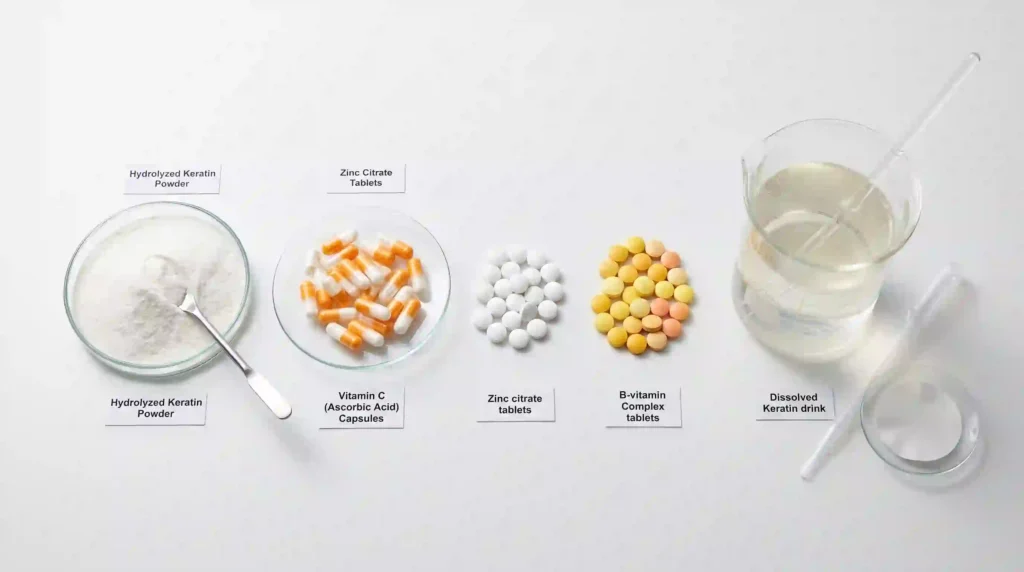
Hydrolyzed keratin peptides are frequently paired with complementary nutrients to create comprehensive supplement blends. When developing a keratin powder to drink, consider adding synergistic ingredients such as:
| Ingredient | Synergistic Rationale |
|---|---|
| Vitamin C | Antioxidant; supports collagen synthesis and protects peptides from oxidation |
| Zinc | Essential for protein synthesis and immune function |
| B-vitamins (especially B6, B12, biotin) | Cofactors for amino acid metabolism |
| Collagen peptides | Complementary amino acid profile; together provide a broader spectrum of structural amino acids |
| Glucosamine or chondroitin | For joint health formulations, combined with keratin’s sulphur amino acids |
These combinations allow brands to develop differentiated products that address multiple health needs simultaneously, making the keratin powder to drink more versatile and appealing to a wider audience.
Dosage and Use Levels for a Keratin Powder to Drink
Clinical studies have used daily doses ranging from 500 mg to 5000 mg of hydrolyzed keratin. For general supplementation, 500 mg/day is a common and well-studied level. For a keratin powder to drink, typical use levels range from 0.5% to several grams per serving, depending on the desired positioning. Because Atnutra’s hydrolyzed keratin peptide is highly concentrated and features an ultra-low molecular weight, formulators can easily achieve effective dosing in compact sachets or single-serve stick packs. When calculating the dosage for your keratin powder to drink, always consider the peptide content and bioavailability to ensure that each serving delivers the intended nutritional benefit.
Quality Parameters for Procuring a Keratin Powder to Drink
For formulators and procurement professionals, several quality parameters require careful evaluation when sourcing a keratin powder to drink.
Protein Content
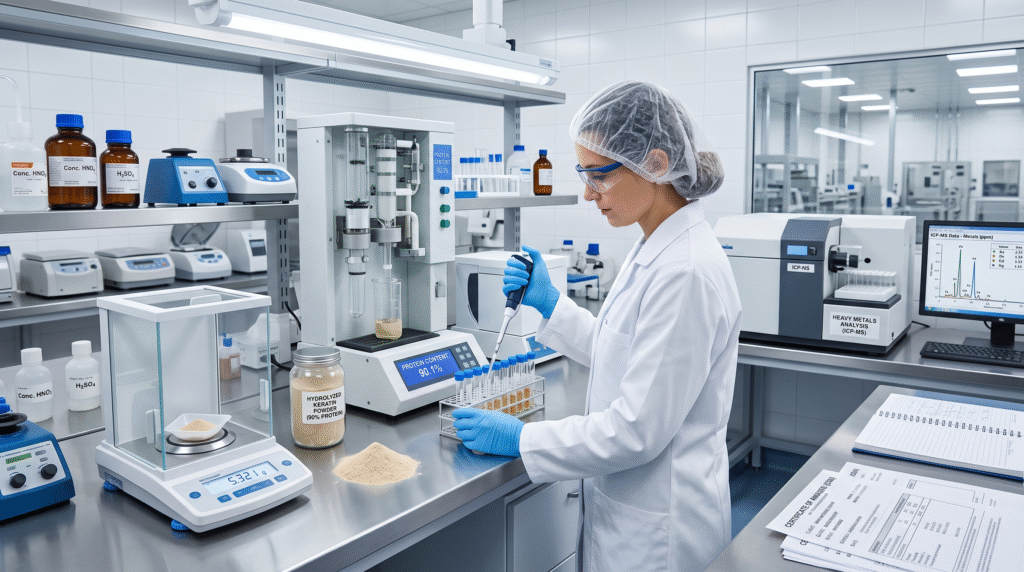
A high-quality keratin powder to drink should contain at least 90% protein on a dry basis. Premium products routinely achieve 92% or higher. Lower protein content indicates higher levels of ash, moisture, or fillers—all of which dilute the active peptide concentration and may affect the solubility and sensory profile of your keratin powder to drink. Atnutra’s keratin powder to drink is batch-verified at 93.15% protein content, ensuring high active ingredient concentration for formulation efficiency.
Molecular Weight Distribution
Molecular weight is the most important predictor of bioavailability for a keratin powder to drink. Products should specify average molecular weight (ideally below 2000 Da) and the fraction below 1000 Da. A high proportion of low-molecular-weight peptides ensures rapid absorption and complete dissolution, which are essential attributes for any premium keratin powder to drink.
Physical Properties
For drinkable applications, the powder should be uniform, soft, and free from caking. Colour should be white or light yellow. Bulk density affects flow and mixing—Atnutra’s product has a verified bulk density of 0.39 g/ml, which facilitates consistent blending and packaging of your keratin powder to drink.
Heavy Metals and Microbiological Standards
Food-grade hydrolyzed keratin must meet strict heavy metal limits—typically lead and arsenic ≤0.50 ppm. Total bacterial counts should be below 1000 CFU/g, with negative pathogen screens. Atnutra’s keratin powder to drink meets these specifications, with total bacteria counts of 210 CFU/g, ensuring a safe and compliant ingredient for your supplement products.
Source and Traceability
Feather-derived keratin offers advantages: it is BSE/TSE-free, sustainable, traceable, and widely accepted in supplement markets. Atnutra maintains localised inventory in North American warehouses for rapid fulfilment and consistent pricing. Direct procurement from an established manufacturer ensures supply chain stability, technical formulation support, and a reliable, traceable supply of your keratin powder to drink.
Comparative Considerations
When selecting between hydrolyzed keratin and other protein ingredients for supplement powders, formulators should consider the distinct characteristics of each. For a detailed comparison of hydrolyzed wheat protein versus keratin, including differences in source, molecular weight, absorption, and application suitability, refer to Atnutra’s comprehensive analysis: Hydrolyzed Wheat Protein vs Keratin: Which is Better?. This comparison will help you decide whether a keratin powder to drink is the right choice for your specific formulation goals.

Conclusion
Hydrolyzed keratin peptides have evolved from an insoluble, indigestible protein into a versatile ingredient for a convenient keratin powder to drink. The key enabling technologies—enzymatic hydrolysis, membrane fractionation, and advanced purification—have produced peptide fractions that combine solubility, stability, bioavailability, and neutral sensory properties, making them ideal for a wide range of drinkable supplement formats.
For formulators and product developers, the opportunity lies in sourcing a keratin powder to drink that meets rigorous quality specifications: protein content above 90%, molecular weight below 2000 Da, a clean sensory profile, and robust clinical substantiation. Atnutra’s hydrolyzed keratin powder meets these specifications with verified protein content of 93.15%, average molecular weight below 1000 Da, neutral sensory profile, and 100% water solubility. These attributes ensure that your keratin powder to drink will perform consistently, dissolve completely, and deliver the nutritional benefits that consumers expect.
As the supplement industry continues to move toward convenient, science-backed formats, a well-formulated keratin powder to drink offers a compelling option for brands looking to differentiate themselves in the crowded protein and wellness market. Whether used alone or in combination with other nutrients, hydrolyzed keratin peptides represent a scientifically validated, commercially viable ingredient for the next generation of functional drinkable supplements. With careful attention to formulation parameters, quality sourcing, and consumer preferences, your keratin powder to drink can become a trusted product that supports daily nutrition and overall well-being.