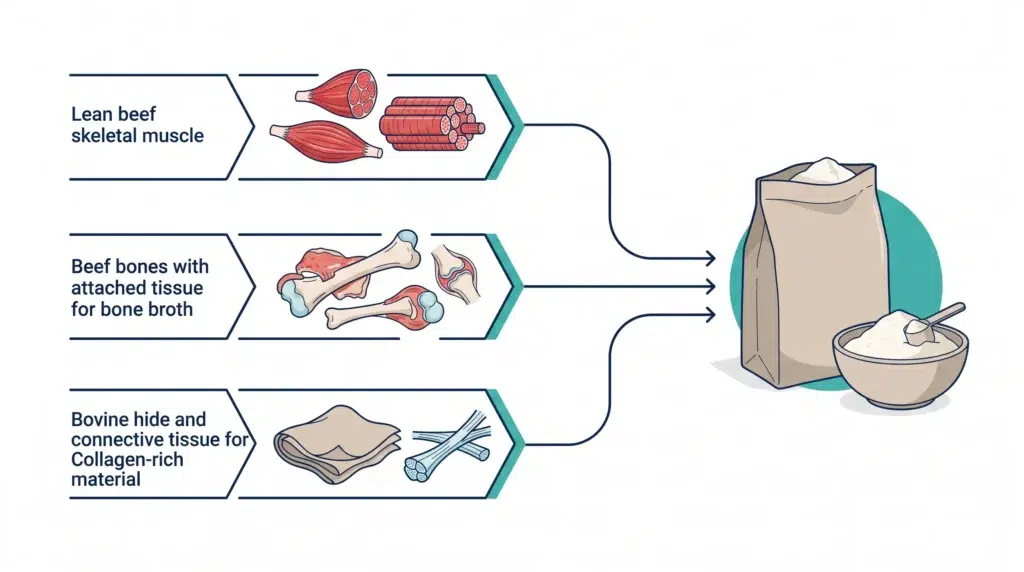
Collagen peptides may help improve certain measures of skin hydration, reduce joint discomfort in some people, and support selected bone or exercise-related outcomes. However, the evidence is not equally strong for every benefit—and a positive study does not mean every collagen supplement will deliver the same result.
Skin and joints are among the most extensively investigated applications. Bone and exercise research also shows promising findings, while evidence for hair growth, gut repair, and dramatic wrinkle reduction remains much less convincing.
The important question is not simply whether collagen peptides work.
It is which benefit was measured, how meaningful the result was, and whether that research applies to the product you are considering.
This guide examines the main benefits of collagen peptides, the conflicting human evidence, realistic expectations, and the limits of common supplement claims.
What Are the Main Benefits of Collagen Peptides?
Collagen peptides, also called hydrolyzed collagen, are collagen-derived protein fragments used in dietary supplements.
Human research has investigated their potential effects on skin, joints, bones, muscles, and connective tissues.
However, each application involves different measurements. An improvement in a skin hydration instrument, for example, is not the same as visibly reversing wrinkles.
Collagen Peptides Benefits: Evidence vs. Realistic Expectations
| Potential benefit | What human studies actually measure | What you can reasonably conclude |
|---|---|---|
| Skin hydration | Instrumental skin moisture measurements | Some studies show improvement, but the size and noticeable value of the effect remain uncertain |
| Skin elasticity | Instrument-based elasticity measurements | Positive signals exist, but not all rigorous analyses agree |
| Wrinkle reduction | Wrinkle depth, surface imaging, or wrinkle scores | Evidence is less robust; dramatic wrinkle reversal is not established |
| Joint comfort | Pain ratings and functional questionnaires | Some people may benefit from specific preparations; results are mixed |
| Bone health | Bone mineral density (BMD) and bone-turnover markers | Some encouraging results in selected populations; fracture prevention is unproven |
| Muscle and exercise | Fat-free mass, strength, tendon characteristics, and recovery outcomes | Some training-related findings are positive, but collagen is not equivalent to whey for muscle protein synthesis |
| Hair and nails | Hair outcomes and nail growth or breakage | Direct controlled evidence remains limited |
| Gut health | Digestive symptoms or intestinal-related measurements | Broad gut-repair claims lack adequate direct human evidence |
This table is an editorial summary of the evidence, not a formal GRADE assessment.
Three distinctions are especially important:
- A statistically significant result may be too small to produce a noticeable change.
- A trial on one collagen peptide preparation does not automatically establish the same effect for another.
- An improvement in a measured indicator does not prove a larger clinical benefit, such as preventing fractures or regenerating cartilage.
Those distinctions are what separate realistic collagen benefits from overstated marketing claims.
Which Collagen Benefits Have the Strongest Human Evidence?
Skin hydration and selected joint outcomes are among the more frequently studied potential benefits, but even these areas have important uncertainties.
There is no scientifically defensible universal ranking that makes every skin outcome stronger than every joint outcome, or vice versa.
Research quality, study population, collagen formulation, and the endpoint being measured all influence the conclusion.
This becomes clear when we compare recent evidence reviews.
Why Do Recent Reviews Reach Different Conclusions?
Three major publications illustrate the difficulty of interpreting collagen research.
| Review | Main finding | Critical limitation |
|---|---|---|
| Myung & Park, 2025 — 23 RCTs, 1,474 participants | Overall skin results were favorable, but benefits were not significant in higher-quality and non-industry-funded study subgroups | Funding source and study quality changed the interpretation |
| Batool et al., 2026 — 35 RCTs, 2,534 participants | Hydration, elasticity, and transepidermal water loss showed positive signals; wrinkle and dermal-structure findings were not robust | Heterogeneity, influential studies, and different outcome measures |
| Ravindran et al., 2026 — 16 systematic reviews covering 113 reported RCTs | Reported favorable findings across several skin and musculoskeletal outcomes | Only 1 included review was rated high quality using AMSTAR-2; 4 were low and 11 critically low |
These publications do not necessarily contradict each other on every outcome.
They differ in study selection, which outcomes were combined, statistical methods, and how research quality was evaluated.
For example, a meta-analysis may find a favorable average effect when all trials are pooled.
But the conclusion becomes less secure if the effect disappears when higher-risk studies are excluded or if a few unusually large findings drive the result.
An umbrella review adds another layer by combining findings from existing reviews. It does not necessarily provide an entirely new set of independent clinical trials, and some underlying studies may appear in more than one review.
The 2026 umbrella review reported favorable results and assigned relatively high certainty to some pooled outcomes. However, its own AMSTAR-2 assessment found serious methodological weaknesses in most of the reviews it included.
A larger collection of studies is not automatically stronger evidence. The reliability of those studies and the relevance of their measured outcomes still matter.
This is why the following sections distinguish promising signals from proven clinical benefits.
Do Collagen Peptides Help Skin?
Some collagen peptide preparations may improve measured skin hydration and elasticity, but visible anti-aging benefits are less convincingly established.
Skin research commonly examines hydration, elasticity, barrier function, wrinkles, and dermal density.
These measurements are related, but they are not interchangeable.
Skin Hydration
The 2026 updated meta-analysis by Batool and colleagues found a favorable pooled effect on skin hydration.
This supports the possibility that some oral collagen preparations may affect skin moisture measurements.
However, the 2025 analysis by Myung and Park did not find significant hydration benefits in its higher-quality and non-industry-funded subgroups.
Both findings deserve attention.
The most reasonable conclusion is that skin hydration is a promising application, but confidence in the consistency and practical magnitude of the effect remains limited.
A change measured by a skin hydration instrument should not automatically be described as visibly younger skin.
Elasticity and Skin Barrier
The 2026 analysis also reported improvements in elasticity and reductions in transepidermal water loss (TEWL), a measurement associated with skin-barrier performance.
Some favorable effects were more apparent after longer supplementation periods.
But the studies varied in dose, collagen source, duration, baseline skin condition, and measurement technique.
A favorable elasticity reading does not prove that every consumer will notice firmer skin.
Similarly, a reduction in TEWL does not establish that collagen supplementation treats a skin disease.
Wrinkles and Visible Skin Aging
Claims about wrinkles require greater caution.
The 2026 analysis found that apparent improvements in wrinkles, roughness, and dermal density were sensitive to influential studies and statistical assumptions.
The 2025 review also found that results for skin aging became less convincing when research quality and funding were considered.
Current evidence does not justify promises that collagen peptides erase wrinkles, reverse aging, or rebuild the dermis.
The more defensible position is that some skin-function measurements show potential benefits, while visible structural anti-aging effects remain uncertain.
For a detailed outcome-by-outcome analysis, read Collagen Peptides for Skin: Hydration, Elasticity & Wrinkles.
Can Collagen Peptides Reduce Joint Discomfort?
Some randomized trials have reported improvements in joint pain or function, but others have found no additional benefit over placebo.
One reason the results differ is that collagen studies do not always investigate the same population, ingredient, or outcome.
A Positive Trial: Activity-Related Joint Discomfort
A 2024 randomized controlled trial by Schulze and colleagues enrolled 182 adults experiencing functional knee or hip discomfort during everyday activities.
Participants received either 5 g per day of a specific collagen peptide preparation or placebo for 12 weeks.
The collagen group showed favorable differences in selected outcomes, including physician-rated pain during walking and participant-rated discomfort during stair climbing and kneeling.
This is evidence of a potential benefit for the tested preparation and the population studied.
It does not prove that all collagen peptides improve every type of joint pain.
A Negative Trial: Self-Reported Knee Pain
A 2020 randomized controlled trial studied 167 physically active adults with self-reported knee pain.
Participants received 10 g of collagen peptides or placebo daily for 12 weeks.
Both groups improved over time, but the collagen group did not show a statistically significant additional benefit on the main pain and functional outcomes.
This is an important counterexample.
However, these two trials involved different populations, formulations, and assessment methods.
The fact that one 5 g trial was positive and one 10 g trial was negative does not mean a lower dose is more effective.
Dose alone cannot explain the contrast.
What Do Joint Meta-Analyses Show?
A meta-analysis of 11 randomized trials involving 870 participants with knee osteoarthritis reported favorable pooled results for pain and function.
However, heterogeneity was substantial: 88% for pain and 75% for function.
The review also evaluated collagen-based supplements more broadly, meaning not every included intervention should automatically be treated as an equivalent hydrolyzed collagen peptide preparation.
This supports the possibility of benefit while limiting how confidently the results can be generalized.
Does Less Joint Pain Mean Cartilage Regeneration?
No.
Pain ratings, mobility assessments, and imaging evidence of cartilage regeneration are different endpoints.
A supplement may affect symptoms without reversing structural joint damage.
Joint-comfort evidence should not be converted into claims that collagen peptides rebuild cartilage or cure osteoarthritis.
Hydrolyzed collagen peptides should also be distinguished from undenatured Type II collagen, a different ingredient form with a different research context.
What About Bone, Muscle, and Tendon Benefits?
These applications are often grouped together because collagen occurs in connective tissues.
But bone mineral density, muscle protein synthesis, tendon morphology, and exercise performance are distinct outcomes.
Bone Health: Promising BMD Findings Are Not Fracture Prevention
A 2018 randomized controlled trial enrolled 131 postmenopausal women with reduced bone mineral density.
Participants received 5 g per day of a specific collagen peptide preparation or placebo for 12 months.
Of those enrolled, 102 completed the study. The analysis reported favorable differences in spine and femoral-neck BMD, together with selected bone-turnover markers.
This is relevant clinical research, particularly because it investigated longer-term bone outcomes.
However, it was conducted in a specific population using a specific preparation.
A 2025 systematic review of Type I collagen hydrolysates noted that bone research remains limited by methodological issues and differences between studies.
Most importantly:
An improvement in BMD is not proof that collagen supplementation reduces fracture risk.
Fracture prevention requires appropriately designed clinical evidence rather than extrapolation from a surrogate measurement.
Collagen peptides should not replace established osteoporosis assessment or treatment.
Muscle and Exercise: Training Outcomes Are Not the Same as Muscle Protein Synthesis
A 2024 systematic review and meta-analysis examined 19 studies involving 768 participants.
It reported favorable pooled findings for some outcomes, including fat-free mass, strength, and certain tendon-related measures when collagen supplementation was studied alongside training.
However, evidence certainty ranged from moderate for some body-composition outcomes to very low for tendon morphology and mechanical properties.
A different question is whether collagen directly stimulates muscle protein synthesis as effectively as a high-quality protein.
In a 2024 randomized trial involving 31 older men, additional whey or pea protein increased integrated myofibrillar protein synthesis under the tested conditions, while additional collagen protein did not produce the same response.
These findings are not necessarily inconsistent.
Fat-free mass, strength, tendon measurements, and muscle protein synthesis are different endpoints.
A positive result for one cannot be used to establish a positive result for all the others.
Collagen also has a lower essential-amino-acid content than whey and is not nutritionally equivalent gram for gram.
For a direct nutritional comparison, see Collagen Peptides vs Whey Protein.
Tendon Support and Recovery
Some training studies report positive tendon-related measurements after collagen peptide supplementation.
But the evidence remains limited, especially for clinically meaningful outcomes such as injury prevention, faster rehabilitation, or reduced tendon injury recurrence.
A change in tendon cross-sectional area or stiffness does not automatically demonstrate a lower risk of injury.
Tendon research is promising enough to investigate further, but not strong enough to support universal claims about injury protection or tissue repair.
Which Popular Collagen Benefits Are Not Well Proven?
Several widely advertised benefits currently have much weaker direct human support.
Hair Growth
Collagen provides amino acids used in normal protein metabolism.
However, this does not demonstrate that consuming collagen peptides promotes new hair growth or prevents hair loss.
Convincing controlled human evidence for collagen peptides as a hair-growth treatment remains lacking.
Stronger Nails
A 2017 open-label study investigated 25 participants using 2.5 g per day of specific collagen peptides for 24 weeks.
The investigators reported favorable changes in nail growth and breakage.
However, the study lacked a placebo-controlled comparison group.
Without that control, it is difficult to determine how much of the improvement resulted from supplementation rather than other factors.
This makes the findings preliminary.
Gut Repair
Collagen supplements are sometimes promoted as products that repair intestinal permeability or heal the gut lining.
These are stronger claims than current direct human evidence supports.
Biological plausibility or the presence of collagen-related amino acids does not establish a treatment effect in a gastrointestinal condition.
Cartilage Regeneration and Disease Prevention
Similarly, collagen supplements should not be described as proven to regenerate cartilage, prevent osteoporosis, or treat a disease simply because some trials reported favorable symptoms or surrogate outcomes.
A measured improvement is evidence for the endpoint studied—not permission to claim a broader medical result.
How Much Collagen Was Used in Human Studies?
There is no single dose or supplementation duration that has been established as optimal for every collagen peptide benefit.
Clinical trials use different preparations, doses, populations, and timelines.
| Studied application | Example from human research | What it does not establish |
|---|---|---|
| Skin outcomes | Trials across varying doses, commonly lasting several weeks to around 12 weeks | A universal anti-aging dose or guaranteed visible result |
| Activity-related joint discomfort | 5 g/day for 12 weeks in one positive trial | Equivalent results from every 5 g collagen ingredient |
| Self-reported knee pain | 10 g/day for 12 weeks in one negative trial | That all 10 g preparations are ineffective |
| Bone mineral density | 5 g/day for 12 months in one study of postmenopausal women | A general dose for fracture prevention |
| Exercise-related outcomes | Different doses combined with training programs | An optimal collagen dose for muscle gain or injury prevention |
These are examples of clinical interventions, not universal recommendations.
The appropriate serving size for a particular product should reflect its formulation, intended use, supporting evidence, and labeling requirements.
Taking more collagen does not automatically produce greater benefits.
What Should Consumers Know Before Taking Collagen?
Collagen peptides have generally been well tolerated in many clinical trials, although the evidence does not establish absolute safety for every person or long-term use in every circumstance.
Some users may experience mild digestive discomfort, fullness, nausea, or an unpleasant aftertaste.
Source matters as well. For example, consumers with fish allergies should carefully assess fish-derived collagen products and their allergen labeling.
People who are pregnant, breastfeeding, managing a medical condition, or receiving treatment should seek advice from an appropriate healthcare professional before starting a new supplement.
Product quality also matters.
Two products described as hydrolyzed collagen may differ in source, purity, manufacturing specifications, contaminant controls, and quality documentation.
Consumers should consider the complete product rather than relying only on the word collagen or a broad benefit claim.
What Can Collagen Clinical Studies Actually Support?
A clinical study supports the outcomes measured under its particular conditions. It does not automatically support every claim about the ingredient category or every finished product.
This is one of the most important principles for consumers, supplement brands, and formulation teams.
What a Positive Study Can—and Cannot—Prove
| Study finding | Reasonable interpretation | Unsupported leap |
|---|---|---|
| Improved instrumental skin hydration | A particular intervention improved measured skin moisture under the study conditions | “Clinically proven to erase wrinkles” |
| Lower joint-pain score | Some participants experienced improved symptoms | “Regenerates damaged cartilage” |
| Higher BMD | A bone-density measurement improved in a studied population | “Prevents fractures” |
| Increased fat-free mass with exercise | Favorable body-composition results occurred under a training protocol | “Superior to whey for muscle protein synthesis” |
| Collagen-derived peptides detected in blood | Some digestion products entered circulation | “Targets and rebuilds skin, joints, and bones” |
The objective is not to dismiss positive research.
It is to use that research accurately.
A trial can provide genuine evidence of benefit without establishing every downstream marketing conclusion.
Illustrative Case: A 5 g Collagen Beauty Powder
Consider a hypothetical supplement brand developing a beauty powder containing:
5 g of generic hydrolyzed bovine collagen peptides per serving.
The marketing team finds a published trial reporting improvements in skin hydration using a particular proprietary collagen peptide preparation.
The trial appears relevant because both ingredients are collagen peptides.
But before using the study to support the finished-product claim, the brand should evaluate four questions.
| Review Step | Question | Why It Matters |
|---|---|---|
| Ingredient identity | Is the commercial bovine collagen comparable to the clinically tested preparation? | Same ingredient category does not establish identical composition or efficacy |
| Dose | Did the trial use an equivalent dose and regimen? | Matching the number of grams alone may not establish equivalence |
| Population and duration | Were the participants and intervention period relevant to the intended product? | Results may not apply to a different audience or timeline |
| Measured endpoint | Did the study measure hydration, elasticity, or wrinkles? | A hydration result does not prove wrinkle reduction |
Suppose the brand can confirm the study used 5 g daily, but cannot establish whether its generic ingredient is sufficiently comparable to the proprietary preparation.
The study may still be useful scientific background.
It does not automatically establish that the finished beauty powder delivers the same clinical effect.
This is an illustrative claim-review exercise, not a real ATNUTRA formulation or a determination that any specific advertising wording is legally approved.
Clinical Evidence vs. Ingredient Evidence vs. Finished-Product Claims
A useful way to review collagen research is to separate three levels.
Level 1 — Benefit-category evidence
Does human research suggest that some collagen interventions may influence the proposed outcome?
Level 2 — Ingredient-specific evidence
Does the evidence apply to the specific collagen preparation, dose, and relevant characteristics?
Level 3 — Finished-product claim
Does the available evidence adequately substantiate the precise claim consumers will see for the actual product being marketed?
Passing the first level does not automatically satisfy the second or third.
What Do U.S. Claim Rules Require?
For U.S. dietary supplements, FDA rules distinguish permissible, properly substantiated structure/function claims from disease claims. Applicable structure/function labeling requirements can include specified disclaimers and notification obligations.
Separately, the Federal Trade Commission requires health-related advertising claims to be truthful, not misleading, and supported by competent and reliable scientific evidence.
FTC guidance also emphasizes the importance of clinically meaningful results and evidence that is relevant to the product and the claim being advertised.
A disclaimer cannot automatically correct an otherwise misleading efficacy statement.
For brands and ingredient buyers, the practical lesson is simple:
The stronger and more specific the claim, the more directly relevant and convincing its substantiation must be.
Frequently Asked Questions
What are the most evidence-supported collagen peptide benefits?
Skin hydration and certain joint-related outcomes are among the more extensively investigated areas, with positive findings in some human trials. However, inconsistencies between studies, quality concerns, and product differences mean these benefits are not guaranteed or uniformly established.
Do collagen peptides actually work?
Some specific preparations have produced positive results for selected outcomes in randomized trials. Other studies have found little or no additional benefit compared with placebo. Effectiveness should be evaluated by the outcome, ingredient, dose, population, and study quality.
Can collagen peptides reduce wrinkles?
The evidence is less convincing than for some instrumental skin hydration outcomes. Recent analyses found that apparent wrinkle improvements were sensitive to influential studies and methodological choices. Claims of dramatic wrinkle reversal are not established.
Are collagen peptides better for skin or joints?
Neither application can be declared universally better. Skin and joint studies measure different outcomes and involve different populations and ingredients. The more useful approach is to evaluate evidence for the particular benefit you want.
Is marine collagen better than bovine collagen?
Current human evidence does not establish that either source is universally superior. Animal source affects considerations such as allergens, dietary preferences, and sourcing, but it does not independently guarantee better clinical performance.
Can collagen peptides replace regular protein powder?
Collagen contributes protein and amino acids, but it is not equivalent to a complete, essential-amino-acid-rich protein such as whey. If the primary objective is muscle protein synthesis or high-quality dietary protein intake, whey has stronger direct supporting evidence.
Bottom Line: Which Collagen Peptides Benefits Are Worth Believing?
Collagen peptides have promising applications, but the benefits are specific to the measured outcome, the tested preparation, and the quality of the research.
Some studies report improvements in skin hydration and selected joint symptoms. Bone and exercise-related results are also encouraging in certain populations.
However, conflicting reviews, industry funding concerns, differences among preparations, and limitations in clinical trial design prevent broad conclusions.
Evidence for dramatic wrinkle reduction, hair growth, gut repair, cartilage regeneration, and fracture prevention is substantially less convincing.
The key is to distinguish what researchers measured from what marketers imply.
Measured skin hydration is not wrinkle reversal. Reduced joint discomfort is not cartilage regeneration. Improved bone density is not proven fracture prevention. Increased fat-free mass is not proof of superior muscle protein synthesis.
For consumers, choosing collagen peptides should begin with realistic expectations.
For supplement brands, credible claims must begin with relevant, preparation-specific evidence.
The question is not how many benefits collagen is associated with. It is which benefits have actually been demonstrated, for which products, and with what degree of confidence.
References
- Myung SK, Park Y. Effects of Collagen Supplements on Skin Aging: A Systematic Review and Meta-Analysis of Randomized Controlled Trials. The American Journal of Medicine. 2025;138(9):1264–1277. https://doi.org/10.1016/j.amjmed.2025.04.034
- Batool A, et al. Oral Collagen Peptides and Skin Rejuvenation: A Systematic Review and an Updated Meta-Analysis of Randomized Controlled Trials. Journal of Cosmetic Dermatology. 2026;25(7):e71041. https://doi.org/10.1111/jocd.71041
- Ravindran R, et al. Collagen Supplementation for Skin and Musculoskeletal Health: An Umbrella Review of Meta-Analyses on Elasticity, Hydration, and Structural Outcomes. Aesthetic Surgery Journal Open Forum. 2026;8:ojag018. https://doi.org/10.1093/asjof/ojag018
- Schulze C, Schunck M, Zdzieblik D, Oesser S. Impact of Specific Bioactive Collagen Peptides on Joint Discomforts in the Lower Extremity during Daily Activities: A Randomized Controlled Trial. International Journal of Environmental Research and Public Health. 2024;21(6):687. https://doi.org/10.3390/ijerph21060687
- Bongers CCWG, et al. Effectiveness of Collagen Supplementation on Pain Scores in Healthy Individuals with Self-Reported Knee Pain: A Randomized Controlled Trial. Applied Physiology, Nutrition, and Metabolism. 2020;45(7):793–800. https://doi.org/10.1139/apnm-2019-0654
- Simental-Mendía M, et al. Effect of Collagen Supplementation on Knee Osteoarthritis: An Updated Systematic Review and Meta-Analysis of Randomised Controlled Trials. Clinical and Experimental Rheumatology. https://pubmed.ncbi.nlm.nih.gov/39212129/
- König D, Oesser S, Scharla S, Zdzieblik D, Gollhofer A. Specific Collagen Peptides Improve Bone Mineral Density and Bone Markers in Postmenopausal Women—A Randomized Controlled Study. Nutrients. 2018;10(1):97. https://doi.org/10.3390/nu10010097
- Brueckheimer PJ, et al. The Effects of Type I Collagen Hydrolysate Supplementation on Bones, Muscles, and Joints: A Systematic Review. Orthopedic Reviews. 2025;17:129086. https://doi.org/10.52965/001c.129086
- Bischof K, Moitzi AM, Stafilidis S, König D. Impact of Collagen Peptide Supplementation in Combination with Long-Term Physical Training on Strength, Musculotendinous Remodeling, Functional Recovery, and Body Composition in Healthy Adults: A Systematic Review with Meta-analysis. Sports Medicine. 2024;54:2865–2888. https://doi.org/10.1007/s40279-024-02079-0
- McKendry J, et al. The Effects of Whey, Pea, and Collagen Protein Supplementation Beyond the Recommended Dietary Allowance on Integrated Myofibrillar Protein Synthetic Rates in Older Males: A Randomized Controlled Trial. The American Journal of Clinical Nutrition. 2024;120(1):34–46. https://doi.org/10.1016/j.ajcnut.2024.05.009
- Hexsel D, et al. Oral Supplementation with Specific Bioactive Collagen Peptides Improves Nail Growth and Reduces Symptoms of Brittle Nails. Journal of Cosmetic Dermatology. 2017. https://pubmed.ncbi.nlm.nih.gov/28786550/
- U.S. Food and Drug Administration. Notifications for Structure/Function and Related Claims in Dietary Supplement Labeling. FDA Guidance
- Federal Trade Commission. Health Products Compliance Guidance. FTC Guidance